Many homeowners are unsure if a retaining wall can stand strong on a slope. With the right approach, you can build one that lasts for years. The biggest challenge lies in managing soil pressure and water drainage on uneven terrain. Without proper planning, walls can fail catastrophically, leading to expensive repairs and safety hazards.
Building retaining walls on slopes is not only possible but extremely common in landscape construction. Success depends on proper site evaluation, adequate drainage systems, and choosing appropriate materials for your specific conditions. Professional engineers recommend terraced designs for steeper grades to distribute pressure more effectively. With correct planning and execution, your slope wall will provide decades of reliable soil stabilization.
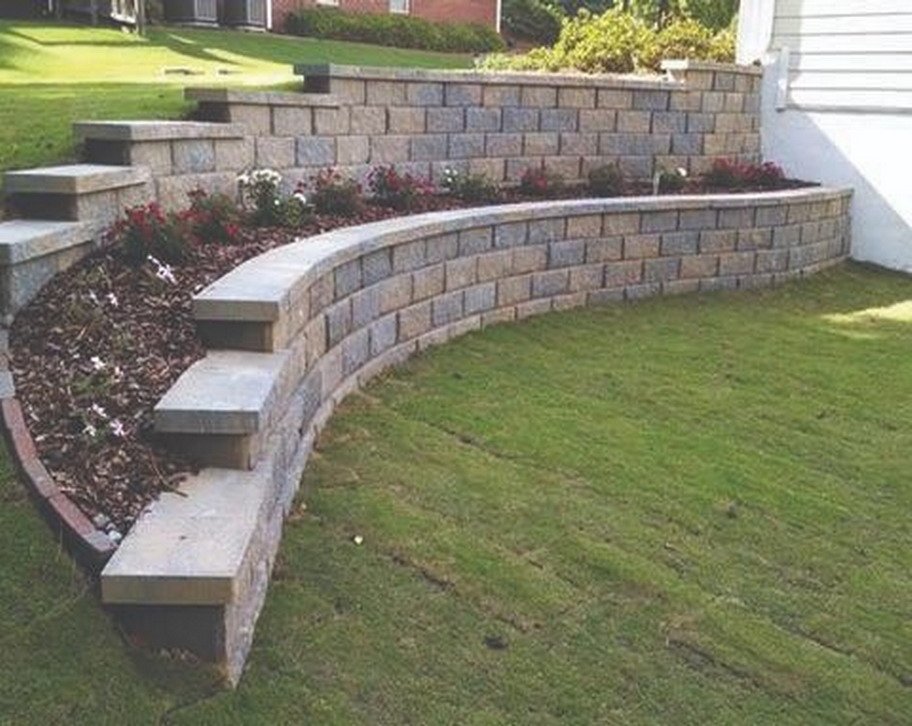
Absolutely, building retaining walls on slopes is not only possible but very common. These structures effectively prevent soil erosion while transforming steep, unusable terrain into functional level spaces.
The wall works by holding back earth and soil pressure from the hillside. However, success depends on proper engineering that includes a solid foundation and adequate drainage systems.
Effective water management becomes important on steep grades to prevent hydrostatic pressure buildup. When designed correctly, slope retaining walls provide long-lasting soil stabilization and create valuable usable areas.
Picture your steep slope transformed into a functional, beautiful landscape that adds value to your home. These structural wall design solutions offer multiple advantages that make slope management techniques worthwhile investments.
Building retaining walls on slopes requires careful planning, but the drainage benefits behind the wall make this home improvement project incredibly rewarding. Your sloped terrain walls will create usable space while preventing water damage through proper landscape fabric and backfill installation.
Before you start your slope retaining wall construction project, understanding your terrain becomes absolutely critical for success. Your hillside wall techniques depend entirely on accurate measurements and proper soil evaluation.
You’ll need to measure your slope’s steepness carefully because gradient wall design requirements change dramatically with different angles. Steeper slopes require more robust earth retention methods and specialized structural wall design approaches.
Your backyard slope engineering success depends on thorough site evaluation. Ground support structures must match your specific soil conditions to ensure long-term landscape stabilization and prevent costly failures.
Different soil types create varying lateral pressures that directly impact your structural wall design requirements. Clay soils expand when wet, increasing pressure, while sandy soils may shift unexpectedly without proper reinforcement. Your foundation depth and width must match your soil’s bearing capacity to ensure stable ground support structures.
Steeper gradients demand stronger hillside wall techniques and specialized materials like geogrid for additional stability. Slopes exceeding 1:1 ratios require enhanced earth retention methods and more robust backyard slope engineering solutions. Your gradient wall design must account for increased gravitational forces on steeper terrain.
Proper drainage solutions prevent hydrostatic pressure buildup that causes wall failure during heavy rainfall periods. Your landscape stabilization system needs French drains, weep holes, and proper backfill materials for effective water control. Without adequate drainage, even the strongest tiered garden walls can fail catastrophically.
Walls exceeding four feet typically require professional engineering plans and local building permits for safety compliance. Taller structures need deeper foundations and additional reinforcement to handle increased soil pressure and structural loads. Your incline wall installation must meet local codes and safety standards.
Licensed engineers provide essential calculations for complex hillside wall techniques, especially on steep terrain or tall structures. Their expertise ensures your structural wall design meets safety codes and handles soil pressures effectively. Professional consultation becomes mandatory for walls over four feet or challenging slope conditions requiring specialized earth retention methods.
Terraced designs often work better than single tall walls on steep slopes, distributing soil pressure more effectively. Your gradient wall design can incorporate multiple shorter walls that step down the hillside for improved stability. This approach creates attractive tiered garden walls while reducing structural stress and simplifying your incline wall installation process.
Different reinforcement techniques match specific soil conditions and slope severity levels in your backyard slope engineering project. Geogrid applications work excellently in sandy soils, while concrete reinforcement suits clay-heavy terrain better. Your ground support structures need reinforcement methods that complement both soil type and expected load requirements.
Choose building materials that withstand lateral soil pressure and weather exposure throughout your landscape stabilization system’s lifespan. Stone and concrete blocks offer excellent durability for terrain adaptation methods, while treated timber works well for lighter applications. Your drainage solutions must integrate seamlessly with selected materials for optimal long-term performance.
Your slope retaining wall construction demands specialized methods that account for challenging terrain conditions. These proven techniques ensure your project delivers lasting stability and performance.
Start your excavation by creating stepped foundations that follow your slope’s natural contours effectively. Establish solid footings below frost line depth, then begin wall assembly using proper leveling techniques at each course. Your structural wall design requires careful attention to alignment and base preparation for optimal results.
Terracing systems work best on steep inclines, breaking tall walls into manageable shorter sections for better stability. Use specialized retaining blocks designed specifically for incline wall installation and uneven terrain applications. These hillside wall techniques distribute soil pressure more evenly across your gradient wall design.
Maintain strict safety standards throughout your backyard slope engineering project, especially during excavation and material handling phases. Proper compaction of backfill materials prevents settling issues in your ground support structures over time. Always follow local building codes and drainage solutions requirements for your landscape stabilization system compliance.
When your yard sits on a slope, you need more than just a wall, you need a structure built with precision, strength, and long-term stability. At Atlantic Hardscape and Concrete, we design and build retaining walls that not only secure your landscape but also enhance the overall look of your property.
We understand Fredericton’s soil conditions, weather patterns, and grading challenges, allowing us to create walls that hold firm year after year. Whether you are dealing with erosion, uneven ground, or simply want a cleaner, more functional outdoor space, we are here to build a retaining wall that matches your vision and meets the highest standards of durability. Reach out and let our local experts help transform your landscape with confidence.
For sloped terrain, segmental block walls are the top choice due to their exceptional strength and straightforward installation process. These engineered walls offer superior durability, adaptability to various slope gradients, and provide excellent structural integrity compared to other retaining wall materials. Homeowners appreciate segmental block walls for their versatility, aesthetic appeal, and ability to effectively manage soil pressure and erosion on challenging landscape configurations.
The biggest risk is poor drainage. When water gets trapped behind the wall, it builds hydrostatic pressure that pushes against the wall. Over time that pressure can cause bulging, cracking, or even collapse, especially on slopes or where soil holds moisture.
Even short walls need careful planning on slopes. While shorter walls exert less pressure, soil conditions, drainage, and slope angle still matter. There are cases where short walls failed because these factors were ignored, so don’t assume short is safe.
GET STARTED
Your dream space is within reach as we work together from detailed 3-D designs to the final custom build. Our process is both professional and exciting, and we look forward to taking this journey with you.
Contact
34 Jackstraw Court, Fredericton, NB, Canada, New Brunswick
