The first time many people hear the phrase what is permeable paving, they picture regular bricks with a fancy name. In reality, it describes a very different way to build driveways, walkways, and parking areas. Instead of sending rain and snowmelt straight into the street, permeable paving lets water soak through the surface and into the ground below.
That idea matters a lot in a place like Fredericton. Heavy rain, spring snowmelt, and freeze–thaw cycles often leave puddles at the end of a driveway, ice patches on walkways, and soggy spots near foundations. When storm sewers are under pressure, water backs up, lawns erode, and icy surfaces become a safety issue for both homes and businesses.
Canadian cities now put more focus on smart stormwater management. Permeable pavement is one of the key tools they use. It manages water where it falls, reduces runoff, and still provides a strong, attractive surface.
By the end of this guide, property owners will know:
Atlantic Hardscape and Concrete has spent more than 15 years building interlock driveways, patios, and permeable systems across Fredericton and nearby communities. This article draws on that local experience so readers can decide whether permeable paving is the right fit for their property.
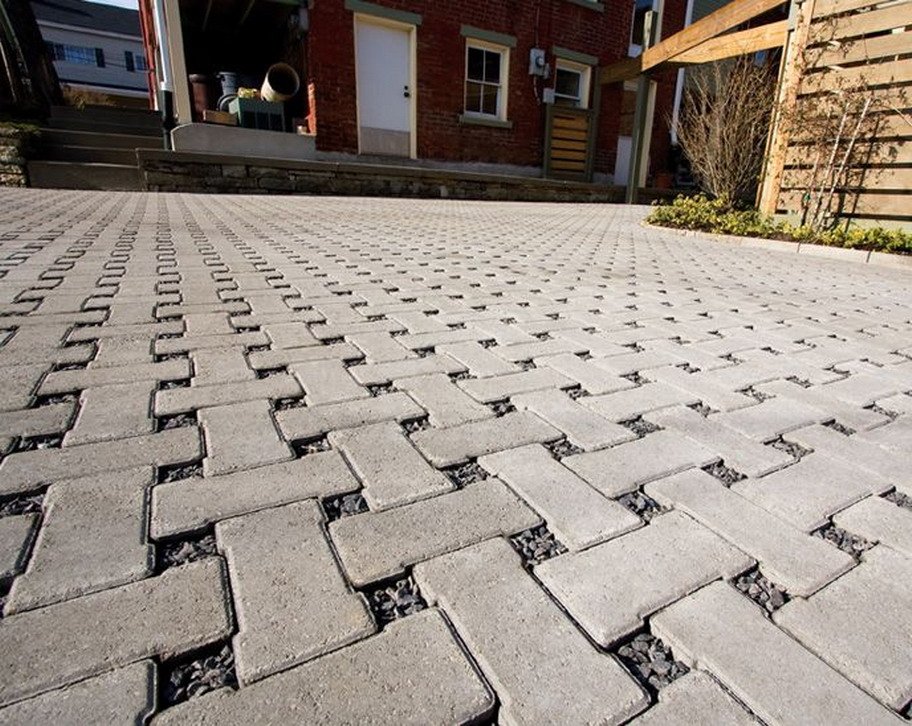
When someone asks what is permeable paving, the short answer is that it is a type of hard surface that lets water pass through instead of shedding it. A permeable pavement system is built so rain and snowmelt move through the surface, into a stone base, and then into the soil or a drain. This is very different from solid asphalt or concrete, which send almost all water straight to catch basins and storm pipes.
The structure works in layers:
Designs fall into three main groups:
Permeable paving copies how a natural yard handles rain. Instead of fast runoff, water slows down, spreads out, and soaks in. This matches the goals of Low Impact Development (LID), a planning approach that manages rain where it falls instead of sending it all into pipes. In cold regions like New Brunswick, these systems are designed with enough depth and the right stone so they handle freeze–thaw cycles without heaving or clogging.
Permeable paving is not one single product. It is a family of surfaces that all let water pass through, with different looks and strengths that fit different sites and budgets.
Permeable interlocking concrete pavers (PICP) are one of the most common choices for homes and commercial sites in Fredericton. They are solid concrete pavers laid with wider joints between the units, usually five to fifteen percent of the surface. These joints are filled with small, clean crushed stone that lets water flow down into the base while keeping the pavers tightly locked.
The result is a strong surface that handles cars and light trucks, yet still acts as permeable block paving. There is a wide range of shapes, colours, and textures, so owners can match house style and boost curb appeal. If one area settles or a paver cracks, that piece can be lifted and replaced without tearing out the whole driveway.
Atlantic Hardscape and Concrete installs many styles of permeable concrete block paving and can design custom patterns for driveways, patios, walkways, and parking areas that suit both the home and the local climate.
Pervious concrete is a poured concrete mix with very little fine sand in it. That missing sand leaves a network of open voids that give the slab roughly fourteen to thirty‑one percent air space. Water passes straight through the slab into the stone base, so the entire surface acts as pervious pavement instead of just the joints.
This type of pervious paving needs an experienced crew because the mix, placement, and curing methods differ from standard concrete. The finished surface has a rougher texture and is often used for parking areas, pedestrian zones, and some commercial sites where a more uniform, monolithic surface is preferred over pavers.
Porous asphalt works in almost the same way as pervious concrete, but uses an asphalt mix with very few fine particles. That open‑graded mix creates at least sixteen percent void space so water can drain through the full thickness of the pavement. It still looks similar to regular asphalt from a distance, though the texture is a bit more open.
This option is common for parking stalls and low‑traffic roads where a dark surface is preferred. It is placed with standard paving machines, but compaction must be gentle so the pores do not close up.
Permeable grid systems use concrete or strong plastic units shaped like a grid. Each unit has open cells that are filled with gravel or with a soil and grass mix. The grid spreads loads from vehicles, while the fill material stays free draining and does not compact into a solid mass. In many cases this type of system is called a gravel grid or a grass grid.
These systems work well for:
They suit owners who want more green space while still supporting vehicles.
Permeable articulated block systems are heavy concrete blocks linked together to form a flexible mat. There are open gaps between the blocks that can be filled with stone or soil so water can flow through. They are used most often for slopes, shorelines, or very high load areas, and are less common for typical residential driveways, though they can be used in special cases.
Understanding what is permeable paving is helpful, but the real question for most owners is what it does for their property. In Fredericton and nearby communities, the benefits line up neatly with local weather and bylaw concerns.
Key benefits include:
A well‑designed permeable pavement system can reduce runoff volume by up to ninety percent when all water is allowed to soak into the soil. Instead of water rushing off a driveway into the street during heavy rain or spring melt, it moves down through the joints or pores and sits in the stone base before soaking into the ground or leaving through a pipe. This eases pressure on municipal storm systems and lowers the chance of flooded gutters and basements.
As water moves through the stone layers, sediment, heavy metals, oil, and a large share of road grit are trapped. Studies show removal rates for total suspended solids in the high eighties, which helps protect rivers and streams across New Brunswick. Slower flow and lower volume also mean less erosion along ditches and nearby watercourses.
Because meltwater drains through the surface instead of sitting on top, there is far less chance of black ice. That means safer walkways and parking lots, and a lower slip‑and‑fall risk for commercial owners. Many sites can cut de‑icing salt use by as much as seventy‑five percent, which saves money and reduces chloride entering local water.
Good results start long before the first paver goes down. Planning a permeable driveway, patio, or parking area means looking closely at soil, slope, drainage, and local rules. This is where the guidance of an experienced contractor such as Atlantic Hardscape and Concrete becomes very helpful.
When Atlantic Hardscape and Concrete reviews a site, key factors include:
Atlantic Hardscape and Concrete walks owners through each of these steps. The team can carry out a site visit, review grades and drainage, test soils, and then prepare clear plans and 3D design views so property owners understand how their permeable paving project will look and perform before work begins.
Once the planning is finished, the next step is careful installation. Permeable pavement is not installed the same way as regular asphalt or concrete, so choosing a contractor with proper training and experience is very important. Atlantic Hardscape and Concrete has more than 15 years of practice with interlock and permeable systems in New Brunswick conditions.
A typical installation follows these steps:
Site preparation
The crew marks out the area, protects nearby drains, and sets up measures to keep mud and loose soil from washing into the work zone. Heavy trucks are kept off the prepared subgrade so it does not become compacted and smeared.
Excavation and subgrade preparation
Excavation brings the area down to the depth needed for the stone base and bedding layers. The subgrade soil is shaped so it is level for infiltration systems or slightly sloped for lined bases with underdrains. It is compacted to about ninety‑five percent of standard density so it is firm but still able to absorb water where needed.
Installing the stone reservoir and underdrains
Next, the stone reservoir goes in. Crews place clear, crushed stone in layers about ten to fifteen centimetres thick and compact each layer with a vibratory roller. The goal is a dense, stable base with plenty of open space left between the stones for water storage. If the design calls for an underdrain, perforated pipes are set within the upper part of this stone and connected to the chosen outlet.
Setting edge restraints
Edge restraints frame the surfaced area. For driveways and parking lots, cast‑in‑place concrete curbs are a common choice because they hold the pavers in place, stand up to freeze–thaw cycles, and work well with snow plows.
Laying pavers and filling joints
For permeable paver systems, a bedding layer of small clear stone is screeded over the compacted base. Pavers are laid by hand or with machines in the agreed pattern, then compacted gently so they settle into the bedding. Small clear stone is swept into the joints until they are full, and the surface is compacted again and swept clean.
Final checks and handover
Before the crew leaves, Atlantic Hardscape and Concrete checks that the surface drains as expected. A simple water test confirms that water moves into the joints and down into the base. Homeowners are given guidance on use and care, and residential permeable driveway projects are backed by a written warranty.
Permeable systems can last well over twenty years, but only if they stay free draining. The main goal of maintenance is simple to describe and very important to follow: keep fine sediment and organic debris out of the joints and pores so water can keep moving down into the stone base.
Core maintenance tasks include:
Atlantic Hardscape and Concrete offers maintenance and repair services for clients who prefer a hands‑off approach or want help keeping their warranty in good standing.
Permeable paving usually costs more to install than basic asphalt, and honest information about that difference helps owners make good choices. Extra cost comes from the thicker stone base, the special surface materials such as permeable pavers or grids, and the skilled labour needed to install them correctly.
Several factors shape the final price:
A simple residential permeable driveway with well‑draining soil and easy access will sit at the lower end of the range. Larger commercial parking areas, sites with soft or clay soils that need underdrains, or designs that require deeper stone for heavy trucks will cost more.
When the full life cycle is considered, the picture changes. Permeable systems often last more than twenty years with proper care, while basic asphalt may need full resurfacing after eight to ten years. There can also be savings on stormwater infrastructure on new builds, since the pavement itself handles storage that would otherwise need pipes or ponds. On tight urban lots, combining parking and drainage in one area can free more space for buildings or green areas.
Operating costs are usually lower as well. Reduced salt use, less patching, and the ability to replace individual pavers rather than entire slabs all help stretch maintenance budgets. Many buyers also see added value in a property that manages rainwater in a smart, visible way. Atlantic Hardscape and Concrete provides clear, detailed quotes and can present different design options so owners can balance budget, performance, and appearance.
By now, the idea behind what is permeable paving should feel much clearer. Instead of fighting water with solid surfaces that shed every drop, permeable pavement works with rain and snowmelt, giving it a place to go. For Fredericton homes and businesses that face heavy rain, spring melt, and icy winters, that difference can mean fewer puddles, less ice, and drier basements.
Permeable interlocking pavers, grid systems, pervious concrete, and porous asphalt all offer strong surfaces with built‑in drainage. They manage runoff at the source, filter pollutants, ease the load on storm sewers, and can boost property appeal at the same time. With proper planning and care, they deliver long service and real day‑to‑day benefits.
Getting that performance does depend on good design and careful installation. Atlantic Hardscape and Concrete brings more than 15 years of local experience with interlock driveways, permeable pavement, and yard drainage in New Brunswick soils and weather. The team offers site assessments, clear design plans, and the chance to view completed projects around Fredericton.
Property owners who are tired of standing water, icy driveways, and drainage worries can reach out for a free consultation. A short visit and a thoughtful plan may be all that is needed to turn a problem area into an attractive, long‑lasting permeable surface that manages water the right way.
Well‑built permeable paving can last twenty years or more when it receives regular care. Interlock pavers installed by Atlantic Hardscape and Concrete are designed for long service, with strong concrete units and deep, well‑compacted bases. Lifespan depends on the quality of installation, how closely maintenance advice is followed, and how heavy the traffic is. One extra advantage is that individual pavers can be replaced or the surface refreshed without tearing out the entire area, while many asphalt driveways need full resurfacing after about eight years.
Yes, permeable pavement performs very well in cold climates when it is designed properly. The stone base stores meltwater and lets it drain away, so there is much less water left on the surface to freeze into black ice. In New Brunswick, Atlantic Hardscape and Concrete uses deeper frost‑resistant bases and careful grading so the system keeps working even through repeated freeze–thaw cycles. Studies have shown that permeable pavers can match or exceed the winter safety of regular pavement while using far less de‑icing salt. Strong edge restraints also help surfaces stand up to snow plows and heavy shovelling.
In many cases, a permeable driveway is an excellent choice for a home. Permeable interlocking pavers are made to handle the weight of everyday vehicles, including SUVs and pickup trucks, without rutting or cracking. The key question is not the car, but the site conditions such as soil type, slope, and where water will go after it moves through the base. Atlantic Hardscape and Concrete has installed many permeable driveways across the Fredericton area and nearby communities. A free site visit and consultation can confirm whether a full or partial infiltration design will work best for a given property.
For most owners, permeable paving is low maintenance compared with the benefits it provides. The main task is vacuum‑style sweeping once or twice a year to remove sediment and debris from the surface. Occasional weed removal, visual checks after big storms, and avoiding sand in winter round out the routine. There is no need for seal coating, and major crack repairs are rare compared with solid asphalt or concrete.
Permeable systems can be adapted to many properties, but not every site uses the same design. Soil type, water table depth, slope, and the presence of nearby wells or streams all shape what is possible. Sites with poor‑draining clay soil can still use permeable pavement by adding underdrain pipes, while sensitive areas such as fuel stations need lined systems that do not allow infiltration. This is why a professional assessment matters so much. Atlantic Hardscape and Concrete reviews each site in detail and then recommends a design that fits its specific conditions while still delivering the benefits of permeable paving.
GET STARTED
Your dream space is within reach as we work together from detailed 3-D designs to the final custom build. Our process is both professional and exciting, and we look forward to taking this journey with you.
Contact
34 Jackstraw Court, Fredericton, NB, Canada, New Brunswick
