Picture a quiet Fredericton street just after sunset. Most homes fade into the dark, but one property glows softly, trees outlined in light and the front walk gently lit all the way to the door. That difference often comes down to one key choice in uplighting vs downlighting landscaping design.
Uplighting sends light upward from the ground, while downlighting sends light down from above. Those two simple directions change everything about how a yard feels at night. They affect how tall a tree looks, how safe a set of steps feels, and how impressive a front entry appears from the street.
Choosing the right mix of these directional lighting techniques is especially important in Fredericton’s long winters and short summer nights. Good lighting adds safety on icy paths, helps guests find your door, and gives patios and decks far more usable hours. With more than 15 years of local experience, Atlantic Hardscape and Concrete has seen how the right outdoor lighting design can boost curb appeal for both homes and commercial properties.
In this guide, you will see what uplighting and downlighting are, how they differ, where each one shines, and how to blend them for a layered, professional look. You will also pick up practical design tips, modern technology options, common mistakes to avoid, and how Atlantic Hardscape and Concrete builds long-lasting systems for Fredericton properties.
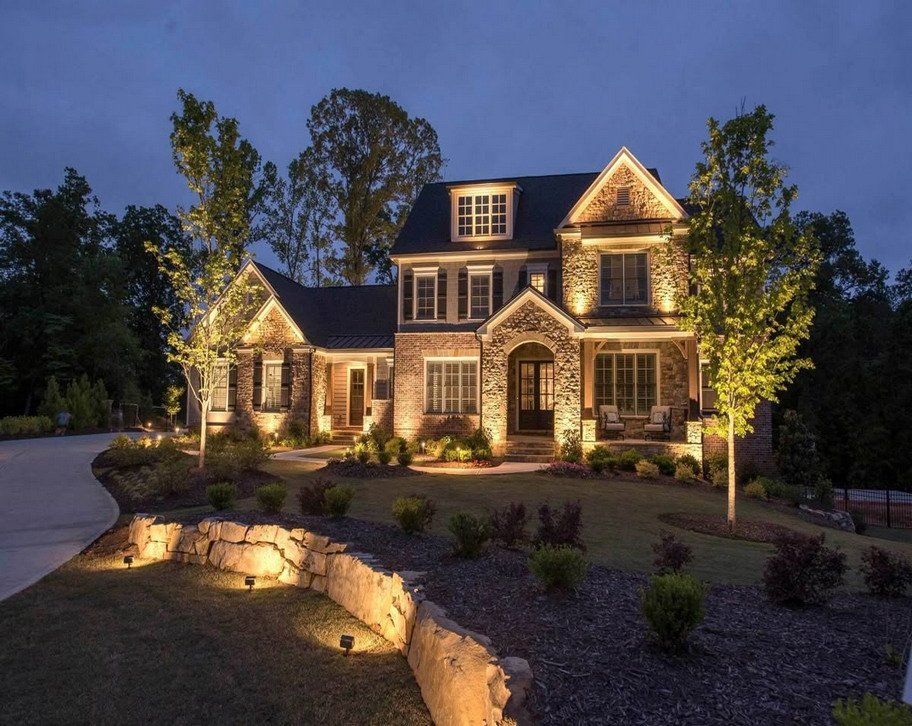
Uplighting is an outdoor lighting technique where fixtures sit at or near ground level and send light upward onto a feature. Instead of washing an area with even brightness, uplighting picks out trees, walls, and architectural details to give them a bold night-time presence. It is one of the most effective ways to turn a dark yard into a series of strong focal points.
Because the light comes from below, uplighting creates high contrast and strong shadows. Vertical elements such as trunks, columns, and textured concrete suddenly stand out with dramatic outdoor lighting effects. This vertical emphasis makes spaces feel taller and often a little larger, which is why many people notice that their front yard looks more impressive the moment uplights are installed.
Uplighting feels very different from simple ambient flood lighting. General floods can make a space bright but flat, with little depth. Proper outdoor uplighting uses narrower beams and careful outdoor lighting placement so the viewer’s eye moves from one feature to the next instead of staring into a blank glow. The play between bright highlights and deep shadow gives fences, retaining walls, and even plain siding a new sense of texture.
Common outdoor lighting fixtures for uplighting include in-ground well lights, bullet-style spotlights, and adjustable stake lights. These can be tucked into planting beds, set beside concrete steps, or hidden behind boulders so that the eye sees the effect, not the hardware. On many Atlantic Hardscape and Concrete projects, uplights are worked into hardscape from the start, so conduits and niches are ready before concrete is poured or stonework is set.
If the goal is drama, uplighting is usually the first tool to reach for. A tree that disappears after dark during summer can become the star of the yard with a single well-aimed uplight. A plain retaining wall can shift into a strong design feature once light brushes across its surface.
Narrow beams are especially helpful when a surface has good texture. When Atlantic Hardscape and Concrete lights a stone or textured concrete wall, they often aim a tight beam close to the face so the light “grazes” across it. This brings out every ridge and groove, adding interest without changing a single stone. Wide beams work better for large canopies, tall façades, or broad shrubs where a softer wash is more attractive than a sharp spotlight.
Good uplighting also guides the eye through the yard:
This creates a quiet visual path from the driveway to the front door or from the patio to the fire pit. It is where uplighting blends into garden accent lighting, turning ordinary items such as urns, sculptures, or a favourite maple into night-time landmarks that feel intentional rather than random.
Downlighting does the opposite job. Fixtures are mounted higher up and send light downward onto the ground or onto lower features. This can be from tree branches, soffits, pergolas, posts, or other structures. When done well, downlighting feels natural, a lot like soft moonlight or early morning sun.
Because downlighting comes from above, it creates shorter, more familiar shadows. Steps, pathways, decks, and seating areas become easy to read and move through, which is why downlighting is usually the backbone of functional yard lighting design. Many people think of it as the outdoor version of ceiling lights inside the home.
One of the most loved forms of garden downlighting is “moonlighting.” This method places fixtures high in a tree and angles them down through the branches. As the light filters through leaves, it throws a gentle, dappled pattern on the turf, patio, or garden beds below. Used in the right spot, moonlighting adds a calm, romantic feeling to a yard without the harsh glare that floodlights can create.
Common outdoor lighting fixtures for downlighting include soffit-mounted spots, recessed lights in overhead structures, tree-mounted fixtures with strong brackets, and pendant-style lights over dining or bar areas. In a well-planned exterior lighting design, these lights are often hidden in beams or eaves so they appear to come from nowhere, just like natural light.
Downlighting is hard to beat when safety and day-to-day use are the main priority. In Fredericton, where winter nights are long and ice is common, clearly lit paths and steps are not just a luxury; they help avoid falls and injuries.
For pathway lighting design, downlights can be mounted along posts, on nearby structures, or in trees so the light falls evenly across the walking surface. Stairs and changes in elevation benefit from recessed step lights or small downlights mounted to side walls. When Atlantic Hardscape and Concrete designs a system, they look for every spot where a shadow might hide an edge and add careful, low-glare light there.
Task areas also depend heavily on downlighting. Outdoor kitchens need bright, focused light over grills and prep counters so food can be cooked safely. Dining tables and lounge seating call for softer outdoor ambient lighting that lets people see plates and faces without squinting. Pool decks and the edges of ponds or water features often look best when lit from above, which reveals the surface and movement of the water while keeping glare out of the water itself.
Finally, downlighting helps with security. Lights over doors, garage entries, and parking areas make it easier to see visitors and discourage unwanted activity. Atlantic Hardscape and Concrete often blends safety lighting with subtle aesthetic touches so a well-lit driveway or side yard fits smoothly into the rest of the design.
Uplighting and downlighting are two sides of the same coin, but they behave very differently. Understanding those differences is the key to using each one well and to getting the most out of an uplighting vs downlighting landscaping plan.
The first difference is direction and placement. Uplighting starts near the ground and sends light upward onto trunks, walls, and other vertical features. Downlighting begins in an elevated position and sends light downward onto paths, patios, and plantings. That simple change in direction changes how tall or wide a space feels and where shadows fall.
Shadows and mood are the next big difference. Uplighting throws long, dramatic shadows that stretch behind objects and up walls. This strong contrast adds excitement and can make a property look grand, even theatrical. Downlighting, by contrast, produces shorter, more natural shadows that people are used to from sun and moon. The mood is calmer and more relaxed, ideal for social spaces and everyday family use.
There is also a difference in primary purpose. Uplighting focuses on appearance, especially when used as architectural outdoor lighting or as part of garden lighting ideas around a feature. It picks out key elements and gives them a starring role. Downlighting serves function first, lighting steps, outdoor kitchens, and sitting areas so people can move and work safely. It still looks good, but its main job is to make the space easy to use.
Installation can vary as well. Ground-based uplights are usually simpler to place and adjust, although they must be protected from mowers and snow removal. Downlights in trees, soffits, or pergolas may need more planning and careful mounting, but they are often better protected from damage once in place. A professional installer like Atlantic Hardscape and Concrete weighs these practical points when choosing where each fixture should go.
Because the strengths of each method are different, they suit different roles. Uplighting is excellent for specimen trees, stone columns, textured retaining walls, and other focal points. Downlighting is better for paths, driveways, decks, and everyday seating areas. A good design rarely picks just one; it uses both in balance to create depth, safety, and beauty across the whole property.
Curb appeal starts with first impressions, and uplighting highlights gables, stone façades, and key trees so homes stand out from the street. When tall trees or entry columns are lit from below, the front looks far more impressive than by day.
Downlighting makes the front walk, driveway, and porch inviting rather than dark. Guests see where to go, and steps feel safe. When the garage, walkways, and entry are softly lit from above, the scene looks cared for and welcoming.
The most attractive yards combine both methods. Atlantic Hardscape and Concrete uplights architectural details and specimen trees, then adds gentle downlighting at porches and walkways. Care is taken to avoid excessive brightness, so properties look refined instead of harsh. This thoughtful design helps Fredericton homes stand out without feeling flashy.
Once the basics are clear, it helps to look at specific places where uplighting works especially well. These are the targets that give the most return in both looks and value when planning yard lighting options.
A natural starting point is mature trees. With the right tree uplighting techniques, bark texture, branching structure, and canopy shape all come to life. A tall maple, oak, or pine can be lit with one or more uplights at its base, angled to show both trunk and canopy. Atlantic Hardscape and Concrete often uses different beam spreads on the same tree, a narrow one for the trunk and a wider one for the leaves, so the tree reads clearly from top to bottom.
Architecture comes next. Uplighting is an excellent form of architectural outdoor lighting when used on stone or brick façades, wing walls, entry columns, and archways. Lights are placed a short distance from the wall and aimed upward so they graze the surface, bringing out joints and textures. This treatment makes the front or back of a home look more detailed and layered at night without adding any new construction.
Garden structures and hardscape also respond well to uplighting. Pergolas, arbours, gazebos, and decorative privacy screens can all gain presence after dark when light rises along their posts and beams. Decorative fencing, boulder groupings, and feature planters become part of a thoughtful garden accent lighting plan instead of fading away.
Uplighting shines around water features and art pieces too. A fountain, statue, or decorative urn can become a night-time focal point with one or two fixtures aimed to catch water movement or sculpted shapes. Because water surfaces can reflect up to twice as much light, Atlantic Hardscape and Concrete often uses lower lumen outputs around ponds and fountains to get strong results without wasting energy.
Retaining walls and other textured surfaces are another prime target. By grazing light close along stone, concrete, or masonry, uplighting makes the most of every shadow line. This approach works especially well on the custom concrete walls and seat walls that Atlantic Hardscape and Concrete builds, bringing out their pattern and finish. It can also help define the edges of patios and outdoor rooms by outlining the hardscape in light.
Finally, uplighting can suggest property lines or the edges of outdoor living zones. Fixtures placed along the rear tree line, at the sides of a yard, or around a patio perimeter give a sense of boundary without needing a fence. In Fredericton’s snowy months, well-aimed uplights can also catch the sparkle of snow on branches and walls, turning winter scenes into something worth viewing from the living room window.
Downlighting comes into play anywhere people need to walk, work, or relax safely. It is the quiet partner to uplighting, filling in the gaps and making the whole yard comfortable at night.
One of the most common uses is along paths and walkways. Rather than relying only on short path lights, Atlantic Hardscape and Concrete often mounts downlights on nearby posts, trees, or structures so a smooth pool of light falls across the walking surface. This approach avoids bright dots and dark gaps, which makes it easier to see uneven spots and feels better to walk through.
Driveways and parking areas also benefit from downlighting. Fixtures in soffits, on garage peaks, or on poles can throw a wide, even light on the surface so drivers can park and back out with confidence. Good light in these spots also helps guests find the right house and reduces the chance of stepping in hidden puddles or ice patches.
Outdoor living spaces are a perfect match for downlighting. Patios, decks, and conversation areas feel more like outdoor rooms when light falls from above, similar to interior lighting. Fixtures tucked into pergola beams or under roof overhangs can highlight seating, rugs, and coffee tables while keeping glare out of people’s eyes. This is a core part of thoughtful outdoor lighting design.
Steps and stairways are a safety priority, especially in icy Fredericton winters. Small downlights on risers, side walls, or rail posts make each tread easy to read. When combined with good pathway lighting design along the routes leading to the stairs, this reduces the risk of slips for both residents and visitors.
Task areas such as outdoor kitchens and bar counters demand brighter, more focused downlighting. Cooking surfaces, sinks, and prep spaces need clean, shadow-free light, while adjacent seating often calls for softer levels. With smart planning, all of this can come from a few well-placed fixtures that can be dimmed or zoned separately.
Downlighting also works well for ground-level plantings and water features. Fixtures in trees or overhead structures can send a gentle wash across flower beds, ground covers, and borders, showing off leaf colour and bloom without harsh contrast. Pools and ponds often look best when the deck or surrounding plantings are lit from above, with underwater lights used only as needed. Atlantic Hardscape and Concrete often integrates downlighting into pergolas, covered patios, and other structures from day one so wiring and mounting points are clean and long-lasting.
While uplighting and downlighting can work on their own, they are strongest together. When both are used, the result is a layered lighting plan that feels rich and complete, with no area left oddly bright or uncomfortably dark.
This layered approach uses different heights and angles to guide the eye:
The viewer’s gaze moves naturally through the yard from foreground to background, taking in one highlight after another instead of staring into a single bright spot.
Blending both methods also balances drama with day-to-day function. Uplighting gives the “wow” factor on a façade or feature tree, but that same tree can host moonlighting fixtures that cast a gentle glow over a patio or seating area below. In a similar way, a custom stone wall can be lit from below to show its texture, while downlights in a nearby pergola make the adjacent dining table practical for meals and games.
Atlantic Hardscape and Concrete uses this approach on most projects, from compact city yards to larger rural properties. Rather than lighting each element in isolation, they design the entire property as one system. That avoids common amateur mistakes such as a blazing tree with a dark patio beside it or a bright path that leads into total blackness. The end result is a yard that looks considered and comfortable wherever someone stands.
Deciding between uplighting and downlighting starts with clear goals. Some property owners prioritize safety on steps and paths, while others want strong visual impact. Setting priorities makes later choices much easier.
List the key features on your property: mature trees, shrubs, stone walls, patios, decks, walkways, water features, and sculptures. Decide which items deserve special attention and which simply need visibility. Uplighting usually suits focal points, while downlighting works best for routes, seating, and work zones.
Property shape and views matter too. Consider sightlines from the street, indoor rooms, and outdoor gathering spots. A tree visible only from the back deck needs different treatment than one seen from the living room and road. In Fredericton, think about seasonal use, since winter shifts activity closer to the house while summer spreads across the yard.
Budget plays a key role. Safety lighting on paths, stairs, and entries comes first. Once covered with solid downlighting, accent uplights can be added in stages. Atlantic Hardscape and Concrete installs core systems with room for future additions, so you can expand without redoing earlier work.
A “flashlight test” helps visualize results. Walk the property after dark with a bright flashlight, aiming it up, down, and across different features. This previews how outdoor lighting placement will look before installation. During consultations, the Atlantic Hardscape and Concrete team uses hands-on reviews and 3D planning tools to spot opportunities not obvious in daylight.
Atlantic Hardscape and Concrete treats lighting as a key part of every outdoor project, not an afterthought. The process starts with a thorough consultation to understand how the property is used, what the owner values most, and what budget is available. This applies to homes, commercial sites, and development projects alike.
From there, the team considers lighting alongside hardscape elements such as patios, walkways, retaining walls, and outdoor structures. Conduits and mounting points are planned before concrete is poured or stone is laid, so fixtures are cleanly integrated rather than tacked on later. Custom designs, often supported by 3D visuals , show how architectural outdoor lighting, tree accents, and functional zones will all work together.
Material properties are part of the planning as well. Concrete surfaces can reflect roughly forty percent more light than softer materials, and water features can multiply light effects even further. By using these facts, Atlantic Hardscape and Concrete can select lower lumen levels while still getting strong visual impact, which improves both looks and efficiency.
Only outdoor-rated, durable fixtures are used, chosen specifically for Fredericton’s cold winters and humid summers. Trained technicians handle installation, from trenching and proper burial depths to waterproof connections and correctly sized transformers. After dark, the team often returns to fine-tune aim and brightness so every feature looks just right.
Ongoing support is part of the service. Atlantic Hardscape and Concrete offers maintenance, repair, and LED upgrade options, including retrofits for older halogen systems that are ready for a modern, efficient update. With more than 15 years of experience across the region, they bring strong local knowledge of plants, architecture, and climate to every yard lighting options discussion.
Yes, using both is not only possible, it is usually the best approach. Professional designers often build layered systems where uplighting highlights trees, walls, or art, while downlighting makes paths, patios, and steps easy to use. A common example is lighting a feature tree from below while using moonlighting from its branches to wash a seating area underneath. This mix gives strong visual impact without forgetting safety and comfort. Atlantic Hardscape and Concrete designs most projects with this kind of combined, carefully balanced layout.
The better choice depends on what effect you want and on the tree itself. Uplighting from the base shows off trunk texture and branch structure, creating striking silhouettes and strong vertical lines. Downlighting, especially moonlighting from within the canopy, sends a soft, patterned glow onto the lawn, patio, or beds below. Many of the best designs use both methods on a single tree, one for structure and one for mood. In Fredericton, Atlantic Hardscape and Concrete also considers how deciduous and evergreen trees change through the seasons when choosing angles and fixture types.
Low-voltage outdoor lighting systems that run on 12V can often be installed by qualified landscape professionals who understand design and outdoor wiring methods. However, any work involving 120V line power, including connecting the transformer to the main electrical service, must be done by a licensed electrician. Proper planning is important for safe burial depths, correct voltage at each fixture, and weatherproof connections. DIY attempts that skip these steps can lead to poor performance or safety risks. Atlantic Hardscape and Concrete uses trained technicians and works within electrical codes so your system is both attractive and safe.
GET STARTED
Your dream space is within reach as we work together from detailed 3-D designs to the final custom build. Our process is both professional and exciting, and we look forward to taking this journey with you.
Contact
34 Jackstraw Court, Fredericton, NB, Canada, New Brunswick
