A clear concrete driveway on a Fredericton winter morning can feel like a skating rink with a slope. Many homeowners search for how to deice a concrete driveway after one scary slip or a close call with a sliding car. Ice is not just annoying, it is a real safety hazard for family, visitors, and tenants.
At the same time, anything that melts ice can slowly eat away at concrete. The wrong product or method can lead to scaling, spalling, pits, and cracks that shorten the life of a driveway. That is the tough balance every property owner faces in Atlantic Canada, especially with our constant freeze and thaw swings.
With more than 15 years working on driveways in the Fredericton area, Atlantic Hardscape and Concrete sees this problem every winter. In this guide, we walk through safe driveway ice removal methods, how to choose concrete safe ice melt, smart prevention steps, and when professional help makes sense. Good winter care costs far less than a full concrete replacement, and it keeps people and vehicles safe all season.
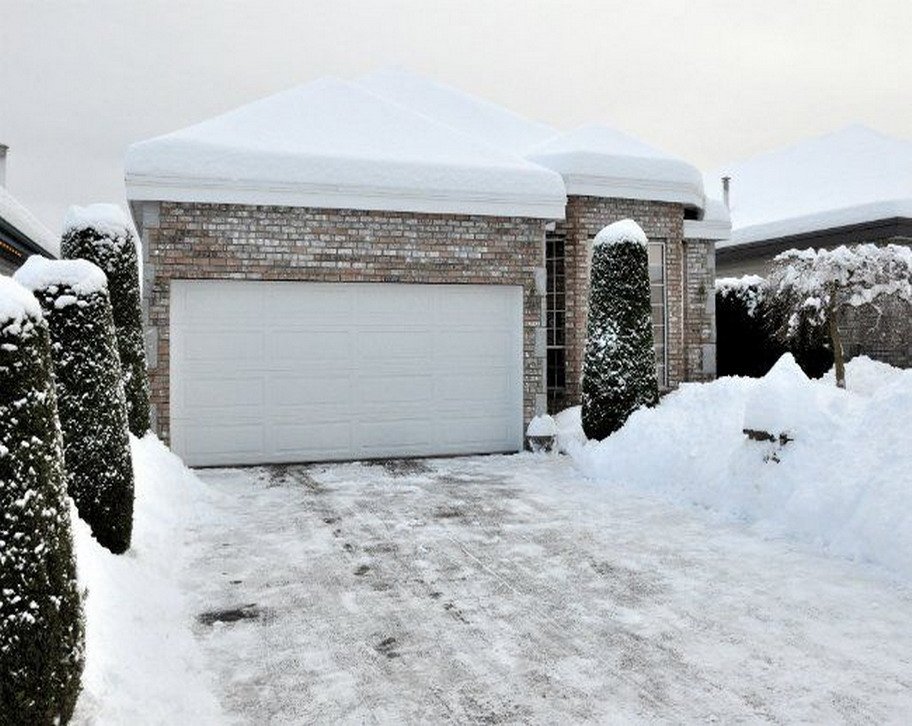
Concrete driveways in Atlantic Canada sit through wide temperature swings. One day can be mild and wet, the next night well below freezing. That pattern creates perfect conditions for ice on concrete. Melted snow, rain, and slush run across the surface, fill tiny pores, and then freeze solid when the temperature drops again.
Concrete looks solid, but it acts like a sponge on a very small scale. Water seeps into those small openings whenever the surface is wet. When that water freezes, it expands and pushes against the sides of each pore. That expansion creates internal pressure inside the slab.
Every freeze and thaw cycle adds a bit more stress. Over one Fredericton winter there can be dozens of these cycles, especially during shoulder seasons where days hover around zero. Over several winters, this repeated stress begins to show as light flaking, small chips, and hairline cracks across the driveway.
When owners understand this process, it becomes clear why prevention is so helpful. The less water that enters the concrete and the fewer times it freezes inside, the longer the driveway will last. Smart concrete driveway winter maintenance focuses first on keeping water out and stopping ice from bonding tightly to the surface.
Not all ice looks or behaves the same. Knowing what is on the concrete helps decide the best driveway ice removal methods and how much effort or product is needed. Some types scrape away easily, while others cling like glue and need a different approach.
Black ice is a very thin, almost invisible film of ice that forms when meltwater or light rain refreezes on cold concrete. It often looks like a wet surface instead of solid ice, which makes it especially dangerous. Foot traffic and vehicles can slide suddenly, so traction with sand or other abrasives matters more than heavy melting products.
Snow pack ice develops after snow is left on the driveway and gets packed down by cars or people. That packed snow compresses and then freezes into a dense layer of ice. It is harder to remove than fresh snow, often needing a mix of careful scraping plus a concrete friendly ice melt to loosen it.
Surface glaze shows up after freezing rain or sleet leaves a thin, smooth coat over the driveway. This glaze is slick but usually not very thick. A light application of concrete safe ice melt followed by quick shovelling or scraping often removes it before it turns into a thicker layer.
Thick ice buildup happens when several rounds of melting and refreezing stack on top of each other. This is the most challenging kind to handle and often covers the full width of a driveway. It usually calls for a mix of pre-applied deicer, patient manual removal, and abrasives for safe walking and driving. Early action on black ice, glaze, and snow pack helps stop them from turning into this heavy, stubborn buildup.
Deicing products prevent slips but change how water behaves around concrete. Most chemical deicers lower water’s freezing point and create brine that seeps into pores more easily than plain water, increasing freeze-thaw cycles inside the slab.
Each cycle means more expansion and contraction inside the concrete. Over several winters, that stress shows up as scaling where the surface flakes away, or spalling where pits and holes open. Small cracks widen as water gets inside, freezes, and pushes the sides apart.
Chloride based products such as sodium chloride and calcium chloride can react with parts of the concrete. When brine reaches steel rebar or mesh inside a reinforced driveway, it starts corrosion. Rust takes up more space than clean steel, so it swells and pushes against surrounding concrete. That pressure causes deeper cracks and, in bad cases, raised or broken sections.
Some deicing blends also contain dyes or additives that leave stains or discolouration on the surface. A driveway that started with a clean, light grey finish can end up patchy or spotted.
Sealed concrete handles deicers better than bare concrete because the sealer acts like a thin raincoat. Less water soaks in, so less brine reaches the inside of the slab or the reinforcement. Atlantic Hardscape and Concrete applies high quality sealers that help block moisture and reduce the effect of deicing salts. An unsealed driveway sits exposed to every bit of brine that lands on it, which speeds up aging and shortens its service life.
Over time, that damage leads to real repair bills. Simple sealing costs far less than cutting out and replacing broken sections or rebuilding a full driveway. For many Fredericton homeowners, wise use of deicers and regular sealing through Atlantic Hardscape and Concrete is the best way to balance winter safety with long term driveway health.
Deicers do not stay on the driveway forever. Every warm spell and spring thaw washes traces off the concrete and into the surrounding property. That runoff can have many side effects that go far beyond the slab itself.
Runoff from driveway ice melt often affects:
Plants and soil: Salty water soaks into soil along the driveway edges and is taken up by grass, shrubs, and garden beds. High salt levels dry out plant roots and make it harder for them to take in water. Over time, this often shows as brown patches along the driveway or struggling shrubs on the salty side of the yard.
Metal parts and vehicles: Vehicle undercarriages, garage doors, door tracks, railings, and steps that see a lot of spray or splash can begin to rust faster. Chlorides in brine speed up corrosion, especially when the metal does not get rinsed clean in spring.
Local waterways: Runoff usually flows into storm drains and then into local rivers and streams around Fredericton. Salts and other chemicals do not disappear on the way. High levels in the water can stress fish and other aquatic life and change the balance in those habitats.
Pets: Certain chemicals can irritate paw pads, cause small burns, or make animals sick if they lick treated areas. Households that use gentler concrete friendly ice melt or natural options avoid many of these problems.
Long term soil health: Salt can build up in soil over years of heavy use. That long term contamination makes it harder to grow healthy plants in those spots, even after changes in products.
For all these reasons, using less chemical deicer and reaching for natural methods or professional help from Atlantic Hardscape and Concrete where possible is kinder to both the property and the wider community.
Sodium chloride, often called rock salt, is the most common product people think of when they ask how to deice a concrete driveway. It is widely sold across New Brunswick, simple to spread, and fairly affordable in large bags. Because of this, many homeowners and property managers rely on it as their main ice melt.
Rock salt works by dissolving in the thin layer of moisture on top of ice and snow. Once it dissolves, the salty water has a lower freezing point than plain water, so it begins to melt the ice and weaken the bond to the concrete. Sodium chloride works well down to about minus ten degrees Celsius. Below that point, the melting effect slows down a lot.
When used in modest amounts, rock salt is usually seen as the least damaging chemical deicer for most concrete driveways. It can still cause wear over many years, but the effect is lighter compared with stronger chemicals. The key is light, even coverage instead of heavy piles, and using it as a helper to manual removal rather than the only tool.
In the Fredericton area, rock salt is easy to find at hardware stores, grocery stores, and building supply yards. Atlantic Hardscape and Concrete often recommends it as the base choice for many residential driveways, paired with regular shovelling to remove slush and limit how long the brine sits on the surface. Owners still need to remember that it can harm plants and local water, so smart, limited use matters.
Calcium chloride steps in when the cold really settles over Atlantic Canada. It draws moisture from the air and releases heat when it dissolves, which means it starts melting ice faster and keeps working in much lower temperatures than rock salt. Many labels show effective performance down to about minus twenty degrees Celsius.
This power comes with a cost. Calcium chloride is harder on concrete and nearby metal than sodium chloride. Heavy or frequent use can speed up surface damage, especially on older slabs or ones that were never sealed. It can also leave a slimy film that needs to be removed once conditions warm up.
Because of this, Atlantic Hardscape and Concrete suggests using calcium chloride as a backup, not an everyday choice. It can be helpful during deep cold snaps when rock salt will not do much, or on small, high risk areas like steps and tight walkways. Applying a thin layer only where needed reduces the stress on the driveway and nearby soil.
Calcium chloride usually costs more per bag than basic rock salt. Since it should be used sparingly and only in special weather, that higher price can still make sense when combined with regular shovelling and other methods.
Magnesium chloride often appears on store shelves as a premium ice melt with claims of low impact on plants and pets. While it can work well at lower temperatures, it is particularly harsh on concrete surfaces. The chemical reaction between magnesium chloride and concrete can cause quick scaling, softening, and surface breakdown.
For that reason, experts now advise avoiding magnesium chloride on concrete driveways and walkways. The short term gain in melting power does not make up for the long term damage to the surface. Even though packages may show friendly marketing messages, the real effect on a concrete slab can be costly repairs.
Atlantic Hardscape and Concrete recommends other concrete safe ice melt options instead. Our team is happy to review product labels with homeowners and point out when magnesium chloride appears in the ingredients so it can be left on the shelf.
Organic or salt free deicers use different active ingredients, such as glycols or calcium magnesium acetate, instead of standard chloride salts. They still lower the freezing point of water, but they do so without the same harsh impact on concrete, metal, and plants. Many of these products are marketed as pet friendly and kinder to lawns and gardens.
These products tend to be much easier on concrete slabs and pavers. They are a strong choice for new or recently sealed driveways where owners want to protect their investment. They also make sense near sensitive landscaping or in yards where pets spend a lot of time on and around the driveway.
The main downside is cost. Organic deicers are usually more expensive per kilogram than rock salt or calcium chloride. For many Fredericton properties, they work best as part of a mixed approach where high risk zones get organic products and lower risk areas use sand and a bit of rock salt. Atlantic Hardscape and Concrete often recommends them for new driveways we have installed and sealed, where long life is a clear priority.
Sugar beet juice and pickle brine sound more like kitchen items than driveway helpers, yet both can play a part in safe ice control. The natural sugars in beet juice and the salt and vinegar in pickle brine help lower the melting point of water, much like standard deicers. This makes it harder for ice to form a strong bond with the concrete.
Some Canadian cities spray beet based liquids on roads before storms to reduce salt use and make plowing easier. Homeowners can borrow that idea on a smaller scale. A simple brine can be made by mixing about two pounds of regular salt into a gallon of water, then adding a glassful of sugar beet juice. The liquid spreads more evenly than dry salt and sticks to the surface longer.
For a driveway, this type of brine works best as a pre-treatment before a storm. It keeps snow and ice from freezing tightly to the concrete, so a snow pusher or shovel can clear it away more easily. Because the salt is in liquid form and used in lower amounts, it can reduce total salt use over a season.
These liquids are generally safe for most concrete, metal, and plants when used modestly. They can leave a slight sticky film, so some people prefer them on the upper part of the driveway rather than near entrance doors. In Fredericton, beet juice products may be available through farm supply stores, while pickle brine can come from simple household sources.
Alfalfa meal is a ground plant product often sold as an organic fertilizer. In winter, it doubles as a gentle aid for ice control. Its grainy texture gives extra grip on slick surfaces, and the small amount of nitrogen in the product adds mild melting power.
When sprinkled lightly over icy patches, alfalfa meal improves traction right away. It does not cut through thick ice like strong chemicals, but it can make walking safer on thin or patchy areas. Because it is dark and rough, it also absorbs sunlight, which helps soften ice during bright periods.
Alfalfa meal is fully biodegradable and safe for concrete, pets, and nearby gardens. As spring arrives, it simply breaks down and adds nutrients to the soil. That makes it a smart partner to other methods for property owners who care about both concrete driveway winter maintenance and the health of their yards.
Urea is a common ingredient in many fertilizers and also works as a deicer. It does not contain chlorides, so it is far less corrosive than salt based ice melt. This makes it gentler on concrete, metal, and vehicle parts compared with many standard products.
For households with pets, urea has another benefit. It is considered almost non-toxic in the amounts used on driveways, and it does not burn paw pads the way some products can. That makes it a good option around dog runs, steps, and common walking routes.
Urea melts ice more slowly than calcium chloride, so it is better for light to moderate ice rather than thick, stubborn sheets. It should also be kept away from lawns and garden beds in high doses, because strong concentrations can stress or burn plants even though it appears in many fertilizers. Homeowners often need to visit farm supply outlets or order online to find pure urea products, but it can be well worth it where pet and concrete safety come first.
For small, icy spots, a simple mix of baking soda and very hot water can offer a quick fix. Baking soda is a mild salt, so when it dissolves in hot water it creates a weak brine that can soften thin ice. This method will not clear a whole driveway, but it is handy for short flights of steps, tight walkways, and single problem patches.
To use this method, mix baking soda into a bucket or watering can filled with boiling or very hot tap water. Stir until the powder dissolves, then carefully pour or spray it over the icy area. The heat of the water starts the melting, and the baking soda slows refreezing for a short time.
This approach is not as strong as commercial deicers, so a second round may be needed for stubborn spots. The benefit is that baking soda is non-toxic, safe for concrete in these light uses, and already present in many homes. As part of a larger plan that includes shovelling and abrasives, it gives property owners one more safe and simple tool for removing ice from concrete.
Plain natural sand is one of the best non-chemical ways to improve safety on icy driveways. It creates a rough layer that gives shoes and tires grip. Many Fredericton homeowners keep a bucket of sand near the garage door.
When spread in a thin layer over slippery areas, sand quickly reduces the risk of slips and falls. It works well on sloped driveways where sliding is more likely. Darker sand also draws in sunlight, which can slowly warm the surface and help soften ice.
Because sand does not react with concrete, it is completely safe for the slab. There is no chemical attack, no added stress on the freeze and thaw cycle, and no risk to embedded steel. The trade off is that sand can be messy and needs sweeping in spring to prevent drain blockage.
For many situations, this trade off is fair. Sand keeps the focus on traction while cutting down on chemical use. Atlantic Hardscape and Concrete recommends it as a first line of defence on icy mornings, followed by shovelling once temperatures rise.
In very cold weather, plain rock salt becomes much less useful, yet ice remains slick and stubborn. A practical approach in these conditions is a mix with mostly sand and a small amount of salt added. This gives instant traction while still letting a little deicer work in the background.
A mix might contain about ninety-five percent sand and five percent sodium chloride. The sand delivers the main safety benefit by creating a high friction layer. The small salt content slowly weakens the bond between ice and concrete whenever the temperature is close to the product’s effective range.
This sand first method keeps chemical use low while still offering some melting help during short warm spells. It stretches more expensive deicing products and focuses them on the most needed spots in the mix. Preparing a few buckets of this blend before a cold stretch allows for quick spreading on icy driveways, steps, and paths during Fredericton’s harshest weeks.
Sometimes the best abrasive materials are already in the house. Used coffee grounds and cold fireplace ash can both be scattered on icy patches to provide grip. Their rough texture works much like sand and their dark colour absorbs sunlight, which can gently warm the surface.
Before spreading ash, it must be completely cool to avoid any fire risk. Once safe, a light layer over slick zones can make a big difference for footing. Coffee grounds behave in a similar way and can be saved through winter for this purpose.
The main issue with these household abrasives is mess. As ice melts, ash or grounds can form a dark sludge that tracks into homes and onto vehicles. They are best used as a short term fix on limited areas such as porch steps, a narrow section of walkway, or the end of a driveway. On the positive side, both materials are biodegradable and break down harmlessly over time.
Manual removal remains the most earth-friendly method to clear a driveway and is essential for deicing concrete safely. The right tools protect the surface, while wrong ones cause scratches and chips.pers are the safest option for concrete driveways. Their edges push snow and slush effectively without gouging the slab. Metal-edged tools can catch on small flaws, leaving scrapes that collect water and worsen during freeze-thaw cycles. blade snow pushers cover large flat areas quickly with minimal lifting. For stubborn ice, a flat plastic scraper can slide underneath and break it free in sheets after deicer loosens the bond. Ergonomic handles with padded grips reduce back and hand strain during longer sessions. available, like a wide pusher for fresh snow and a narrower shovel for tight corners. Atlantic Hardscape and Concrete regularly observes how proper tools preserve surfaces, resulting in fewer chips and cracks after many winters.
Good technique makes manual snow and ice removal faster, safer, and easier on the concrete. One of the best habits is to clear snow early and often during a storm. It is much easier to move a few centimetres several times than to tackle a deep, heavy layer once the storm ends.
When possible, pushing snow straight ahead is better than lifting it. Pushing keeps the weight on the ground and reduces strain on the back. When lifting is needed, bending at the knees and using the legs to raise the load protects the spine. Smaller scoops moved more often are gentler on the body than big, heavy piles.
It also helps to clear the driveway before vehicles drive back and forth many times. Tire pressure can pack snow into dense snow pack ice that later freezes and bonds strongly to the concrete. A quick pass with a shovel or pusher right after work, before parking for the night, removes that loose snow and can prevent future ice.
Timing matters too. Clearing during the day when temperatures are slightly higher, then again right after a storm ends, limits the chance of water refreezing overnight. Thoughtful piling of snow also helps keep future meltwater away from low spots, drains, and the garage entrance. In Atlantic Canada, where storms can stack up, this kind of planning keeps both the driveway and the people using it safer.
There are times when calling a professional snow removal team makes more sense than handling the driveway alone, for example:
Very large or wide driveways
Steep slopes or tight turning areas
Frequent heavy snowfall events
Health or mobility concerns for the property owner
Busy schedules that leave little time for shovelling
Atlantic Hardscape and Concrete offers plowing, shovelling, snow blowing, and hauling for both homes and commercial sites in the Fredericton area. Our crews use commercial grade equipment that clears snow quickly, which reduces how long it sits, melts, and refreezes into ice. Regular service also keeps surfaces more consistent, which helps avoid thick icy buildup.
For businesses, professional snow and ice management is also a safety and liability issue. Clear driveways and walkways keep customers and staff safer and maintain access for deliveries and emergency services. Atlantic Hardscape and Concrete can set up winter maintenance plans that fit each property, combining snow removal, deicer use advice, and off-season repairs into one service.
Safe and smart winter care for a concrete driveway is about balance. People need clear, non-slip access for walking and driving, yet they also want to protect their investment in the concrete itself and avoid harm to their yard and local rivers. By understanding how ice forms, how different deicers behave, and how manual methods fit into the picture, that balance becomes much easier to reach.
A mix of steps works best. Light, well timed applications of concrete safe ice melt, strong habits around shovelling and scraping, and the steady use of sand or other abrasives give reliable safety with less chemical stress. Natural and eco-friendly options add more tools to the toolbox for households focused on pets and the environment.
In the background, good construction and regular sealing set the stage for long life. Atlantic Hardscape and Concrete designs, installs, seals, and maintains driveways across Fredericton with winter in mind, from air-entrained mixes and proper joints to professional snow removal and fall sealing services. With the right plan in place, a concrete driveway can handle many Atlantic Canada winters while staying strong, attractive, and safe.
For many homeowners, plain rock salt in modest amounts remains a good starting point when temperatures are above about minus ten degrees Celsius. On new or freshly sealed driveways, organic salt free products are often a better choice because they are easier on the surface and nearby plants. In very cold weather, a sand heavy mix with just a little calcium chloride can improve safety without heavy chemical use. The “best” deicer depends on temperature, budget, and how strongly concrete and environmental protection rank on the priority list.
Natural products such as beet juice brine, alfalfa meal, urea, and baking soda mixes can work well in mild to moderate conditions and as helpers alongside other methods. They are very kind to concrete and the environment, but they do not always match the raw melting power of strong chemical deicers in severe cold. Many Fredericton owners use them on steps, walkways, and newer driveways while still keeping a small amount of traditional ice melt on hand for harsh weather.
The best time to plan winter care is early fall, before the first hard frost. That window allows time for sealing, small repairs, and setting up any snow removal service. If winter has already started, it is still worthwhile to reach out for advice on safe ice melt for driveways, repair options for early damage, and snow clearing support. Our team can help adjust your current routine so your driveway stays safer and lasts longer through the rest of the season.
GET STARTED
Your dream space is within reach as we work together from detailed 3-D designs to the final custom build. Our process is both professional and exciting, and we look forward to taking this journey with you.
Contact
34 Jackstraw Court, Fredericton, NB, Canada, New Brunswick
