Imagine getting your concrete patio extended, only to step back and realize the new section looks like it belongs to a completely different property. The colour is off, the texture doesn’t quite match, and the whole thing reads as patched rather than purposefully designed.
Matching the finish when extending a concrete patio is one of the most common, and underestimated, challenges homeowners face. Whether the gap comes from aging, UV fading, freeze-thaw weathering, or curing differences, that visual mismatch can undermine an otherwise well-executed project.
With over 15 years of experience serving homeowners across Fredericton and the surrounding area, Atlantic Hardscape and Concrete has helped many property owners work through this exact problem. In this article, you will learn why a perfect finish match is often unrealistic, which practical steps can minimize the contrast, and when extending your patio with pavers might actually be the smarter call.
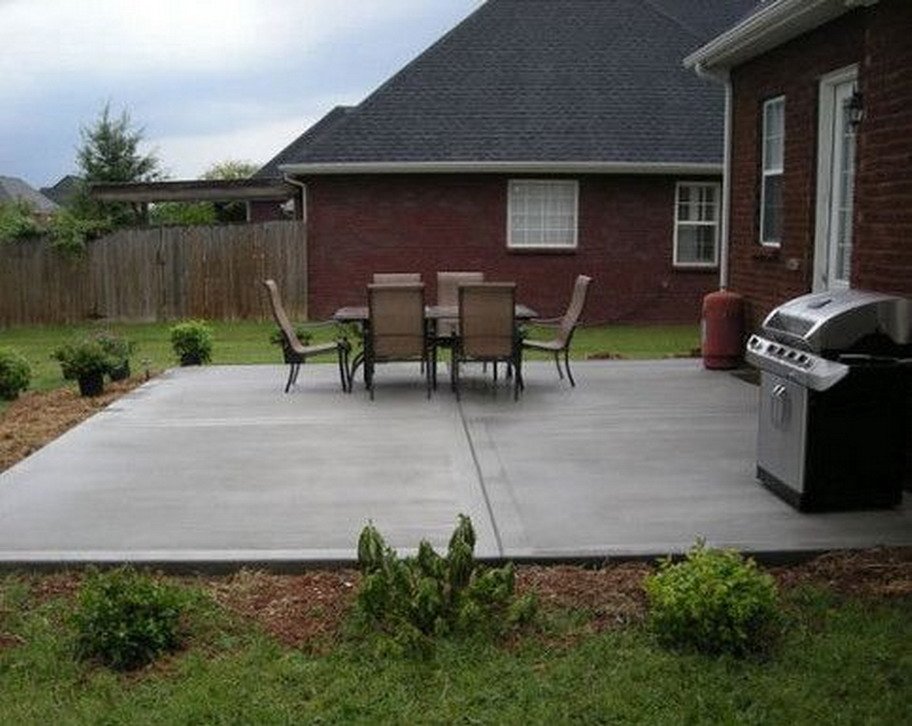
Concrete changes over time, and that’s precisely what makes finish matching on a patio extension so tricky. When your existing slab was first poured, it began a gradual process of fading, weathering, and wearing down under foot traffic, furniture loads, and Fredericton’s freeze-thaw cycles. By the time you’re ready to extend it, the surface may look significantly different from its original state.
Even when a contractor uses the same concrete mix, a perfect colour match is rarely achievable. Pigments and aggregates vary from batch to batch, and the water-cement ratio, pour-day temperature, and site-specific curing conditions all influence how the final surface looks as it hardens. Freshly poured concrete almost always appears lighter and more uniform than an aged slab, a contrast that only becomes more obvious over the following weeks as both sections cure and settle.
Textured or stamped finishes add another layer of difficulty. Reproducing the exact pattern depth, colouring, and aged surface character of an older stamped slab is genuinely difficult, even for experienced contractors. Coloured concrete and exposed aggregate finishes present the same challenge, these concrete surface finish techniques are nearly impossible to replicate with full invisibility on an extended concrete slab.
That’s the mindset Atlantic Hardscape and Concrete brings to every design consultation, setting realistic expectations before a single truckload of concrete arrives on site.
Getting the best possible result when extending a concrete patio comes down to preparation, timing, smart design decisions, and finishing. No single technique solves everything, but combining several of these strategies can significantly reduce the visual gap between old and new sections.
Prepare the existing slab thoroughly. Before pouring concrete to extend a patio, pressure wash the old surface to remove dirt, algae, and years of accumulated grime. A clean slab bonds better with adjacent new concrete and looks noticeably fresher on its own, both effects naturally reduce the contrast between sections.
Time your pour carefully. Scheduling the extension in similar weather and temperature conditions to the original install gives the new concrete a better chance of curing to a comparable tone.
Match the mix as closely as possible. Work with your hardscape contractor to source a mix design that’s as close as possible to the original, matching aggregate size and colour additives doesn’t guarantee a perfect result, but it meaningfully closes the gap.
Use an intentional design transition. Where a seamless match still isn’t realistic, a contrasting border strip or a subtle change in surface pattern between old and new sections reads as a thoughtful design choice rather than a patch job.
If the existing slab is significantly faded or worn, concrete patio resurfacing of the entire surface after the extension is complete is one of the most reliable paths to a unified finish. When both old and new sections are resurfaced together, finish variation disappears entirely. Applying a uniform concrete sealer across both sections after curing is another highly effective method for blending new and old concrete, it evens out sheen levels and creates a consistent surface tone across the full patio. Atlantic Hardscape and Concrete makes professional sealing a standard step in their extension projects, and the results consistently speak for themselves.
Sometimes, the smartest approach to expanding a concrete patio isn’t more concrete at all. If the existing slab is heavily faded, stamped, or coloured, blending new concrete convincingly can become an uphill battle. Extending a concrete patio with pavers sidesteps the colour-matching problem entirely by creating a visually distinct zone that reads as deliberately designed rather than a struggled attempt at matching.
A concrete patio with a paver extension works particularly well when the new area serves a different function, a dedicated dining zone, a fire pit area, or a relaxed lounge space. The material transition defines those zones naturally, and the contrast between concrete and pavers can look intentional and polished rather than random. Pavers also carry a practical advantage in Fredericton’s climate: if one shifts or cracks due to freeze-thaw movement, swapping out individual units is far simpler than patching a poured slab.
There is one trade-off worth considering. Extending a concrete patio slab with pavers introduces a joint between two different materials, which requires careful detailing at the connection point to prevent settling or separation over time. Getting that joint right takes real experience and should not be underestimated.
The cost to extend a concrete patio with poured concrete versus a paver extension varies based on size, materials, and site-specific conditions, a professional on-site assessment gives you the clearest picture of what makes sense for your project. Atlantic Hardscape and Concrete has deep experience in both poured concrete and paver installations, which means homeowners get genuinely unbiased guidance on which approach best fits their property, goals, and budget.
Achieving a cohesive result when extending a concrete patio takes more than hoping the colours line up. It takes realistic expectations, skilled technique, and thoughtful design decisions, whether that means careful mix matching and sealing, full resurfacing, or choosing pavers to sidestep the matching challenge altogether.
If you’re planning a concrete patio extension in Fredericton or the surrounding area, Atlantic Hardscape and Concrete is ready to help. Contact us today for a free on-site assessment and design consultation.
Rarely, if ever, with guaranteed invisibility. Existing concrete fades over time from UV exposure and weathering, and batch-to-batch variation in pigments and aggregates makes an exact colour match very difficult. An experienced contractor can get reasonably close and use sealing or design strategies to reduce the visual contrast, but setting realistic expectations from the start is always the professional approach.
Concrete patio resurfacing of the entire surface after the extension is complete is the most reliable method, it treats old and new sections as one unified surface. Applying a uniform sealer across both sections is another highly effective equalizer. When budget is a limiting factor, intentional design transitions like contrasting borders or subtle pattern changes can make the visual difference look planned rather than accidental.
It depends on the condition of your existing slab, your aesthetic goals, and your budget. Pavers eliminate the colour-matching challenge entirely and offer real design flexibility, making them a strong option when the existing concrete is heavily faded or stamped. Consulting a contractor experienced in both materials, such as Atlantic Hardscape and Concrete, helps you determine which option best fits your property and long-term goals.
Wait until the new concrete has fully cured, which typically takes around 28 days. Conditions matter as well, you want dry weather, temperatures above 10°C (50°F), and no expected frost or overnight dew. Atlantic Hardscape and Concrete’s professional sealing services account for all of these factors to help the sealer bond correctly and deliver lasting protection against Fredericton’s seasonal wear.
GET STARTED
Your dream space is within reach as we work together from detailed 3-D designs to the final custom build. Our process is both professional and exciting, and we look forward to taking this journey with you.
Contact
34 Jackstraw Court, Fredericton, NB, Canada, New Brunswick
