Are you looking at your sloped backyard and wondering if you’re missing out on valuable outdoor living space? Have you considered a concrete patio but aren’t sure what height retaining wall would work best? Choosing the right wall height isn’t just about aesthetics—it’s about balancing structural requirements, local building codes, and your specific design goals.
The best retaining wall height for a backyard concrete patio depends on your property’s slope, soil conditions, and intended use. For most residential projects in Fredredericton and surrounding areas, walls between 2 and 4 feet handle moderate slopes effectively without requiring extensive engineering. Walls under 2 feet work well for gentle grades, while slopes exceeding 4 feet typically need terraced systems or formal engineering approval.
This guide will walk you through the key factors that determine ideal wall height, explain why these measurements matter for your patio’s long-term stability, and provide practical recommendations based on common backyard scenarios in the Fredericton region.
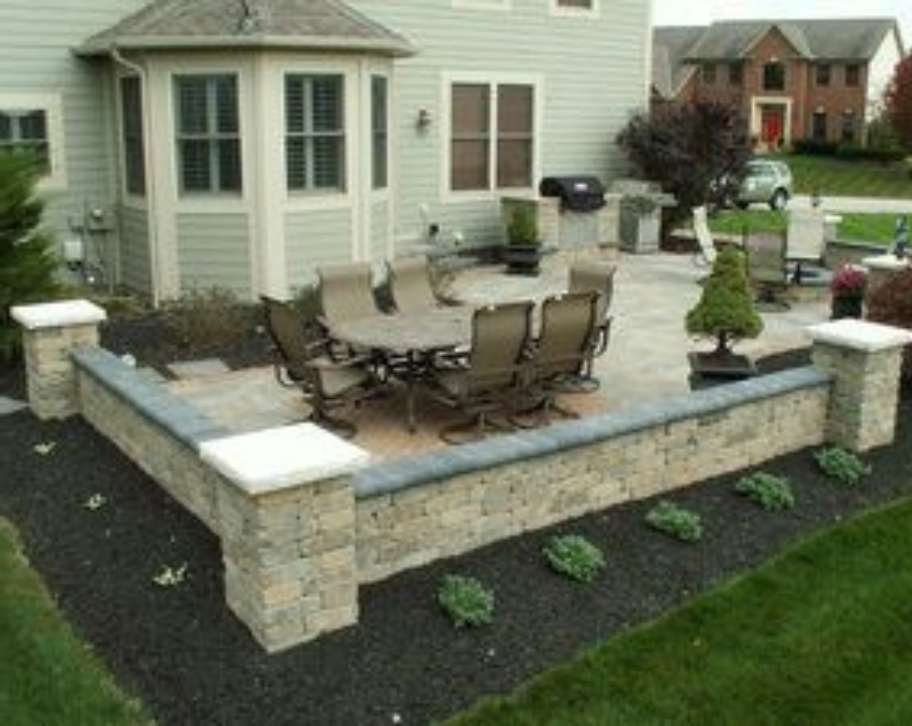
Retaining wall height directly affects your patio’s structural integrity and long-term performance. The wall’s primary job is to hold back soil and create a level foundation for your concrete surface. When the height is properly matched to your slope and soil conditions, the wall can manage the lateral pressure from the earth behind it without bowing, cracking, or failing.
The relationship between wall height and soil pressure is straightforward: taller walls face greater force from the soil they’re restraining. This pressure increases significantly when water saturates the ground during spring thaw or heavy rainfall, common occurrences in New Brunswick. A wall that’s too short for the grade change won’t adequately contain the soil, leading to erosion and patio damage. Conversely, an unnecessarily tall wall may require more complex engineering and higher costs than your project actually needs.
The 4-foot height threshold serves as a general industry benchmark where walls transition from simple gravity structures to engineered systems. Below this height, many walls can rely on their mass and proper construction to resist soil pressure. Once you approach or exceed 4 feet, most municipalities treat the structure as an engineered retaining wall requiring formal plans, permits, and often stamped engineering drawings.
New Brunswick’s freeze-thaw cycles add another layer of complexity to height decisions. When water in the soil freezes, it expands and pushes against the wall. Walls must be founded below the frost line (typically 4 to 5 feet deep in the Fredericton area) to prevent seasonal heaving that can disconnect the wall from the patio surface or cause structural movement.
Wall Height Range | Structural Requirements | Typical Materials | Permit Considerations |
|---|---|---|---|
Under 2 feet | Gravity wall, basic drainage | Concrete blocks, natural stone | Usually no permit required |
2-4 feet | Engineered gravity or cantilever, integrated drainage, frost-line foundation | Segmental blocks, poured concrete | May require permit depending on municipality |
Over 4 feet | Formal engineering, advanced drainage, geogrid reinforcement | Engineered concrete systems, terraced walls | Permits and engineering drawings typically mandatory |
Improper height selection leads to predictable failures. Walls that are undersized for the slope cannot contain soil movement during wet conditions. The result is often a bowing wall, cracks radiating through the patio surface, soil washing out from behind the wall, and eventually costly emergency repairs. Getting the height right from the start protects your investment and provides decades of trouble-free outdoor living.
Determining the right retaining wall height for your concrete patio requires evaluating several site-specific conditions. These factors work together to define what will be structurally sound, code-compliant, and appropriate for your property.
The vertical rise from your lower yard elevation to the desired patio level is your starting point. Measure the difference in height between where the patio will sit and the ground below. This measurement tells you the minimum wall height needed to create a level surface. For example, if your yard drops 3 feet from the house to the back fence, you’ll need at least a 3-foot wall to bring the patio up to grade.
The type of soil on your property significantly impacts wall design. Clay-heavy soils, common throughout the Fredericton area, retain water and create greater lateral pressure against retaining walls. These soils expand when wet and contract when dry, putting stress on the structure. Sandy or gravelly soils drain more freely and exert less pressure. Properties with clay soils may benefit from shorter wall segments or terraced designs rather than a single tall wall, as this distributes the load more effectively.
What you plan to place on your patio matters. A simple seating area with lightweight furniture places minimal load on the wall. However, if you’re planning an outdoor kitchen with a stone pizza oven, a hot tub, or heavy planters, the wall needs additional reinforcement to support these concentrated loads. The wall height may need to be adjusted or the foundation deepened to handle the extra weight safely.
Most New Brunswick municipalities require formal engineering drawings and building permits for retaining walls approaching or exceeding 4 feet in height. Some jurisdictions set the threshold at 3 feet, while others allow up to 4 feet before engineering is mandatory. Walls that support additional loads (like a driveway or pool deck) may require permits at lower heights. Check with your local building department early in the planning process to understand the specific requirements for your property.
Wall height can serve purposes beyond soil retention. An 18-inch wall can double as built-in seating around your patio perimeter, eliminating the need for extra furniture. A 3- to 4-foot wall provides privacy screening from neighbours or street traffic. Terraced walls at varying heights create opportunities for integrated garden beds, adding visual interest and softening the hardscape with greenery.
Before finalizing your wall height, ask yourself these questions:
What is the total grade change from the lowest to highest point where the patio will be built?
What type of soil is present on the property (clay, sand, loam, or mixed)?
Will the patio support heavy structures like outdoor kitchens, hot tubs, or large planters?
Are there existing drainage issues in the area that need to be addressed?
What is the local permit height limit in your municipality?
Do you want the wall to serve additional functions like seating or privacy screening?
Professional site evaluation provides proper assessment of all these factors before construction begins. An experienced contractor can identify potential issues, like poor drainage or unstable soil, that might not be obvious to property owners but could significantly impact the appropriate wall height and design approach.
Based on common backyard scenarios in the Fredericton region, here are specific height recommendations that balance structural requirements, regulatory compliance, and long-term durability.
Properties with minimal elevation change can typically use low gravity walls constructed from concrete blocks or natural stone. These walls rely on their own weight to resist soil pressure and require only basic drainage provisions, usually a layer of crushed stone behind the wall. Foundations should still extend below the frost line to prevent seasonal movement. Permits are typically not required for walls in this height range, making them a straightforward option for creating subtle patio definition or managing minor drainage issues.
This range covers most residential patio projects and requires more attention to engineering principles. Walls in this category should use either engineered gravity systems or cantilever designs with integrated drainage. The foundation must extend below the frost line, and proper drainage is non-negotiable. Expect to install perforated pipes, geotextile fabric, and crushed stone backfill. Depending on your municipality, you may need a building permit, especially as you approach the 4-foot mark. These walls, when properly constructed, are suitable for standard patio applications and can incorporate features like built-in seating or integrated lighting.
Properties with significant elevation changes require a different approach. Rather than building a single tall wall, terraced or tiered systems that break the total height into multiple shorter walls (each 3 to 4 feet) provide better load distribution and long-term stability. Each tier should be set back from the one below it, creating a stepped appearance. This design requires formal engineering, municipal permits, and advanced drainage at each level. The complexity increases project costs, but the result is a structurally sound system that can last 50 years or more with minimal maintenance.
Factors like soil type, water table depth, and proximity to property lines all influence the optimal design. Wall height decisions should also align with your overall landscape master plan. Consider how the wall will integrate with future features like outdoor lighting, irrigation systems, or additional hardscaping elements. Installing conduits or sleeves during initial construction is far more cost-effective than retrofitting these features later.
Determining the best retaining wall height for your property requires more than general guidelines. It demands on-site assessment of your specific slope, soil conditions, drainage patterns, and local building regulations. Experienced contractors can identify potential issues early in the planning process, recommend appropriate wall systems and materials, coordinate necessary permits and engineering when required, and build projects to withstand decades of New Brunswick weather.
Investing in proper design and quality construction upfront prevents costly repairs later. A well-built retaining wall and concrete patio combination not only solves immediate slope and drainage challenges but also creates valuable outdoor living space that improves your property’s functionality and resale value.
Atlantic Hardscape and Concrete offers detailed site visits and project quotes specific to each property’s conditions throughout Fredericton and surrounding communities. Our team brings over 15 years of local experience to every project, providing retaining walls and patios designed and built to last.
Yes, walls over 4 feet are possible but require engineered designs, formal permits, advanced drainage systems, and often geogrid reinforcement or terraced construction for safety and long-term stability.
Undersized walls cannot adequately retain soil, leading to wall failure, patio cracking, erosion, and potential property damage during heavy rain or spring thaw conditions common in New Brunswick.
Taller walls require deeper foundations, more materials, advanced drainage, possible engineering fees, and permits, which increase project costs compared to shorter gravity wall installations that need minimal engineering.
For steep slopes, terraced systems with multiple shorter walls (each 3 to 4 feet) are recommended. They distribute loads better, provide superior long-term stability, and often avoid the most stringent engineering requirements.
GET STARTED
Your dream space is within reach as we work together from detailed 3-D designs to the final custom build. Our process is both professional and exciting, and we look forward to taking this journey with you.
Contact
34 Jackstraw Court, Fredericton, NB, Canada, New Brunswick
