Applying de-icing chemicals requires a two-step method: pre-treat before a storm to stop ice from bonding, and shovel snow clear before spreading your primary de-icer. Spreading salt directly over thick snow wastes product and forms hidden ice sheets beneath the slush.
Winter property care in cold regions requires accurate timing, mechanical removal, and precise chemical placement. Atlantic Hardscape and Concrete recommends clearing snow mechanically down to the pavement before applying post-storm treatments. This detailed guide explains the science of anti-icing, effective post-clearing de-icing, and seasonal methods that protect your paved surfaces.
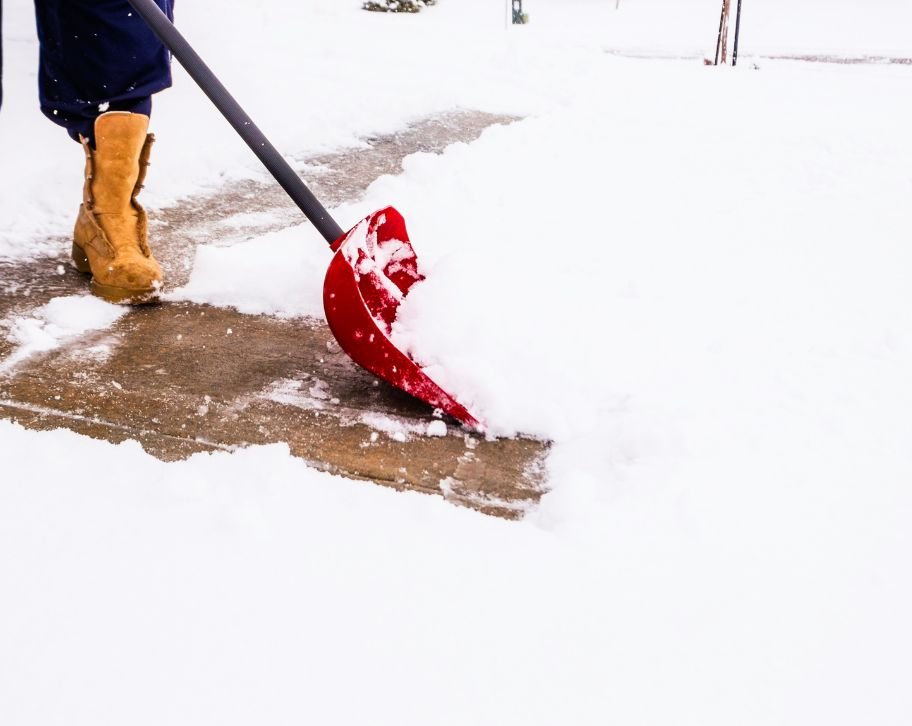
To decide if you should salt before or after shoveling, you need to understand the physical difference between anti-icing and de-icing. Pre-treating a dry surface before precipitation forms a chemical barrier that stops frozen moisture from sticking to pavement pores. Post-treating acts as a secondary cleaner that melts thin ice films and packed tire tracks after snow removal is complete.
Applying heavy salt directly over accumulated snowpack is ineffective and expensive. Solid granules dissolve within the upper layers of snow, diluting the brine before it reaches the ground. This reaction leaves the bottom layer bonded solidly to the concrete while creating a messy, wet slush on top.
Anti-icing creates a sacrificial chemical layer directly on top of driveway pavers and poured concrete. Spreading a light liquid brine or pre-wetted granular salt 1 to 2 hours before a storm stops snow from bonding to the substrate. The falling snow turns into a loose, unbonded slush cushion.
This chemical barrier prevents hardpack from forming when vehicles or pedestrians travel across the property. Snow shovels and plow blades scrape cleanly down to the bare pavement in a single pass. This proactive step uses up to 75% less chemical product than melting thick, established ice sheets later.
Physical snow removal must always happen before spreading your primary de-icing chemicals. Solid de-icers work through vertical boring, melting small downward channels by drawing moisture from the surrounding air. When granules reach the hard surface, they spread sideways to break the bond between the pavement and the ice.
Dumping salt onto 5 to 10 cm of snow wastes the product completely. The chemical action dilutes high up in the snowpack, raising its freezing point. This diluted runoff sinks to the bottom and refreezes into an invisible sheet of black ice beneath the snow.
Manual shovelling or snowblowing removes the vast bulk of frozen mass without chemical expense. By stripping the accumulation down to bare concrete, your de-icing granules target only the thin glaze left behind. This targeted application keeps chemical runoff away from lawn perimeters and concrete expansion joints.
Winter storms in Atlantic Canada bring fluctuating temperatures, dense snow, and freezing rain that require specialized maintenance routines. Pavement temperature dictates how chemical de-icers behave, so property owners must track surface conditions rather than air temperatures alone. Applying salt during the wrong weather phase leads to chemical runoff and wasted labour.
Warm rain that transitions into freezing snow presents a frequent winter challenge. Applying salt before a rain event washes the product into storm drains, leaving zero chemical protection when temperatures drop. Review the weather decision matrix below to select the right approach for each storm profile.
| Weather Scenario | Pavement Temperature | Recommended Sequence | Primary Material | Application Rate |
|---|---|---|---|---|
| Freezing Rain or Glaze | -4°C to 0°C | Pre-treat 1 to 2 hours before onset | Liquid brine or calcium chloride | 20-30 g/m² |
| Light Dry Flurries (<5 cm) | -12°C to -4°C | Mechanical clearing only; no salt | Poly-blade shovel or stiff broom | Zero chemical |
| Moderate Snow (5-15 cm) | -8°C to -2°C | Light pre-salt, shovel, then post-treat | Rock salt or magnesium chloride | 15-25 g/m² |
| Rain Turning to Snow | +2°C dropping to -6°C | Wait for snow, shovel clean, then salt | Calcium chloride or blended de-icer | 20-35 g/m² |
| Deep Freeze Snap | Below -15°C | Shovel down to bare base, apply grit | Coarse masonry sand or traction grit | 50-75 g/m² |
Selecting the correct chemical compound protects masonry investments from premature surface scaling and aggregate spalling. Concrete is a porous material that absorbs water and dissolved chemical salts into its internal capillary network. When trapped water freezes, it expands by roughly 9% in volume, generating internal hydraulic pressure that fractures unsealed concrete paste.
Different de-icing chemicals provide distinct melting ranges and structural risks for residential driveways and commercial lots. Use the structured breakdown below to choose a safe, effective product for your outdoor surfaces:
Maintaining clean, safe driveways throughout the winter requires proper clearing tools and balanced application methods. Using metal-edged shovels or low steel plow blades can chip decorative paver chamfers and scratch acrylic concrete sealers. Switching to high-density polyurethane blades protects masonry while allowing smooth clearing across joints.
Follow this systematic maintenance routine during every winter precipitation event:
Driveways and walkways suffer significant stress when winter chemicals disrupt natural freeze cycles. When salt lowers the freezing point of water, it artificially increases the frequency of freeze-thaw transitions within concrete pores. Instead of freezing once and staying solid, moisture inside the slab melts and refreezes dozens of times in a single week.
To protect your hardscape assets against spalling and aggregate pop-outs, apply a high-grade penetrating silane or siloxane sealer every two to three seasons. Penetrating sealers soak into the microscopic capillaries of concrete and stone, creating a hydrophobic zone that repels moisture. Liquid brine cannot penetrate sealed pores, which prevents internal ice expansion and preserves the structural integrity of your paved surfaces.
Managing winter conditions across Fredericton and surrounding New Brunswick areas requires reliable equipment, seasonal scheduling, and hardscape expertise. Atlantic Hardscape and Concrete provides complete winter property services, including commercial snow plowing, residential clearing, and site-specific de-icing protocols.
Their team pairs proper mechanical snow clearing with protective concrete sealing services completed before the ground freezes. Applying a penetrating silane-based sealer in early autumn blocks moisture ingress and protects driveways from harsh freeze-thaw cycles. Contact their local specialists to secure seasonal snow removal contracts and preserve your property through the winter months.
The standard rule for winter property care is simple: pre-treat lightly before freezing precipitation, clear snow mechanically, and de-ice only residual ice patches. This sequence minimizes chemical use, lowers seasonal maintenance expenses, and preserves outdoor concrete and paver installations.
Matching your de-icing compound to local pavement temperatures keeps surfaces clear without inducing freeze-thaw damage. Avoid over-applying rock salt, keep drainage paths clear of compacted snow, and use coarse traction sand during extreme sub-zero weather.
No, spreading salt on deep snow melts only the top layer into heavy slush. Granular de-icers cannot bore through thick snowpacks to reach the pavement. This creates an icy slurry while leaving the bottom snow layer bonded firmly to your driveway.
Yes, rock salt causes severe surface scaling on new concrete. Concrete poured within the past 12 months retains open capillary pores and ongoing curing reactions. Property owners should use clean masonry sand or non-chemical traction grit during the initial full winter after installation.
Standard sodium chloride loses its practical melting ability below -7°C to -9°C. Granules become inert in deep sub-zero cold, failing to create a liquid brine. Property owners should switch to calcium chloride, magnesium chloride, or abrasive traction sand during cold snaps.
Apply liquid brine or fine pre-wetted salt 1 to 2 hours before snowfall begins. This timing allows the liquid film to dry on the pavement without blowing away. If the storm begins as warm rain, skip pre-treatment to prevent the chemical from washing away.
Use a shovel fitted with a high-density polyurethane or rubber wear blade. When operating a snowblower, elevate the skid shoes 5 to 8 mm above the paver surface. Angling plow blades at 30 degrees prevents steel edges from dropping into joint lines.
GET STARTED
Your dream space is within reach as we work together from detailed 3-D designs to the final custom build. Our process is both professional and exciting, and we look forward to taking this journey with you.
Contact
34 Jackstraw Court, Fredericton, NB, Canada, New Brunswick
