Sealing an interlocking paver driveway before winter can be worthwhile, but it is not essential for every driveway. A compatible sealer can reduce moisture absorption, make oil and dirt easier to clean and, in some cases, help stabilize joint sand. However, it cannot fix loose pavers, poor drainage or frost heave. In Fredericton, the most important decision is whether the driveway is in good condition and the weather will allow the product to cure properly.
If temperatures are falling, the pavers are damp or repairs are needed, waiting until spring is usually better than rushing the job. Here is how to decide what your driveway actually needs before snow and ice arrive.
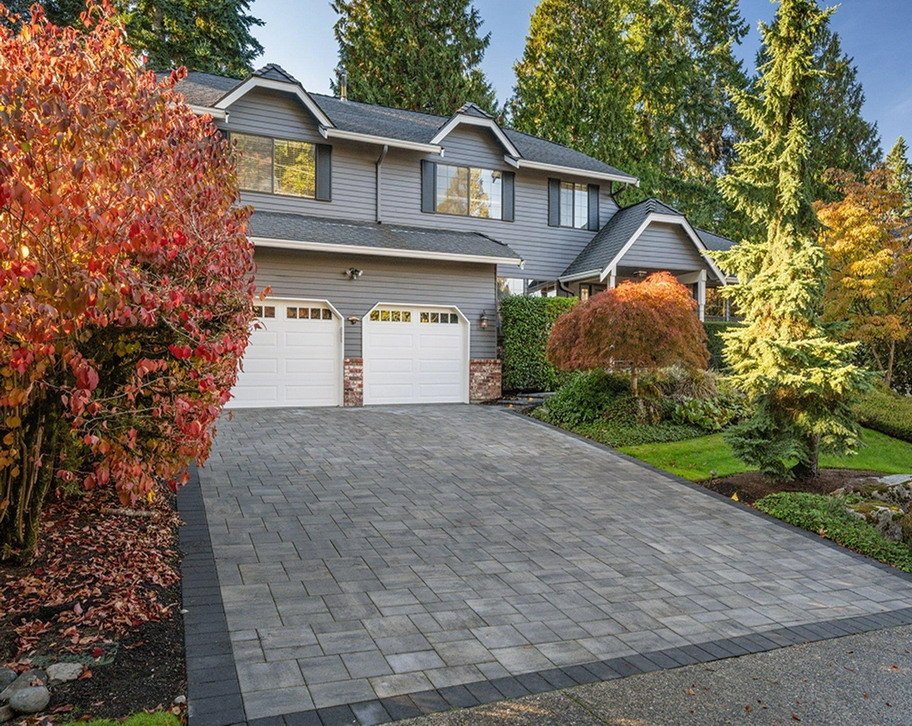
No, sealing is not mandatory simply because winter is approaching. Quality interlocking pavers are made for outdoor exposure, and a properly constructed driveway relies on its base, drainage, edge restraints and joint material for stability. A sealer is an optional surface treatment, not a substitute for those elements.
Sealing may be useful when an older driveway absorbs water readily, receives frequent vehicle-related stains, or needs a particular finish. Some products also help hold joint sand in place. But if your driveway is level, drains properly, has sound joints and still looks good, there is no reason to assume that a fresh coat is urgently required before every winter.
Fredericton’s freeze-thaw conditions make the distinction important. Snow melts, water enters exposed pores and joints, and temperatures can fall again. Reducing the amount of water absorbed into the paver surface can help limit some surface deterioration. It does not remove water from the soil beneath the driveway or stop frost movement caused by a poorly prepared base.
The practical rule is simple: assess the driveway first, then decide whether sealing will solve a real maintenance problem.
A driveway paver sealer is a treatment designed for the surface of concrete paving stones. Depending on the formula, it either penetrates the surface or forms a protective coating over it. Its main purpose is to make the surface easier to maintain and less vulnerable to certain kinds of staining and water exposure.
Reduced surface absorption. Water-repellent products can limit how much rain or salty meltwater soaks into the pavers themselves.
Easier cleaning. Oil drips, dirt and road grime may be easier to remove before they penetrate deeply.
Appearance options. Some sealers preserve a natural look; others deepen the colour or add sheen.
Possible joint-sand stabilization. Certain products are designed to help retain joint material, but not every surface sealer performs this function.
These are useful benefits, but none should be presented as guaranteed protection from winter damage. Road salt, vehicle traffic, snow-clearing equipment and weather continue to affect a sealed surface. The choice of sealer and the quality of preparation matter as much as the decision to seal.
Sealing will not re-level sunken pavers, rebuild an unstable aggregate base, correct a drainage slope, secure a failed edge restraint or make black ice harmless. It also cannot restore a badly damaged coating simply by covering it with another layer. If the surface is already moving or trapping water, those problems deserve attention before any finishing product is applied.
For more detail on underlying movement, see our guide to why pavers shift or sink during winter.
The right type of sealer depends on your pavers, the finish you want, traffic exposure and slip resistance. There is no single product that is best for every interlocking driveway in New Brunswick.
Feature | Penetrating sealer | Film-forming sealer |
|---|---|---|
How it works | Soaks into the paver surface | Forms a coating at or near the surface |
Typical appearance | Natural or low-sheen finish | May enhance colour and create a satin or wet look |
Main benefit | Reduces absorption with less visible surface change | Can provide stain resistance and stronger visual enhancement |
Main consideration | Check compatibility with the specific paving stone | Some coatings can become slicker when wet or wear unevenly |
Best decision factor | Prefer the existing texture and a subtle finish | Want a particular appearance and can confirm safe traction |
Many homeowners prefer the natural colour and texture of their interlocking stones. A compatible penetrating, water-repellent product may fit that goal because it does not rely on a thick visible coating. It can be a sensible option where moisture and staining are the main concerns.
However, even a penetrating product must be approved for the particular paver material. Factory-treated pavers, special finishes and existing sealers can change what is suitable. Always follow the paver and sealer manufacturers’ guidance rather than assuming every water-repellent product is interchangeable.
A film-forming product may appeal if you want richer colour or a more pronounced finish. It can also be useful where its stain-resistance properties match the driveway’s use. The trade-off is that coatings can highlight application marks, trap moisture if poorly applied, and affect traction. On a sloping driveway or near a pedestrian entrance, the wet and icy surface should matter more than achieving a glossy appearance.
A small test area is valuable with either type. Check the dried colour, surface feel and suitability before treating the entire driveway. If a film product requires a traction additive, use only a compatible option specified by its manufacturer.
Seal only when the driveway is clean and completely dry, and both the air and surface temperatures remain inside the product’s required range throughout application and curing. A sunny afternoon is not enough if damp joints or a cold night will interfere with the finish.
Some paver sealers call for conditions around 10 °C or warmer and a rain-free period of at least 24 hours, while other products have different requirements. The label is the deciding authority. Check the overnight forecast as well as the daytime high, because dew, frost and rain can interrupt curing.
In Fredericton, late summer and early fall often provide a more comfortable window than the final weeks before winter. Once the weather becomes consistently damp and cold, postponing until a suitable spring or summer period is usually more practical than risking a cloudy, patchy or poorly cured coating.
A useful pre-application check is to confirm all of the following:
The driveway and joint material have had enough time to dry after cleaning or rain.
The required air and paver temperatures will be maintained for the full curing period.
No rain, heavy dew or frost is expected during the period specified on the label.
The pavers are suitable for the selected product and have no unresolved coating or efflorescence issue.
You can keep vehicles and pedestrians off the surface for the required time.
If any condition is uncertain, do not force a late-season application. Routine cleaning, drainage checks and careful snow removal still offer worthwhile protection.
Not every visible problem means a new sealer is needed. The better approach is to identify the cause and choose the correct repair or maintenance step.
What you notice | What it may mean | Recommended next step |
|---|---|---|
Water darkens the surface quickly | The pavers may be absorbing water | Check the existing coating and product compatibility before considering a sealer |
Oil marks or stubborn dirt | Stains are reaching the surface pores | Use a paver-compatible cleaner and remove stains before sealing |
White, powdery deposits | Possible efflorescence | Identify and address the deposits; do not seal them under a coating |
Loose or low joint sand | Joint material is missing or eroding | Restore joints using material suitable for that paving system |
High, sunken or rocking stones | Settlement, frost movement or base issues | Repair the affected section before considering sealer |
Water pools in one area | Grading or drainage may be inadequate | Investigate the water path instead of trying to seal the puddle away |
Peeling, whitening or patchy gloss | An old coating may be failing | Check compatibility and whether removal is required before recoating |
White deposits deserve particular care on newly installed concrete pavers. Efflorescence is a natural mineral deposit that may appear as moisture travels through the paving material. It is not automatically a structural defect. Trapping it or residual moisture beneath a coating can create an unattractive finish.
Similarly, replacing joint sand is different from resealing the surface. If the old joints contain polymeric sand, do not simply sweep a thin layer of new product over failed material. The appropriate preparation depends on the sand system, existing condition and manufacturer’s directions.
Careful preparation is what separates a useful protective treatment from an avoidable maintenance problem. The exact application method changes with the product, but the planning sequence is consistent.
Identify whether the driveway uses conventional interlocking concrete pavers, natural stone, factory-treated pavers or a permeable paving system. Materials and joint designs differ. A product intended for one surface may not be suitable for another.
Walk the driveway while it is dry and easy to see. Look for raised corners, rocking stones, sunken sections, loose border restraints and areas where rainwater collects. Address problems that could catch a snowplow blade or direct meltwater toward the garage or house. A sealer cannot compensate for an unstable base.
Sweep away leaves, grit and loose soil. Remove oil or other stains with cleaners approved for the paver material. Use cleaning equipment cautiously: aggressive pressure washing can dislodge joint sand or damage a textured surface. Rinse and clean only as required by the product directions.
Check whether sand is missing and whether it needs full replacement rather than a quick top-up. Conventional interlock may use appropriate jointing sand or a designed stabilized system. Follow the specific joint-material directions, including drying or curing times, before moving on to sealing.
Moisture trapped under a sealer can cause whitening, poor adhesion or uneven appearance. Surface dryness is not enough when the joints remain wet after washing. Allow the full dry period required by the sealer manufacturer, taking local humidity, shade and recent rain into account.
Apply a small test patch exactly as directed. Let it cure and check the colour, sheen and grip. This step is especially important for an older driveway that may already have an unknown coating.
Follow the specified application rate, equipment, number of coats and safety precautions. Do not apply extra product on the assumption that a thicker coating offers better winter protection. Excess material can leave a blotchy finish or affect slip resistance. Protect neighbouring surfaces, garden beds and drains from overspray or runoff.
A surface may feel dry to the touch before it is ready for vehicle tyres. Check the manufacturer’s separate guidance for foot traffic, vehicle traffic and exposure to moisture. Allow the full period rather than trying to fit the work around an approaching storm.
A permeable interlocking driveway is designed to let water pass through open joints filled with clean stone into a specially built aggregate base. That makes its maintenance different from a conventional interlocking driveway.
Do not treat permeable joints with ordinary polymeric sand or a coating that closes the drainage openings. Blocking the joints can prevent the system from managing rain and snowmelt as designed. Some surface treatments may be compatible with particular permeable paving stones, but compatibility and continued infiltration must be confirmed first. For many permeable installations, proper sweeping, joint-stone maintenance and keeping sediment out of the system are more important than applying sealer.
If you are unsure which system you have, read our guide to permeable paving before choosing any product. The presence of paving stones alone does not tell you how the underlying drainage was built.
Sealing can reduce some exposure to moisture and staining, but it does not make interlocking pavers immune to road salt, scraping or ice. Each winter hazard needs its own maintenance response.
Vehicles bring salty slush onto driveways, and de-icers may be needed to manage slippery conditions. Use only products suitable for the paving material and follow their application rates. More de-icer is not automatically better. Remove loosened ice and excess residue when conditions allow, and consider the effect of runoff on nearby planting and drainage.
A metal edge that catches a raised paver can chip it whether or not it has been sealed. Check for uneven stones before the first snowfall. Plastic-edged shovels or properly adjusted plow equipment can reduce avoidable scraping. Make sure anyone clearing the property knows where paver borders, steps and other exposed edges begin.
A sealed driveway can still develop black ice. Some glossy coatings may also change the wet-surface grip. Shovelling promptly, controlling where meltwater drains and treating slippery areas as needed remain essential. A sealer is a maintenance finish, not a winter safety system.
Our sanding versus salting guide explains the different purposes of traction material and ice-melting products. For permeable driveways, avoid spreading ordinary sand into the open joints because it can clog the drainage system.
There is no universal resealing schedule that applies to every driveway. Product type, vehicle traffic, exposure to sunlight, winter maintenance and the condition of the previous coating all affect when another application makes sense.
Inspect the surface during dry weather. Areas that now absorb water readily, stain more easily or have unevenly worn coatings may deserve closer attention. Water beading can be a useful clue, but it is not a complete test of sealer performance. Compare the driveway’s condition with the product’s maintenance instructions, and do not add another coat over peeling or contaminated material without addressing the cause.
For a driveway that still looks and performs well, cleaning, joint checks and drainage maintenance may be all that is necessary this season.
Some homeowners can seal a small, sound section themselves when they know the paver type, have a compatible product and can follow the preparation and curing requirements. A full driveway is less forgiving. Uneven coverage, poor cleaning, trapped moisture and incompatible old finishes can be costly to correct.
Professional advice is particularly useful when the pavers are shifting, the driveway is steep, the previous sealer is unknown, or water pools near a building. In those situations, the most valuable decision may be to repair the hardscape or improve drainage rather than to apply a new coating.
A sound interlocking driveway starts below the surface. Well-prepared base layers, proper grading, stable edges and suitable joint material matter more than any finishing coat. Sealing may be a useful final maintenance step, but the right choice depends on the driveway’s condition and the weather.
If you are planning a new paver driveway or have concerns about settling, drainage or damaged paving stones, Atlantic Hardscape and Concrete can help you explore appropriate installation, repair and maintenance options for your Fredericton property. Learn more about our paver driveway services or contact our team to discuss the next step.
The bottom line: Seal an interlocking driveway before winter only when there is a clear benefit, the product is compatible and the surface has enough dry, suitable weather to cure. Otherwise, focus on repairs, drainage and safe snow removal now, and revisit sealing when conditions improve.
Not automatically. Some new pavers need time for surface moisture or efflorescence to work its way out, and factory-finished products can have specific requirements. Confirm the paver manufacturer’s advice and the selected sealer’s directions before choosing a date.
Possibly, but only if the driveway is fully dry and the forecast meets the specific product’s temperature and curing limits. In Fredericton, late-fall rain, dew and overnight cold can make that difficult. Waiting for a better weather window is often safer than rushing.
No. Frost heave develops when freezing conditions and water in frost-susceptible soil or base materials cause movement below the surface. Sealing may reduce absorption into paving stones, but proper base construction, drainage and edge restraint are what address underlying movement.
Certain joint-stabilising products can reduce joint-sand loss and make it harder for weeds to establish, but they do not guarantee weed-free joints. Seeds can germinate in dirt that accumulates on top of the surface. Keep the driveway clean and maintain the correct joint material.
Only when the new product is confirmed compatible and the old coating is sound. Cloudy, peeling or patchy finishes may need correction or removal first. Test in a hidden area and follow the manufacturer’s recoating instructions.
Follow the product label. Dry-to-touch time, safe walking time and the time before vehicles can return are not always the same. Cool or humid conditions can extend curing, so do not assume a fixed number of hours works for every sealer.
A glossy look is not automatically suitable. On slopes and areas used by pedestrians, check wet traction carefully and confirm that the selected finish meets the site’s safety needs. A lower-sheen or penetrating option may be more appropriate, depending on the material.
GET STARTED
Your dream space is within reach as we work together from detailed 3-D designs to the final custom build. Our process is both professional and exciting, and we look forward to taking this journey with you.
Contact
34 Jackstraw Court, Fredericton, NB, Canada, New Brunswick
