Have you walked onto your patio and noticed unsightly cracks spreading across the surface? Are you wondering whether those fractures signal a minor cosmetic issue or a major structural problem?
Cracked concrete is a common challenge in New Brunswick’s freeze-thaw climate. Each winter, water seeps into tiny pores, freezes, expands, and weakens the slab from within. Over time, those small fissures can grow into trip hazards and drainage problems.
This article will clarify when DIY repairs are sufficient versus when professional intervention is necessary. You’ll learn what causes cracks, how to repair different types, and when replacement makes more sense than patching. By the end, you’ll have a clear action plan for your cracked concrete patio.
Let’s start by understanding why your patio developed cracks in the first place.
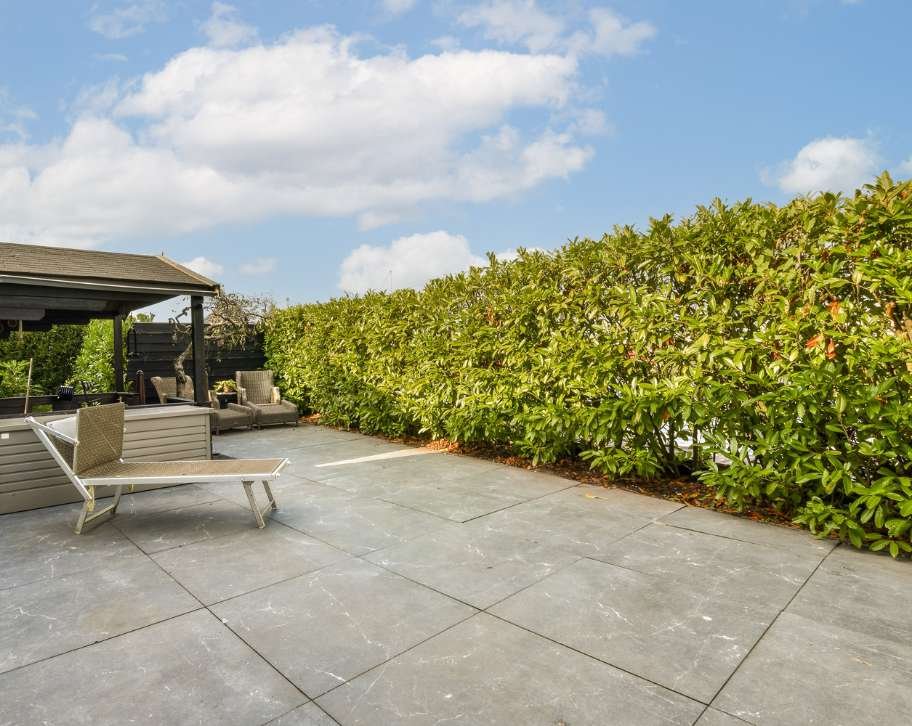
Concrete patios crack when internal or external forces exceed the material’s tensile strength. In Fredericton, the freeze-thaw cycle is the primary culprit. Water penetrates the porous surface, expands by roughly 9% when it freezes, and exerts tremendous pressure on the slab. When the ice melts, the pressure releases, but the internal structure has already weakened. Repeated cycles throughout winter eventually create hairline fractures that widen over time.
Improper subgrade preparation is another major cause. If the soil beneath your patio was not properly compacted during installation, or if the soil is clay-rich (which expands and contracts with moisture levels), the concrete slab loses its uniform support. This leads to settlement cracks where one section sinks lower than the rest. Clay soils are particularly problematic in the Atlantic region because they swell when wet and shrink when dry, creating constant movement beneath the slab.
Shrinkage cracks often appear in newer installations. As moisture evaporates from fresh concrete, the volume of the slab decreases. If the concrete dries too rapidly due to wind or direct sun exposure, or if the water-to-cement ratio was too high during mixing, the slab will crack to relieve internal tension. These cracks typically form within the first few months after installation.
Additional contributing factors include:
Root intrusion from nearby trees (maples and oaks are notorious for this)
Heavy loads from vehicles or equipment
Missing or improperly spaced control joints
Poor drainage directing water toward the foundation
Control joints are intentional weak points cut into the concrete to guide where cracks form, keeping them hidden and manageable. Without these joints, concrete will crack randomly across the surface.
Crack Type | Visual Characteristics | Typical Causes | Severity Level |
|---|---|---|---|
Hairline | Thin, shallow cracks resembling a strand of hair | Plastic shrinkage during curing, rapid drying | Low (cosmetic) |
Settlement | Deep cracks with vertical offset (one side higher) | Poorly compacted soil, clay expansion/contraction | Moderate to High |
Structural | Wide cracks (over 1/4 inch) extending through slab | Missing expansion joints, heavy loads, soil movement | High (safety hazard) |
Crazing | Map-like pattern of fine surface cracks | Improper finishing, surface drying faster than bottom | Low (cosmetic) |
Identifying the cause is essential before choosing a repair method. A hairline crack caused by shrinkage requires a different approach than a settlement crack caused by soil failure.
The repair method depends entirely on the crack’s severity and underlying cause. Surface-level fixes won’t solve deep structural problems, and overbuilding a repair for a minor cosmetic crack wastes time and money.
These are the easiest to address. Clean the crack thoroughly with a pressure washer or stiff wire brush to remove dirt, moss, and loose debris. Once the surface is completely dry, apply a concrete crack filler or polyurethane sealant. The sealant prevents water from penetrating the crack and causing freeze-thaw damage. In Fredericton’s climate, choose a flexible sealant that can expand and contract with temperature changes without breaking the bond.
These require more preparation. Use a grinder or masonry saw to widen the crack into a V-shape or U-shape groove. This provides more surface area for the repair material to bond with and ensures the filler penetrates deep into the fracture rather than sitting on top. Clean out all debris, then fill with a polymer-modified repair compound. These compounds contain synthetic polymers that improve adhesion and flexibility compared to standard concrete.
These demand professional assessment. Large cracks often signal serious problems beneath the slab, such as soil settlement, inadequate reinforcement, or water intrusion. Epoxy injection is a common professional solution that bonds the two sides of the crack back together, often making the joint stronger than the original concrete. In severe cases, complete slab replacement may be the only safe and cost-effective option.
This is an excellent solution for patios with widespread hairline cracking or surface deterioration. The process involves applying a thin polymer-modified cement overlay (approximately 1/4 inch thick) over structurally sound concrete. The overlay creates a brand-new surface, hiding cosmetic imperfections while adding a protective barrier against moisture and freeze-thaw damage. Atlantic Hardscape and Concrete uses polymer-modified mixtures with special bonding agents that provide superior adhesion and flexibility in New Brunswick’s challenging climate.
These address settlement issues where one section has sunk. Mudjacking involves drilling small holes into the slab and pumping a cement-based slurry underneath to hydraulically lift the concrete back to its original level. Polyurethane foam injection is a newer alternative that uses expanding foam instead of slurry. Both methods are significantly cheaper and faster than tearing out and replacing the entire patio.
Concrete crack filler: Best for hairline cracks; easy to apply with a caulking gun
Polyurethane sealant: Flexible option for cracks subject to movement; remains pliable in cold temperatures
Polymer-modified cement: Used for moderate cracks and resurfacing; offers superior adhesion and durability
Bonding agents: Applied before repair materials to improve adhesion between old and new concrete
Epoxy injection systems: Professional-grade solution for structural cracks; requires specialized equipment
The difference between cosmetic fixes and structural repairs is critical. Filling a wide crack with standard caulk might hide the problem temporarily, but it won’t address the underlying soil movement or inadequate support. Large cracks often signal deeper problems requiring professional equipment and expertise.
Never pour new concrete over old cracked surfaces without proper preparation. Existing cracks will reflect through the new layer, and underlying issues remain unaddressed. This approach wastes money and creates a false sense of security.
Deciding between repair and replacement depends on the extent of damage, the patio’s structural integrity, and your long-term plans for the property.
You have isolated cracks in an otherwise sound slab
Cosmetic damage doesn’t compromise structural integrity
Minor settlement can be corrected through levelling
Surface deterioration is addressable through resurfacing
The concrete is less than 10 years old and damage is limited to specific areas
You see widespread deep cracks throughout the slab
Significant vertical displacement creates trip hazards
Extensive spalling (surface peeling) or crumbling occurs
Repeated repair failures happen
Water pooling directs moisture toward your foundation
More than 30% of the patio surface is damaged
Cost of project play a major role. While replacement has higher upfront costs (typically two to three times more than repair), it may be more economical than repeated repairs on a fundamentally compromised slab. A professional assessment determines whether the concrete beneath surface damage is structurally sound. Atlantic Hardscape and Concrete’s experts can evaluate the slab’s integrity using specialized tools and over 15 years of experience in the Fredericton area.
Beyond traditional concrete, paver overlays can transform a damaged concrete patio without full removal. Individual pavers can be replaced more easily than patching a poured slab, offering easier future maintenance in freeze-thaw climates. This approach also sidesteps colour-matching problems that occur when trying to blend new concrete with old.
Proper evaluation considers the patio’s age, extent of damage, and your long-term plans. If you’re planning to sell within a few years, a professional repair or resurfacing can boost curb appeal without the expense of full replacement. If you’re staying long-term, investing in a complete replacement with proper subgrade preparation and drainage may provide better value over decades.
Atlantic Hardscape and Concrete brings over 15 years of experience repairing and replacing concrete patios in the Fredericton area. We offer comprehensive services including crack repair, resurfacing with polymer-modified materials, complete replacement, and paver alternatives.
Our focus is on lasting solutions adapted to New Brunswick’s challenging climate. We use advanced materials and proven techniques to address both cosmetic issues and structural problems. Whether you need a simple crack repair or a complete patio transformation, our team provides honest recommendations based on your specific situation and budget.
Contact us for a professional assessment of your cracked concrete patio. We’ll evaluate the damage, explain your options, and help you choose the most cost-effective solution for your property.
Hairline cracks can be DIY projects with proper materials like concrete crack filler or polyurethane sealant. However, moderate to severe cracks require professional assessment to address underlying structural issues such as soil settlement or inadequate support, providing lasting repairs rather than temporary fixes.
Longevity depends on repair quality, materials used, and ongoing maintenance. Professional repairs using polymer-modified materials typically last 10 to 15 years or more in freeze-thaw climates, while standard DIY fixes may fail within 2 to 5 years if underlying problems aren’t addressed.
Properly executed repairs that address underlying causes can prevent recurrence. Surface-only fixes on structurally compromised slabs will likely fail. Prevention includes proper drainage, regular sealing every 2 to 3 years, and addressing soil issues before they cause new settlement.
Late spring through early fall is ideal when temperatures consistently stay above 10°C. Most repair materials require specific temperature ranges (typically 10°C to 30°C) for optimal bonding and proper curing. Cold temperatures prevent proper adhesion and can cause repair materials to fail prematurely.
GET STARTED
Your dream space is within reach as we work together from detailed 3-D designs to the final custom build. Our process is both professional and exciting, and we look forward to taking this journey with you.
Contact
34 Jackstraw Court, Fredericton, NB, Canada, New Brunswick
