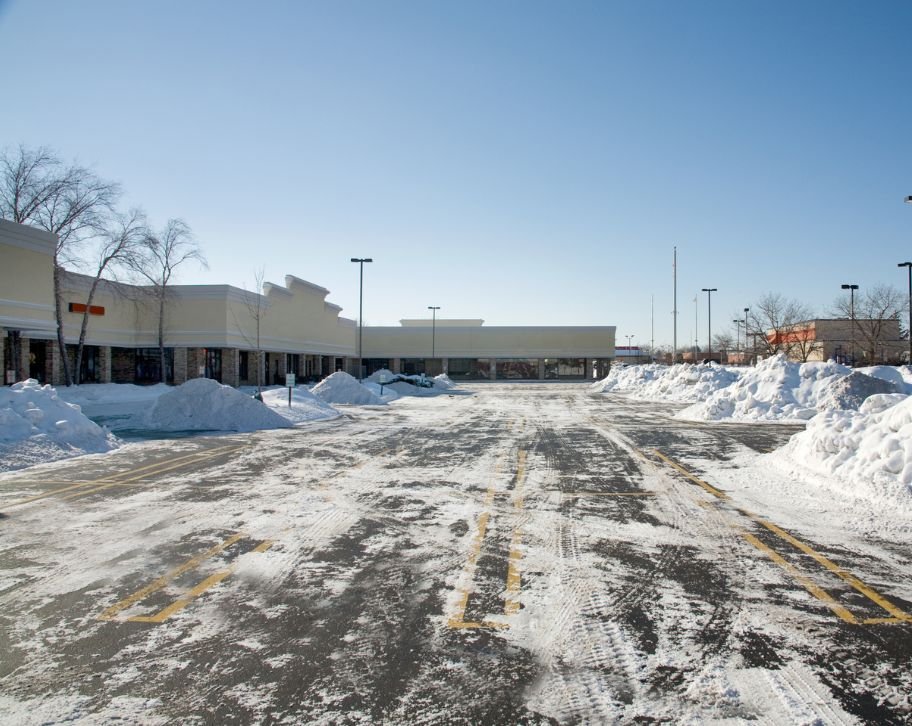
Determining the ideal trigger depth for commercial parking lot plowing involves understanding how vehicle weight packs down fresh snow. Commercial parking lots need plowing much earlier than residential driveways because heavy vehicle traffic accelerates the conversion of loose flakes into solid sheets of ice.
Property managers must define the 2 to 3 inch accumulation threshold that stops snow from packing down into solid ice sheets. Waiting for deeper accumulation increases the risk of snow compaction under vehicle tires during freeze-thaw cycles. Once snow hardens into ice, removal becomes difficult and hazardous.
Understanding commercial accumulation triggers helps property teams adapt to different storm intensities and moisture levels. Light snowfall under 2 inches often requires only targeted de-icing unless vehicle traffic compresses the flakes into slick patches. Heavy storms dumping over 2 inches per hour demand rolling clearance passes while the snow is still falling.
Comparing commercial and residential clearing schedules highlights the operational differences between business lots and home driveways. Commercial properties host hundreds of vehicles daily and need clear lanes to maintain business operations. Professional commercial contracts guarantee rapid response times and heavy machinery compared to residential snowblowers.
Prioritizing high-risk areas during a heavy winter storm protects visitors and ensures compliance with local safety codes. Emergency paths and pedestrian walkways require immediate, ongoing attention during active snowfall to prevent slip and fall accidents. Neglecting priority zones creates severe legal risks and municipal code violations that can halt business operations.
Accessible parking spaces and fire lanes demand strict regulatory compliance throughout every winter event. Designated accessible stalls and adjacent access aisles must stay completely clear of snow and ice at all times to maintain barrier-free access. Fire routes and loading bays need priority clearing within a few hours of accumulation starting to allow emergency vehicle access.
Managing ice and slip and fall liability relies on chemical treatments and meticulous record-keeping by property operators. Apply salt or specialized de-icing blends near entrances and main pathways to stop black ice formation. Keep detailed records of every service visit, weather condition, and chemical application to support due diligence during insurance reviews.
Best practices for winter commercial property maintenance involve managing snow storage, hauling schedules, and professional contractor partnerships. On-site snow storage piles become too large during severe winters and require mechanical hauling off-site to preserve parking stalls. Partnering with professional contractors before winter locks in guaranteed response windows and reliable equipment access.
Snow storage and off-site hauling thresholds help manage shrinking parking inventory and sightline obstructions during severe winters. Monitor snowbank height restrictions to ensure piles do not block driver sightlines at intersections or pedestrian walkways. Schedule physical snow hauling and trucking after cumulative snowfalls reach 30 to 50 centimetres.
Commercial parking lot snow removal guidelines provide a clear reference framework for property managers handling unpredictable winter weather. A structured schedule helps teams deploy the right equipment based on measured snow depth. The following table outlines accumulation depths, recommended actions, timeframes, and priority areas.
Accumulation depth | Recommended action | Timeframe | Priority areas |
|---|---|---|---|
Under 2 inches | Targeted salting or sanding | Within 24 hours | Entrances and walks |
2 to 4 inches | Full plowing and salting | Within 12 hours | Main lanes and stalls |
4 to 8 inches | Multiple passes and salting | Ongoing during event | Entire parking area |
Over 8 inches | Continuous plowing and hauling | 24 hour restoration | Fire lanes and exits |
Managing commercial winter properties successfully requires reliable local expertise, durable equipment, and proactive planning. Atlantic Hardscape and Concrete provides comprehensive winter maintenance solutions across Fredericton to keep commercial lots safe and fully operational. Pre-season site assessments help design custom snow removal plans with optimal stacking locations, reducing spring drainage issues. Property managers rely on clear communication, time-stamped service records, and rapid response times to protect visitors and reduce liability exposure.
Monitor snow accumulation and trigger full plowing when snow reaches 2 to 3 inches.
Prioritize high-traffic zones like fire routes and accessible spaces continuously during storms.
Maintain detailed service logs to protect your business against liability claims.
Establish pre-season commercial maintenance contracts to avoid high-demand service delays.
Continuous blizzards require rolling clearing passes every few hours or whenever accumulation reaches 2 inches. Waiting until the storm ends makes the snow pack down into hard ice that is difficult to remove.
Municipal bylaws require commercial properties to maintain parking areas in a reasonably safe condition at all times. Failing to clear snow or ice can lead to municipal violation notices, fines, and forced clearing services.
Commercial lots experience heavy public traffic and strict legal liability that require fast clearing schedules. Residential driveways can tolerate deeper accumulation before needing attention.
Schedule snow hauling when cumulative seasonal snowfall reaches 30 to 50 centimetres. Hauling is necessary when storage piles block parking stalls, narrow drive aisles, or obstruct sightlines.
Detailed records of service times and weather conditions prove due diligence during slip and fall claims. Itemized logs and invoices help defend against municipal fine enforcement and legal liability.
GET STARTED
Your dream space is within reach as we work together from detailed 3-D designs to the final custom build. Our process is both professional and exciting, and we look forward to taking this journey with you.
Contact
34 Jackstraw Court, Fredericton, NB, Canada, New Brunswick
