Picture yourself flipping burgers on a crisp autumn evening, surrounded by friends and family as laughter fills the air. The sun dips below the horizon, and suddenly your outdoor kitchen transforms from a well-lit culinary workspace into a dimly shadowed area where finding the salt shaker becomes an adventure. You’ve invested thousands in your outdoor kitchen, yet without proper lighting, half the year it sits unused after 6 p.m.
Outdoor kitchen lighting isn’t just about flipping a switch when darkness falls. For homeowners in Fredericton and surrounding areas, it’s about extending your outdoor living season, ensuring safe food preparation, and creating an atmosphere that makes guests never want to leave. Atlantic Canada’s challenging climate, with its dramatic weather shifts, coastal moisture, and temperature extremes demands lighting solutions that perform reliably whether you’re hosting a Canada Day barbecue or a Thanksgiving dinner under the stars.
The right lighting transforms your outdoor kitchen from a daytime-only cooking area into a year-round entertainment centrepiece that increases your property value and expands your living space. You’ll discover how to select fixtures that withstand Fredericton’s harsh winters, meet Canadian electrical codes, and create the perfect ambiance for any occasion. We’ll cover everything from understanding weather ratings and electrical safety requirements to choosing colour temperatures that make your grilled salmon look as appetizing at 9 p.m. as it does at noon. You’ll learn which fixture types work best for food preparation versus dining, how to create functional lighting zones, and why professional installation protects both your investment and your family’s safety.
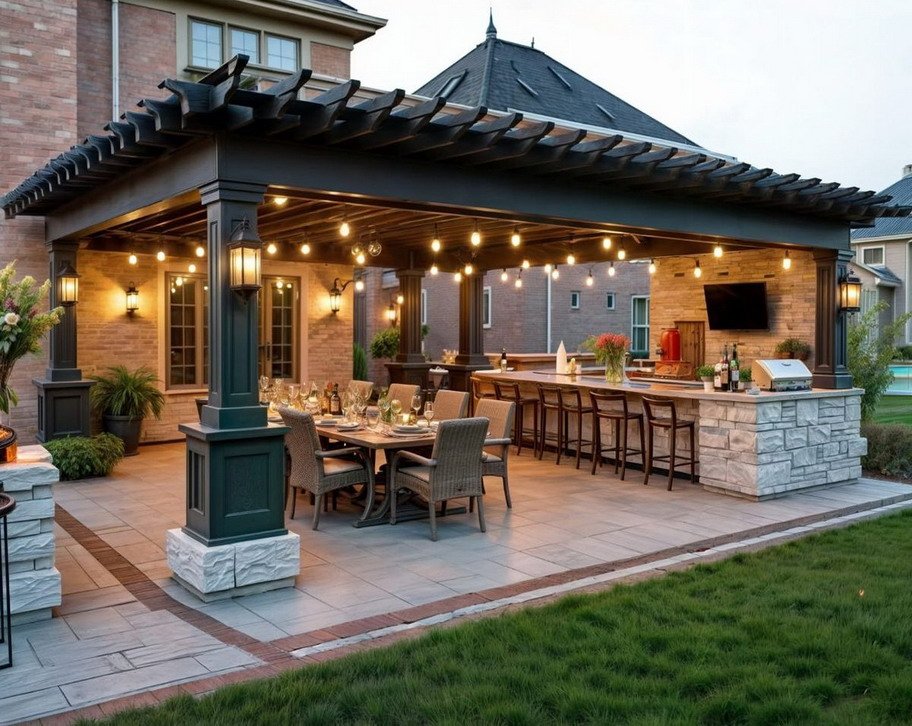
Before selecting a single fixture or bulb, step back and honestly assess how you’ll use your outdoor kitchen. Will you primarily host weekend dinner parties, prepare quick weeknight meals, or enjoy quiet family breakfasts on summer mornings? Each scenario demands different lighting approaches, and understanding your patterns prevents expensive mistakes and ensures your lighting investment delivers maximum value.
Outdoor kitchen lighting serves six distinct purposes that often overlap:
Safety illumination prevents accidents during food preparation—proper lighting means you see exactly where your knife lands when chopping vegetables or notice that small bone while filleting fish
Task lighting provides the bright, focused illumination essential for cooking activities, from reading recipe cards to monitoring grill temperatures
Ambient lighting creates the overall atmosphere in your dining and entertaining areas, setting the mood whether you’re hosting a romantic anniversary dinner or a lively neighbourhood gathering
Security considerations matter more than most homeowners initially realize—well-lit outdoor spaces deter unwanted visitors whilst making your property welcoming to invited guests
Investment protection for your significant outlay in appliances, built-in features, and hardscape work
Navigation lighting ensures family members and guests move safely between your outdoor kitchen, home interior, and other yard areas without stumbling over steps or tripping on uneven surfaces
Fredericton’s dramatic seasonal daylight shifts significantly impact outdoor kitchen use. Summer light extends past 9 p.m., while winter darkness arrives before 5 p.m. Your lighting must handle these extremes for year-round functionality. Proper lighting extends your cooking season during crisp October evenings or early spring nights when you can start grilling weeks ahead of neighbors.
Balance multiple lighting purposes within a cohesive design to avoid mismatched fixtures creating visual chaos. Your outdoor kitchen lighting should integrate task, ambient, security, and decorative elements that complement rather than compete with each other.
Zone-based lighting design separates functional outdoor kitchens from exceptional ones. Strategic zoning illuminates specific areas according to their purpose whilst maintaining visual harmony throughout your property.
The cooking and preparation zone demands bright, functional lighting with neutral white light (4000K-5000K) and high colour rendering for accurate food assessment. Position under-cabinet lights, overhead downlights, and directional spots to eliminate shadows on work surfaces. This high-activity zone requires adequate lighting for safety around sharp knives and hot surfaces.
Your dining zone needs softer, adjustable lighting for different occasions. Dimmable warm white fixtures (2700K-3000K) create inviting atmospheres. Pendant lights hanging 75-90 centimetres above tables provide excellent illumination without obstructing sight lines, whilst wall sconces add ambient light. Dimming capability allows smooth transitions from bright task lighting to intimate dining ambiance.
Serving and bar zones benefit from accent lighting that highlights features whilst providing sufficient illumination for preparation. LED strips beneath bar counters create appealing effects whilst offering functional lighting, and focused spotlights showcase premium stone backsplashes or custom-built pizza ovens.
Circulation zones—pathways connecting outdoor kitchen areas or leading to your home—require consistent, low-level lighting for safe navigation without harsh brightness that disrupts ambiance. Motion-activated lights enhance convenience and security.
Independent zone control transforms your outdoor kitchen into a flexible space. Illuminate only the cooking area for quick meals, activate dining and ambient lighting for entertaining, or engage the full system for large gatherings. Atlantic Hardscape and Concrete integrates lighting zone planning during the hardscape design phase, ensuring electrical provisions and fixture mounting points align perfectly with functional areas before concrete is poured or stone is set.
Canadian electrical codes prevent shocks, fires, and fatalities. Outdoor kitchens face unique electrical challenges where moisture, temperature extremes, and food preparation create dangerous conditions. Compliance is mandatory for safety and legal protection.
Every outdoor receptacle requires Class A Ground Fault Circuit Interrupter (GFCI) protection. These devices detect electrical imbalances and cut power within 1/40th of a second, preventing fatal shocks. The National Electrical Code mandates GFCI protection for outdoor receptacles within 2.5 metres of grade level, where moisture creates dangerous conditions.
Weather-exposed outlets need “in-use” weatherproof covers marked “Extra Duty.” Unlike standard covers protecting only unused outlets, in-use covers maintain weather protection with cords plugged in, preventing moisture infiltration during Fredericton’s rain and snow.
Underground wiring must meet specific burial depth requirements. Licensed Electrical Contractors determine appropriate depths based on location, soil conditions, and high-traffic areas. These professionals account for Atlantic Canada’s freeze-thaw cycles that create ground movement potentially damaging wiring.
Near swimming pools, spas, or hot tubs, strict distance requirements apply:
Never install electrical equipment within 1.5 metres of water features
Maintain 3-metre spacing unless equipment features GFCI protection
These regulations address the extreme danger of water and electricity
DIY electrical work in outdoor environments violates code requirements and voids warranties. Licensed Electrical Contractors carry liability insurance, possess current code knowledge, and understand proper weatherproofing methods. They obtain permits, schedule inspections, and provide documentation for insurance and property transactions.
Before excavation, contact Ontario One Call or your provincial equivalent to locate underground utilities. This prevents damage to electrical wires, gas lines, water mains, and telecommunications—avoiding safety hazards, expensive repairs, and legal liability. Atlantic Hardscape and Concrete coordinates with Licensed Electrical Contractors throughout Fredericton, ensuring your outdoor kitchen lighting integrates seamlessly whilst meeting all safety standards.
Understanding fixture weather ratings prevents premature failures, safety hazards, and the frustration of replacing incorrectly specified lighting within months of installation. Atlantic Canada’s weather demands fixtures built to withstand conditions that would destroy inadequately rated products.
Wet-rated fixtures feature completely sealed construction designed to withstand direct exposure to rain, snow, sleet, and ice without allowing moisture penetration. Gaskets, specialized seals, and weather-resistant materials protect internal electrical components from the elements. These fixtures undergo rigorous testing to verify their ability to operate safely when water directly contacts their exterior surfaces.
Outdoor wall lights, post-mounted fixtures, and any lighting installed without overhead protection requires wet ratings. In the Fredericton area, where nor’easters can drive precipitation horizontally and winter storms deposit heavy, wet snow, wet-rated fixtures represent the only reliable choice for exposed locations. Stainless steel and powder-coated aluminum construction resists corrosion from moisture and road salt spray common in Atlantic Canada.
Even partially covered areas benefit from wet-rated fixtures. Wind frequently drives rain and snow under standard roof overhangs, and ice damming can redirect water in unexpected directions during freeze-thaw cycles. The modest price premium for wet-rated versus damp-rated fixtures provides insurance against weather-related failures that could compromise safety and force expensive replacements. Atlantic Hardscape and Concrete recommends wet-rated fixtures for virtually all outdoor kitchen applications in our climate, recognising that Fredericton’s weather often exceeds what “protected” locations actually protect against.
Damp-rated fixtures suit genuinely protected locations where direct water contact won’t occur. Covered patios with solid roofs, enclosed pergolas with weather-tight canopies, and ceiling-mounted fixtures under substantial overhangs can use damp-rated products when installation positions them away from weather exposure.
These fixtures resist humidity and occasional condensation but lack the complete sealing necessary to withstand direct precipitation. They cost less than wet-rated alternatives and offer broader style selections since manufacturers produce more damp-rated decorative options. However, Atlantic Canada’s unpredictable weather makes damp-rated fixtures risky even in seemingly protected locations.
Consider that winter ice buildup, spring meltwater runoff, and autumn wind-driven rain can all introduce moisture to areas you assumed were protected. A sudden roof leak or blocked gutter could expose damp-rated fixtures to water they weren’t designed to handle. For the relatively small cost difference, wet-rated fixtures provide peace of mind and longer service life in our challenging climate.
Selecting appropriate fixture types for your outdoor kitchen creates a lighting system that balances functionality and aesthetics. Different fixtures excel at different tasks, helping you make informed decisions.
Downlights mounted in ceilings provide focused illumination for food preparation and cooking areas. They direct light downward, concentrating brightness where needed. Adjustable downlights let you fine-tune beam direction for specific work surfaces.
Under-cabinet lights rank among the most important fixtures. Installed beneath cabinets or shelving, they illuminate countertops whilst remaining hidden, reducing glare whilst providing excellent task lighting. LED strip lights or puck lights excel here, offering low-profile installation and minimal heat.
Wall sconces serve multiple purposes from ambient lighting to decorative accents. Mounted on vertical surfaces, they provide general illumination whilst adding architectural interest. Choose styles that complement your property’s aesthetic—traditional lanterns for heritage homes, contemporary designs for modern properties.
Pendant lights create focal points over islands and dining tables. These hanging fixtures add vertical interest whilst providing task or ambient lighting. Ensure pendants carry appropriate wet or damp ratings for outdoor use.
Recessed ceiling lights integrate seamlessly into covered ceilings, providing clean lighting that doesn’t compete visually with appliances. Proper installation requires specialized outdoor-rated housing with careful moisture protection.
String lights add decorative charm and soft ambient illumination for entertaining. Quality outdoor-rated string lights withstand weather, though many Fredericton homeowners remove them during winter. These work beautifully for festive atmospheres but shouldn’t serve as primary lighting.
Path lights illuminate walkways approaching your outdoor kitchen, ensuring safe navigation. Low-voltage path lights offer energy efficiency and easy installation.
Accent lights including uplights and spotlights highlight architectural features and landscaping. These fixtures add depth and visual interest whilst showcasing your outdoor space. Well-placed accent lighting makes your outdoor kitchen a stunning focal point visible from indoors. Atlantic Hardscape and Concrete’s design process incorporates fixture mounting points during hardscape construction, ensuring perfect integration between lighting and built features.
Your outdoor kitchen lighting fixtures remain visible during daylight hours, making their aesthetic qualities as important as their functional performance. Selecting styles that complement your property’s architecture creates visual harmony whilst ensuring your investment looks attractive around the clock.
Traditional lanterns bring classic elegance to outdoor kitchens, featuring intricate metalwork, glass panels, and finishes that evoke heritage craftsmanship. These fixtures suit colonial, Victorian, and traditional home styles common throughout Fredericton’s established neighbourhoods. Black powder-coated finishes, aged bronze, and oil-rubbed metals provide authentic period aesthetics whilst delivering the durability modern outdoor applications demand. Modern LED technology hidden within traditional housings combines old-world charm with contemporary energy efficiency and longevity. Wall-mounted lanterns flanking outdoor kitchen entrances create welcoming focal points, whilst post-mounted versions illuminate pathways and define outdoor room boundaries with timeless style.
Contemporary fixtures feature clean geometric lines, minimal ornamentation, and sophisticated finishes that complement modern architectural styles. Stainless steel and brushed aluminum construction aligns perfectly with outdoor kitchen appliances, creating cohesive design throughout your cooking area. Many modern sconces offer adjustable heads, allowing you to direct light precisely where needed—a functional advantage beyond their aesthetic appeal. Rectangular profiles, cylindrical shapes, and abstract geometric forms provide architectural interest without the decorative complexity of traditional designs. These fixtures particularly suit properties with modern siding, large windows, and open-concept floor plans, extending your home’s contemporary aesthetic into outdoor living spaces.
Industrial fixtures bring urban edge to outdoor kitchens, featuring exposed elements, metal cages, and finishes suggesting factory heritage. Distressed metals, galvanized steel, and Edison-style LED bulbs create authentic industrial character whilst providing durable outdoor performance. The construction typical of industrial designs withstands outdoor exposure particularly well—these fixtures were inspired by demanding warehouse and factory environments. They complement stainless steel appliances and modern hardscape materials beautifully, creating cohesive contemporary outdoor kitchens with distinctive personality. Industrial styles work especially well for properties with modern or transitional architecture, adding character without excessive ornamentation.
Artistic fixtures transform outdoor lighting into sculptural elements that serve as daytime décor and evening illumination. Distinctive shapes, organic forms, and creative patterns make these fixtures conversation pieces that reflect your personal style. Abstract geometries, nature-inspired motifs, and artistic metalwork add personality that mass-produced fixtures can’t match. These distinctive pieces work beautifully as focal point fixtures over kitchen islands or dining areas, whilst more subtle designs integrate into broader lighting schemes without overwhelming your space. Custom fixtures allow you to specify finishes, materials, and designs perfectly suited to your property’s character. Atlantic Hardscape and Concrete collaborates with clients to coordinate custom lighting selections with hardscape design themes, ensuring every element of your outdoor kitchen works together creating a cohesive, personalized outdoor environment.
LED technology has revolutionized outdoor kitchen lighting with performance advantages that make it the clear choice. Understanding these benefits helps you appreciate the value despite higher initial costs.
Energy consumption represents LED’s most obvious advantage. LED fixtures typically consume 75-80% less electricity than incandescent equivalents, dramatically reducing operating costs. With outdoor kitchen lighting often operating several hours nightly during summer entertaining, those hours multiply into substantial savings. Reduced electrical demand also means less strain on your home’s electrical system, potentially allowing more fixtures per circuit.
Lifespan advantages border on remarkable. Quality LED fixtures often provide 25,000-50,000 hours of operation—nearly 6-11 years of continuous use or decades of typical outdoor kitchen operation. This longevity dramatically reduces maintenance requirements, eliminating frequent bulb replacements. For difficult-to-reach fixtures, extended LED lifespan means you might never replace bulbs during property ownership.
Minimal heat output provides multiple benefits:
LED fixtures remain cool to the touch, reducing fire risk and preventing burns
Lower heat generation improves comfort beneath task lighting during warm evenings
LED fixtures attract fewer insects—bugs drawn to warmth find LEDs less appealing, reducing annoying clouds of moths around outdoor lights
Superior dimming capabilities allow smooth brightness adjustment without flickering or colour shifting. You can transition seamlessly from bright task lighting during food preparation to soft ambient lighting during dining. Modern LED drivers and compatible dimmers deliver performance matching or exceeding traditional incandescent dimming.
LED performance in cold weather makes this technology particularly valuable for Atlantic Canada climates. Unlike fluorescent lighting that struggles in freezing temperatures, LED fixtures actually perform more efficiently in cold conditions. Fredericton winters don’t compromise LED output or lifespan. Environmental benefits extend beyond energy savings—LED fixtures contain no mercury or hazardous materials, making disposal simpler and safer.
Colour temperature, measured in Kelvin (K), describes light’s warmth or coolness. Lower Kelvin numbers produce warmer, more yellow light reminiscent of candlelight, whilst higher numbers create cooler, more blue-white light similar to overcast daylight. This specification profoundly impacts your outdoor kitchen’s atmosphere and functionality in different areas.
Task lighting in food preparation areas should use neutral white light in the 4000K-5000K range. This cooler colour temperature provides the crisp, clear illumination essential for safe food handling. You’ll accurately assess meat doneness, identify potential contamination on cutting surfaces, and notice small details like fish bones or vegetable blemishes that warmer lighting might obscure. The slightly blue-white quality mimics natural daylight conditions, supporting accurate visual assessment during cooking activities.
Dining areas benefit from warmer colour temperatures in the 2700K-3000K range. This softer, more yellow light creates cozy, inviting atmospheres that encourage relaxation and conversation. Warm white lighting flatters skin tones, makes food appear more appetizing, and establishes the intimate ambiance most people prefer for evening meals. The psychological difference between eating under cool task lighting versus warm dining light is substantial—warm light simply feels more comfortable and appropriate for dining experiences.
Colour Rendering Index (CRI) measures how accurately a light source renders colours compared to natural daylight. This specification uses a 0-100 scale, with 100 representing perfect colour accuracy matching natural sunlight. CRI becomes critically important in outdoor kitchens where accurate colour perception affects food safety and presentation.
Quality outdoor lighting fixtures should achieve minimum CRI values of 80, which provides quite accurate colour rendering for most applications. Premium fixtures offering CRI values of 90 or higher deliver colour accuracy nearly indistinguishable from natural daylight. This colour precision matters when assessing food freshness, evaluating cooking doneness, and presenting finished dishes. Low CRI lighting makes red meat appear brownish, causes vegetables to look dull, and generally renders food less appetizing than it actually is.
Consider installing dimmable fixtures with high CRI values in your dining area. This combination allows you to adjust brightness to suit different occasions whilst maintaining accurate colour rendering that makes food look its absolute best. Smart lighting systems offering adjustable colour temperature provide flexibility, allowing you to shift from cool task lighting during cooking to warm ambient lighting during dining with simple smartphone controls.
Smart lighting technology provides wireless control and automation for outdoor kitchens through smartphone apps and intelligent systems. Remote control allows you to adjust lighting from anywhere—illuminate your outdoor kitchen before arriving home or turn off lights from indoors without going outside. Beyond basic on/off functions, you can adjust brightness, colour temperature, and activate preset scenes from your phone.
Scheduling capabilities automate lighting based on time or sunset/sunrise. Lights can activate at dusk and turn off at bedtime automatically, or follow custom schedules matching your entertaining patterns. Vacation modes enhance security by simulating occupancy, whilst preventing forgotten lights from burning all night.
Custom scene creation saves lighting configurations for different activities:
Bright task lighting for cooking
Soft ambient illumination for dining
Colourful accents and dynamic effects for parties
Colour-changing capabilities let you shift lighting for special occasions—red and white for Canada Day or warm golden tones for autumn ambiance. Integration with security systems coordinates with cameras and motion sensors, activating lights when movement is detected or during security events.
Geofencing features use your smartphone’s location to trigger lighting automatically as you approach home or leave property. Voice control integration enables hands-free operation when carrying food or supplies. Weather-responsive systems adjust brightness during overcast conditions or fog, whilst energy monitoring features track electrical consumption to optimize efficiency.
When selecting smart outdoor lighting, verify all fixtures carry appropriate IP ratings for Atlantic Canada weather. Many smart bulbs designed for interior use lack necessary weatherproofing for outdoor applications, creating safety hazards and voiding warranties. Choose fixtures specifically certified for outdoor use in wet locations.
Low voltage lighting systems represent excellent choices for many outdoor kitchen applications, combining enhanced safety with energy efficiency and flexibility. Understanding how these systems work helps you determine if they’re appropriate for portions of your outdoor lighting design.
Low voltage systems operate at 12 volts instead of standard 120-volt household current. This dramatic voltage reduction happens through transformers that step down electrical potential whilst maintaining adequate power for lighting. The lower voltage significantly improves safety, particularly in wet outdoor environments where electrical hazards pose the greatest risks. If damage occurs to low voltage wiring or fixtures, the reduced voltage substantially decreases shock severity compared to full-voltage systems.
Required transformers for low voltage systems represent the heart of these installations. These devices convert standard household current to safe 12-volt power whilst protecting against electrical faults. Quality transformers include features like automatic shut-off during overload conditions and weather-resistant housings suitable for outdoor installation. Licensed Electrical Contractors properly size transformers based on the total wattage of connected fixtures, ensuring adequate capacity whilst preventing overload situations.
Reduced electrical consumption provides ongoing operational savings. Low voltage fixtures inherently use less power than equivalent 120-volt lighting, and when combined with LED technology, consumption drops to minimal levels. You’ll notice the difference in your electrical bills, particularly if you frequently operate outdoor kitchen lighting for extended periods during entertaining.
The inherent safety advantages of low voltage systems make them particularly valuable around outdoor kitchens where water, moisture, and electricity coexist. Spills near electrical components, rain exposure, and cleaning activities all create potentially dangerous conditions with full-voltage systems. Low voltage lighting significantly reduces these hazards, though proper installation and GFCI protection remain essential regardless of voltage.
Professional installation by Licensed Electrical Contractors ensures your low voltage system performs safely and reliably. These professionals properly install transformers in accessible yet protected locations, run wiring at appropriate burial depths for Fredericton’s frost levels, and make secure weatherproof connections between transformers, wiring, and fixtures. They understand that even low voltage systems require respect for electrical codes and proper installation methods.
Low voltage systems excel for:
Accent lighting
Pathway illumination
Landscape integration near your outdoor kitchen
These applications benefit from low voltage’s flexibility and safety whilst typically requiring less brightness than task lighting zones. Some homeowners use low voltage for decorative and ambient lighting whilst specifying standard voltage for bright task lighting over cooking surfaces. Atlantic Hardscape and Concrete coordinates low voltage wiring placement during hardscape construction, ensuring conduit, junction boxes, and fixture mounting provisions integrate seamlessly with retaining walls, patios, and other built features without compromising structural integrity or aesthetic appeal.
Professional electrical installation by Licensed Electrical Contractors is essential for safe, durable outdoor kitchen lighting. Their expertise cannot be matched by DIY efforts, regardless of skill level.
Safety hazards of amateur electrical work create serious risks in outdoor settings. Improper wiring can cause electrical fires months or years later. Poor weatherproofing allows moisture that creates shock hazards or damages fixtures. Incorrect circuit sizing overloads systems, causing breaker trips or overheating that degrades insulation. These hazards have caused property damage, injuries, and fatalities across Canada.
Code compliance requirements go beyond basic safety. Building codes specify exact requirements for burial depths, conduit types, GFCI protection, and weatherproofing based on local conditions. Licensed contractors maintain current knowledge of evolving requirements and understand local enforcement practices. They obtain permits and schedule inspections, creating documentation valuable for insurance and property transactions.
Proper weatherproofing methods separate functional systems from those that fail prematurely. Junction boxes require specialized weatherproof construction with gaskets preventing moisture infiltration. Connections need weather-resistant wire nuts and waterproof coverings. Conduit penetrations require careful sealing preventing water infiltration whilst maintaining structural integrity. Professionals possess the materials and techniques to execute these properly.
Correct wiring methods for underground runs account for freeze-thaw cycles, ground movement, and mechanical protection from landscaping damage. Contractors calculate proper burial depths ensuring wiring remains protected whilst accessible for maintenance. They select appropriate conduit materials resisting soil chemistry degradation whilst providing physical protection.
Load calculations and circuit sizing ensure systems handle lighting demands without overloading. Professionals calculate total amperage requirements, account for voltage drop, and properly size breakers. This prevents nuisance trips whilst avoiding dangerous overload conditions.
Secure mounting techniques vary by surface type. Fixtures mounted to wood require different hardware than those attached to masonry or steel. Professionals stock appropriate mounting systems ensuring fixtures remain attached despite weather and vibration over decades.
Testing and verification confirm proper function before completion. Contractors test GFCI devices, verify circuit integrity, and confirm proper grounding. Warranty protection often requires professional installation, as many manufacturers void warranties for unlicensed installation.
Atlantic Hardscape and Concrete coordinates with qualified Licensed Electrical Contractors throughout Fredericton, ensuring your outdoor kitchen lighting integrates seamlessly with hardscape construction whilst meeting all safety standards. Our comprehensive approach manages hardscape, outdoor kitchen construction, and lighting coordination from design through final inspection.
Coordinated lighting and hardscape design creates outdoor kitchens that function beautifully whilst showcasing your property’s best features. Planning lighting during the hardscape design phase prevents costly modifications after construction.
Early lighting planning is essential. Your hardscape contractor must know fixture locations, mounting requirements, and electrical routing before pouring concrete or setting stone, allowing seamless integration of junction boxes, conduit routing, and mounting provisions rather than visible patches from post-construction installations.
Coordinating fixture styles, finishes, and colour temperatures throughout your outdoor spaces establishes visual continuity. Fixtures near your outdoor kitchen should complement those illuminating your entrance, driveway, and landscape features, maintaining consistent finishes and compatible design aesthetics for cohesive outdoor environments.
Pathway lighting leading to your outdoor kitchen provides safety whilst contributing to aesthetic continuity. Low-voltage path lights create inviting approaches using similar colour temperatures to prevent jarring transitions between warm and cool light zones.
Accent lighting for retaining walls, patios, and decorative concrete features highlights quality craftsmanship through uplights grazing textured surfaces, in-ground well lights illuminating architectural features, and step lights integrated into retaining walls for safety whilst showcasing stonework.
Highlighting texture and craftsmanship in masonry requires carefully positioned directional lighting. Grazing techniques—placing fixtures close to textured surfaces with beams directed across them—create dramatic shadowing emphasizing dimensional relief, whilst cross-lighting prevents harsh shadows.
Integrated lighting in hardscape elements represents coordinated design excellence. Step lights built into retaining walls, column lights in posts, and in-pavement fixtures demarcating boundaries all demonstrate intentional planning rather than supplementary additions.
Coordination with water features and fire pits near outdoor kitchens leverages their inherent illumination. Backlit waterfalls create stunning focal points whilst fire pits provide warm ambient light. Dedicated lighting supplements these natural sources ensuring adequate task illumination whilst highlighting premium features.
Concrete surfaces reflect approximately 40% of light—substantially more than grass or soil. Strategic fixture placement using concrete as reflective surfaces amplifies perceived brightness, achieving desired illumination with fewer, lower-powered fixtures, reducing installation costs and electrical consumption.
Atlantic Hardscape and Concrete’s comprehensive approach analyzes lighting, traffic flow, and sight lines during the 3-D design phase, creating cohesive outdoor living spaces. Our 15+ years of Fredericton experience ensures your investment delivers decades of reliable service whilst enhancing your property’s beauty and functionality.
Successful outdoor kitchen lighting in Atlantic Canada requires balancing safety codes, weather ratings, functional needs, and aesthetic preferences within your budget. These decisions directly impact your outdoor kitchen’s performance, safety, and year-round enjoyment.
Quality lighting extends your property’s usable hours from spring through autumn, creating inviting atmospheres for entertaining. Proper illumination ensures safe food preparation, prevents accidents, and showcases your investment after dark. Smart controls and LED technology minimize costs whilst adapting to your lifestyle.
Integrated design planning proves essential. Adding lighting after hardscape completion forces compromises that undermine both appearance and functionality. Professional expertise ensures your system withstands Atlantic Canada’s demanding climate whilst delivering reliable performance.
Atlantic Hardscape and Concrete’s comprehensive expertise creates cohesive outdoor living environments that enhance your property’s beauty, functionality, and value. Our proven track record in the Fredericton area spans more than 15 years, creating stunning outdoor spaces that withstand Atlantic Canada’s weather extremes.
Transform your outdoor space into a captivating retreat that extends your living area. Contact Atlantic Hardscape and Concrete for a consultation on your outdoor kitchen project. We’ll collaborate from concept through installation, coordinating hardscape construction with lighting design to deliver exceptional outdoor living spaces through quality materials, expert craftsmanship, and unwavering commitment to customer satisfaction.
GET STARTED
Your dream space is within reach as we work together from detailed 3-D designs to the final custom build. Our process is both professional and exciting, and we look forward to taking this journey with you.
Contact
34 Jackstraw Court, Fredericton, NB, Canada, New Brunswick
