To prevent freeze-thaw hardscape damage, build a deep aggregate base with geotextile fabric, seal joints with polymeric sand, apply a penetrating sealer, and clear snow using non-corrosive de-icers. Trapped water expands by 9% when freezing, generating over 25,000 PSI of hydraulic pressure that cracks concrete and lifts pavers. A properly drained foundation and hydrophobic sealer keep water out of masonry pores throughout harsh winter freeze cycles.
Repeated freeze cycles force hairline cracks apart and wash out loose joint material. Unaddressed winter shifting lifts driveways, sinks patio stones, and damages structural integrity. Implementing proactive installation and maintenance methods keeps outdoor living spaces level and structurally sound for decades.
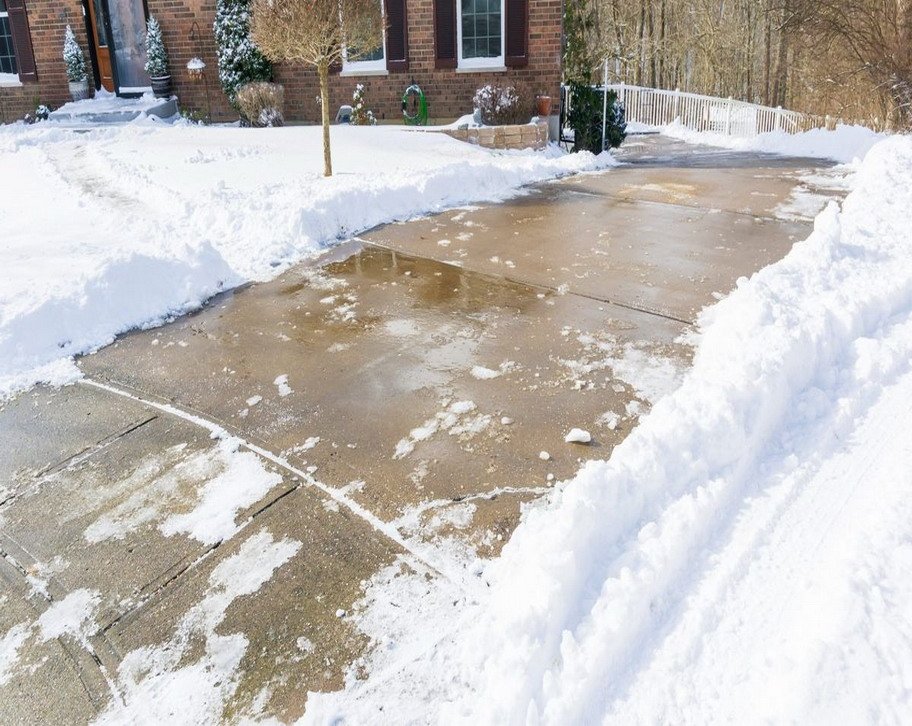
Constructing a frost-resistant base and drainage foundation prevents winter hardscape damage by directing subsurface water away before ice lenses expand. A properly prepared aggregate base removes trapped moisture from the frost zone, eliminating up to 90% of frost heave issues.
Sub-surface water freezing beneath driveways and patios creates expanding ice lenses that lift hardscape units unevenly. Replacing moisture-retaining native soil with compacted angular aggregate provides a stable foundation. Proper site grading directs surface runoff away from paved areas before water can soak into the ground.
Excavating native clay soil to an adequate depth creates space for thick aggregate foundation layers. In Atlantic Canada, residential walkways and patios require 8 to 12 inches of aggregate base depth. Vehicular driveways constructed over heavy clay sub-grade require 12 to 16 inches of crushed stone.
Placing high-strength woven geotextile fabric directly over native clay soil stops sub-grade migration. Clay particles cannot rise into the clean aggregate above, preserving long-term drainage capacity. Installers lay Granular A crushed stone in 2 to 3-inch layers, compacting each layer with a heavy vibratory plate compactor to reach high structural density.
Surface slope plays a major role in keeping meltwater out of joint structures and base materials, thus helping to prevent freeze-thaw damage. All hardscape installations require a minimum 2% positive slope, dropping roughly 1/4 inch per linear foot away from house foundations. Proper surface grading pushes meltwater off stone surfaces before liquid can soak into underlying layers.
Topography sometimes directs surrounding lawn runoff directly toward paved patio or driveway surfaces, potentially leading to freeze-thaw conditions. Installing supplementary drainage options like French drains, channel drains, and catch basins redirects water flow safely. Standing water on paver edges accelerates joint erosion and localized frost heaving during early spring thaws.
Sealing pavers and filling joint spaces to block water entry protects outdoor surfaces from deep moisture penetration and internal ice expansion, effectively preventing freeze-thaw damage. Quality joint materials and penetrating liquid sealers reduce surface water absorption by 70% to 90%, preserving structural strength through freezing cycles.
Unbound sand joints lose 20% to 30% of their material annually due to rain washouts and melting snow. Open joint spaces act as deep water reservoirs that expand during winter freezing events. Applying protective joint fillers and hydrophobic surface coatings seals these entry points against seasonal water intrusion.
Traditional joint sand washes away easily during heavy seasonal rainstorms and winter snowmelt events. Polymeric sand combines graded sand with water-activated polymer binders that cure into a durable, flexible matrix. This hardened joint material resists water erosion, weed growth, and insect activity while accommodating minor ground movement.
Proper application requires sweeping dry polymeric sand into clean, dry paver joints until completely filled. Use a vibratory plate compactor with a protective rubber pad to settle sand into all micro-voids and prevent freeze and expand issues. Sweep away remaining surface dust before misting the area lightly with water to trigger the binder curing process.
Penetrating silane or siloxane sealers offer superior cold-weather protection compared to topical film-forming acrylic coatings. Topical sealers create a solid surface skin that traps internal moisture vapour, leading to peeling or blistering in cold weather. Penetrating sealers sink deep into concrete pores, creating a hydrophobic barrier that lets internal moisture vapour escape safely.
Timing liquid sealer application correctly ensures proper chemical bonding with stone or concrete matrices. Apply penetrating sealers during early autumn when day and night temperatures consistently remain above 10°C. The treated hardscape surface must stay completely dry for a 24-hour window after application to allow complete curing.
Practicing proper winter care techniques and choosing safe de-icing options protects concrete and stone from physical scraping and chemical scaling. Using non-corrosive traction agents and protective shovel blades prevents protective sealants from stripping away during winter snow clearing, helping to prevent freeze-thaw damage.
Chemical de-icers lower the freezing point of water, but frequent melting creates artificial freeze cycles inside masonry pores. Uncontrolled salt application increases seasonal freeze-thaw cycles by 50% to 70%, peeling top concrete layers and exposing aggregate. Selecting safer ice management materials preserves hardscape longevity through harsh winter conditions.
Rock salt causes severe osmotic pressure inside concrete capillaries, pulling water toward the surface and causing flaking. Chemical alternatives and mechanical traction agents provide safe winter walkways without destroying underlying masonry structures. The following table compares common winter ice management products for residential and commercial hardscapes.
De-Icing Material | Minimum Effective Temperature | Freeze-Thaw Stress Factor | Surface Safety Rating | Best Use Case |
|---|---|---|---|---|
Sodium Chloride (Rock Salt) | -9°C | High (Increases cycles by 50-70%) | Poor (Causes scaling) | Unpaved roads only |
Calcium Chloride | -29°C | Moderate-High | Moderate | Fast melting in extreme cold |
Calcium Magnesium Acetate (CMA) is effective in preventing freeze-thaw damage on hardscaping surfaces. | -12°C | Low | High | Concrete and decorative stone |
Washed Coarse Sand | Any temperature | None (0% chemical stress) | Excellent landscape design can help prevent freeze-thaw damage. | Eco-friendly traction |
Physical clearing equipment can inflict severe mechanical damage on stone edges and sealed concrete faces. Steel shovel blades and metal plow wear-bars scratch surface coats, opening direct pathways for standing water. Following proper clearing procedures protects surface investments throughout the snow season.
Use rubber or plastic edge blades. Replace steel shovel edges and metal plow wear-bars with heavy-duty rubber or high-density polyethylene strips. These flexible materials prevent metal blades from scratching protective stone sealers or chipping paver faces.
Set snow blower skid shoes higher to prevent damage to the underlying hardscaping during freeze-thaw conditions. Raise snow blower clearance shoes 10 to 15 millimetres above paver surfaces. Maintaining this elevated buffer stops rotating metal augers from striking slightly raised paver edges.
Pile snow downstream of slope. Position cleared snow banks away from paver perimeters and downhill from hardscape surfaces. Directing snow melt away from paved areas stops runoff from soaking into sub-base joints, which can lead to freeze and thaw issues.
Clear drainage outlets during thaws. Remove ice and slush blocking catch basin covers, channel drains, and Downspout extensions are essential in directing water away from hardscaping to prevent freeze-thaw damage. during mild mid-winter thaws. Unblocking runoff paths prevents standing water from refreezing into hazardous surface ice sheets.
Finding reliable hardscape installation and repair in Fredericton requires experienced professionals who understand regional clay soils and harsh winter freeze cycles. Atlantic Hardscape and Concrete provides complete outdoor surface services engineered specifically for New Brunswick weather conditions. The team builds climate-resilient surfaces using deep base aggregate layers, geotextile sub-grade separation, and high-performance polymeric jointing.
When facing sunken driveway pavers, eroded joint sand, or standing drainage water, professional assessment identifies the root cause of winter damage. Upgrading base foundations or applying pre-winter silane sealers protects valuable property investments against extreme frost cycles. Contact Atlantic Hardscape and Concrete to schedule a property inspection or plan custom hardscape projects engineered for cold weather.
Walkways and patios in Atlantic Canada require 8 to 12 inches of compacted Granular A crushed stone base over geotextile fabric. Vehicular driveways built over native clay soils require 12 to 16 inches of aggregate base to help prevent freeze-thaw damage. This depth removes water from the frost zone and prevents sub-grade moisture expansion, which can lead to freeze-thaw damage.
Deep-penetrating silane or siloxane sealers provide superior protection compared to topical acrylic coatings. They form a hydrophobic barrier inside concrete pores that cuts water absorption by 70% to 90%, significantly reducing the risk of freeze-thaw damage. This barrier allows trapped water vapour to escape safely without causing surface blistering or scaling during freeze-thaw cycles, thus preventing deterioration.
Yes, shifted or sunken pavers can be lifted to repair underlying base depressions. Technicians add fresh aggregate, re-compact the base layer, and re-lay the stones. Sweeping fresh polymeric sand into the joints restores the original level surface and prevents recurring winter displacement.
Calcium Magnesium Acetate provides safe ice melting without introducing destructive chloride ions into stone pores. Washed coarse sand offers immediate physical traction at extreme sub-zero temperatures, helping to prevent deterioration from freeze and thaw cycles. Neither material triggers artificial freeze-thaw cycles or chemical scaling on decorative concrete and paver surfaces.
Apply liquid sealers during early to mid-autumn when air temperatures consistently stay above 10°C both day and night. Ensure the hardscape surface is completely dry and allow at least 24 hours of dry weather after application for full chemical curing before the first winter freeze.
GET STARTED
Your dream space is within reach as we work together from detailed 3-D designs to the final custom build. Our process is both professional and exciting, and we look forward to taking this journey with you.
Contact
34 Jackstraw Court, Fredericton, NB, Canada, New Brunswick
