Are you tired of looking at a cracked, outdated porch or a dull walkway that does nothing for your home’s curb appeal? Do you wonder how some properties in Fredericton manage to maintain such beautiful, durable outdoor surfaces despite New Brunswick’s harsh winters?
Stamped concrete offers a solution that combines stunning visual appeal with the toughness needed to survive Atlantic Canada’s freeze-thaw cycles. This textured paving method transforms ordinary concrete into surfaces that mimic natural stone, brick, or wood, without the maintenance headaches of traditional materials.
Planning your stamped concrete porch and walkway project properly from the start ensures you’ll enjoy a beautiful, long-lasting result. This guide walks you through the decisions, design considerations, and installation factors that separate successful projects from disappointing ones.
Let’s explore how proper planning creates outdoor spaces that boost your property value and stand up to everything the Canadian climate throws at them.
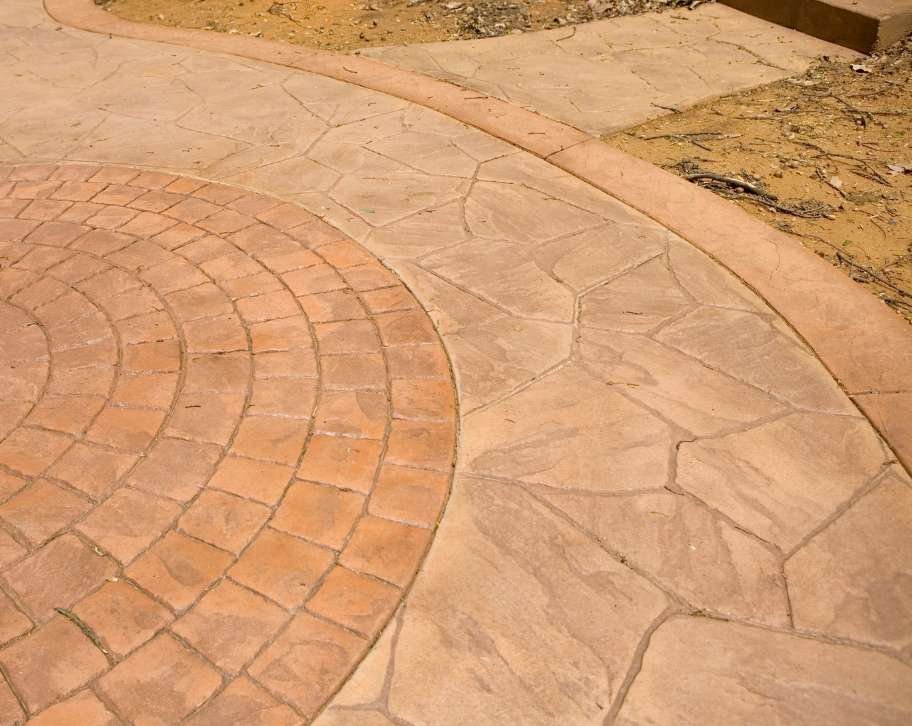
Stamped concrete is a specialized paving technique where patterns and colours are pressed into freshly poured concrete to replicate high-end materials like slate, flagstone, brick, cobblestone, or wood planks. The process involves flexible polyurethane mats with moulded patterns pressed over coloured release powder, creating deep textures that closely mimic natural materials.
Unlike individual pavers or natural stone, stamped concrete creates a continuous, monolithic slab. This eliminates the gaps where weeds typically grow and prevents the shifting or heaving common with unit masonry during New Brunswick’s intense freeze-thaw cycles. The result is a level, safe surface that maintains its appearance for decades.
Material comparison for porches and walkways:
Feature | Stamped Concrete | Interlocking Pavers | Natural Stone |
|---|---|---|---|
Maintenance | Low (reseal every 2-3 years) | Medium (weed control, re-sanding) | Medium (joint repair, shifting) |
Installation Speed | Fast (continuous pour) | Slow (stone by stone) | Very slow (hand-fitted) |
Surface Stability | High (no shifting) | Moderate (prone to settling) | Moderate (heaving risk) |
Weed Growth | Zero (solid surface) | High (grows in joints) | High (grows in joints) |
Customization | Extensive (patterns/colours) | Moderate (limited shapes) | Limited (natural variations) |
The climate-specific advantages matter significantly in the Fredericton region. The continuous slab withstands temperature swings from +30°C in summer to -30°C in winter without the structural vulnerabilities of segmented surfaces. When properly installed with air-entrained concrete mixes, the material accommodates freezing moisture without cracking or spalling.
Available patterns range from natural stone textures like ashlar slate to rustic brick and cobblestone designs. Wood plank patterns offer the warmth of timber without rot or insect damage. Integral colour options, where pigment is mixed throughout the concrete, ensure consistent hue even if minor surface wear occurs over time.
For Fredericton homeowners, this combination of aesthetic flexibility and structural resilience makes stamped concrete an ideal choice for high-visibility areas like front porches and main walkways.
Pattern selection should complement your home’s architectural style and existing exterior colours. A Victorian-era home pairs well with intricate cobblestone or ashlar slate patterns, while modern builds benefit from seamless textures or contemporary geometric designs. The pattern you choose affects not just appearance but also slip resistance and visual scale.
Colour customization happens through two methods. Integral pigments mixed into the concrete provide base colour throughout the slab, ensuring chips or wear don’t reveal grey concrete underneath. Release agents, coloured powders applied before stamping, settle into pattern grooves to create depth and shadow effects that make the texture look three-dimensional and natural.
Key planning questions to answer before starting:
What is the primary traffic flow from street to entrance?
Where does water currently pool or drain on your property?
How will the new surface connect to existing structures (steps, doorways, driveways)?
What is the soil composition and slope of the installation area?
Do local building codes require specific drainage features or setbacks?
What is your realistic budget for both installation and ongoing maintenance?
Site-specific considerations determine project success. Property slope affects drainage design, water must flow away from your home’s foundation, not toward it. Traffic flow patterns influence where you place expansion joints and how you orient patterns. Connection points to existing structures require careful planning to ensure proper transitions and prevent water infiltration.
Professional design renderings and 3-D visualization tools let you preview the finished appearance before installation begins. Atlantic Hardscape and Concrete provides detailed design renderings showing exactly how chosen patterns and colours will look on your specific property. These computer visualizations help you confirm selections complement your home’s architecture and avoid costly changes mid-project.
Base preparation requirements vary by soil type and expected load. Most installations need 6 to 10 inches of compacted granular base material. Clay soils common in the Fredericton area require extra attention to prevent heaving. Proper sub-grade work includes removing organic material, compacting native soil, and installing drainage features before placing the gravel base.
Drainage integration must be planned from the start, not added as an afterthought. French drains, channel drains, or surface grading may be necessary depending on your property’s topography and water table. The goal is to create redundant systems so that if one becomes overwhelmed during spring melt or heavy rain, others continue functioning.
Professional installation follows a precise sequence that determines the final quality. Base compaction creates a stable foundation that won’t settle unevenly. Reinforcement, typically wire mesh or rebar, provides tensile strength to prevent cracking. The concrete pour must be timed carefully based on weather conditions, as temperature and humidity affect working time.
Stamping requires expert timing. The concrete must be firm enough to support the installer’s weight but soft enough to accept a deep impression. Working too early traps moisture at the surface, causing flaking. Waiting too long makes the concrete too stiff to stamp properly. Professional crews use bull floats, trowels, and specialized stamps in a carefully choreographed process.
Climate-specific requirements for New Brunswick installations include air-entrained concrete mixes. These contain microscopic air bubbles that provide expansion chambers when moisture freezes inside the concrete, preventing internal pressure from causing surface damage. Pre-winter sealing protects against moisture infiltration and salt damage from de-icing products.
Resealing schedules typically call for fresh sealer every 2 to 3 years. This maintenance step protects colour vibrancy, maintains texture definition, and guards structural integrity. Signs that resealing is needed include:
Water no longer beading on the surface
Dull or faded colour appearance
Chalky texture developing
High-traffic areas showing wear patterns
Winter care practices extend surface life significantly. Avoid harsh de-icing chemicals like ammonium nitrate or ammonium sulphate, especially during the first year. Instead, use sand for traction or concrete-safe ice melters. Snow clearing should use plastic shovels rather than metal blades to prevent surface scratching.
Without proper equipment and experience, DIY projects frequently result in uneven thickness, poor base compaction, random cracking, and inadequate sealing.
Integrated drainage design prevents water pooling and freeze damage. Proper slope ensures water flows away from structures. Strategic placement of control joints, often hidden within pattern lines, allows the concrete to expand and contract without random cracking. When installed correctly with proper maintenance, stamped concrete porches and walkways typically last 10 to 15 years or more in Fredericton’s challenging climate.
Atlantic Hardscape and Concrete brings over 15 years of specialized experience to stamped concrete projects throughout Fredericton and surrounding communities. Our team understands the challenges of New Brunswick’s clay soils, challenging topography, and extreme freeze-thaw weather patterns, all critical factors when planning your porch and walkway project.
We provide comprehensive service from initial consultation through final sealing. Our detailed 3-D design renderings show exactly how your chosen patterns and colours will look on your property before work begins. This visualization process helps you make confident decisions that complement your home’s architecture and meet your budget.
Our installations incorporate proper drainage design, climate-specific concrete mixes, and professional finishing techniques that ensure long-term performance. We handle everything from base preparation and reinforcement to stamping, curing, and sealing, providing a seamless, single-point-of-contact experience.
Schedule your consultation today to discuss your specific porch and walkway vision. We proudly serve Downtown Fredericton, Northside Fredericton, Oromocto, New Maryland, Hanwell, Keswick, Lincoln, Brookside, Penniac, and Douglas. Visit atlantichardscape.ca to start planning your project.
Stamped concrete typically costs more than plain concrete but significantly less than natural stone or hand-set masonry. Project size, pattern complexity, site preparation needs, and accessibility all affect final pricing. While the initial investment is higher than basic concrete, long-term value comes from reduced maintenance costs, no weed control, re-leveling, or individual unit replacement. Most homeowners find the combination of aesthetic appeal and durability provides excellent value over the surface’s lifespan.
Properly installed stamped concrete with air-entrained mixes, reinforcement, and strategic control joints minimizes cracking risk significantly. Air-entrained concrete contains microscopic bubbles that accommodate freezing moisture expansion without causing surface damage. Control joints are placed strategically, often hidden within pattern lines, to direct any necessary movement to predetermined locations rather than allowing random cracks. Regular resealing protects against moisture infiltration that could cause freeze-thaw damage. Professional installation following climate-specific best practices is key to long-term performance.
Most residential porch and walkway projects complete within a week from start to finish. Site preparation and base work typically take 1 to 2 days. The concrete pour, colouring, and stamping happen in a single day. Curing requires 24 to 48 hours before foot traffic, with full strength developing over several weeks. Final washing and sealing add another day. Weather conditions significantly affect scheduling, installations should not proceed during rain, extreme heat, or when temperatures will drop below freezing within 48 hours of the pour.
Textured stamp patterns provide natural slip resistance superior to smooth concrete surfaces. The deep grooves and varied surface heights create traction even when wet. For better safety, anti-skid additives, fine transparent granules, can be mixed into the sealer coat. These additives provide additional grip without altering the appearance or making the surface difficult to clean. Properly sealed stamped concrete with appropriate texture selection and anti-skid treatment offers safer footing than many alternative materials in winter conditions.
GET STARTED
Your dream space is within reach as we work together from detailed 3-D designs to the final custom build. Our process is both professional and exciting, and we look forward to taking this journey with you.
Contact
34 Jackstraw Court, Fredericton, NB, Canada, New Brunswick
