A snowplow can leave a bank of packed snow across your driveway just when you thought the clearing was finished. In Fredericton, the safest approach is to open the entrance in small sections, keep the snow off public streets and sidewalks, and get help if the ridge is too icy or heavy to move safely.
This ridge is called a snowplow windrow. It is often much harder to move than the fresh snow on your driveway because plowing can compact it into a heavy bank mixed with ice and road grit.
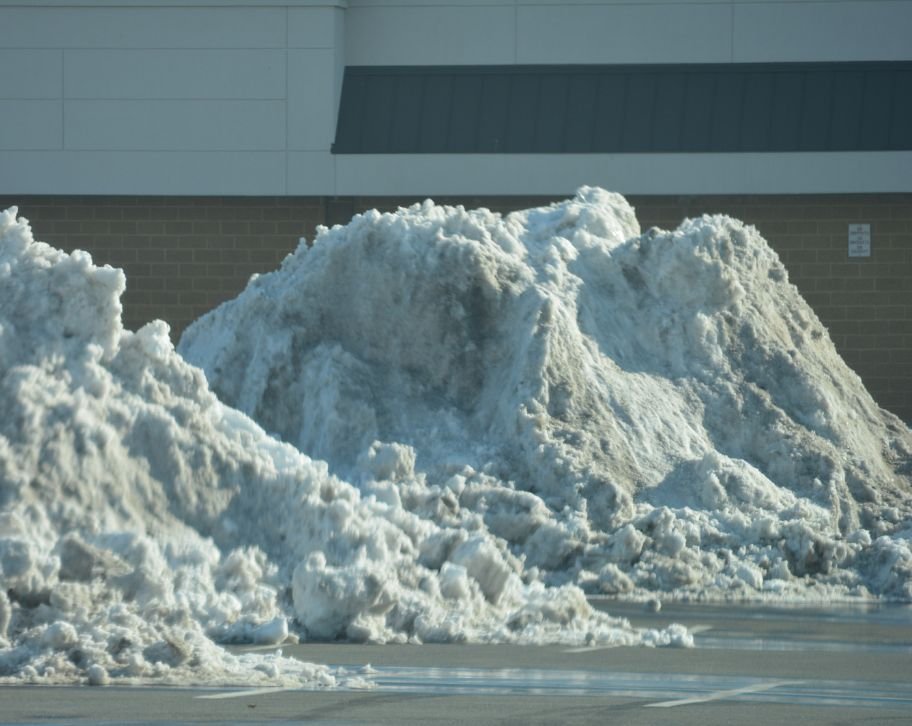
A snowplow clears the roadway by pushing snow toward its edge. When the plow passes a driveway entrance, some of that snow is deposited across the opening. The resulting ridge is a windrow, sometimes called a plow berm or an end-of-driveway snow pile.
Unlike untouched snowfall, a windrow may contain snow that has been compressed by the plow, driven over by vehicles or mixed with slush. After temperatures fall, the pile can become harder still. This is why a driveway that took only a short time to shovel may have a stubborn bank at the street.
A second road-plowing pass can leave another windrow even if you have already cleared the entrance. That does not necessarily mean anyone has done the job incorrectly; it is a common result of clearing a road while keeping snow at the roadside.
Fredericton provides snow clearing for public streets and sidewalks according to its winter maintenance priorities. That routine service should not be confused with clearing a private driveway or reopening every driveway entrance after the street plow passes.
If a road-plow windrow blocks your driveway, plan to remove it safely or arrange private snow clearing. Do not assume there will be a separate municipal visit to open your entrance. Property-specific questions and unusual access problems can be checked with the City.
There is also an important local rule for where the snow goes: do not push or throw snow from your driveway onto the public street or sidewalk. It can obstruct traffic and pedestrians and may be pushed straight back when the plow returns.
The safest method depends on the height and hardness of the ridge, the amount of room available and the condition of your driveway surface. Use these steps rather than trying to lift or drive through the entire bank at once.
Check the street and the snow first. Look for moving plows, vehicles, ice and poor visibility. Stay on your property side as much as possible. If another road-plowing pass is likely and you do not need immediate access, it may be easier to finish after that pass.
Start with a manageable opening. Work from one side of the driveway entrance. Break up loose or moderately packed snow in small amounts instead of trying to pry up one heavy block. Do not swing a metal tool at a frozen bank close to concrete, pavers or a curb.
Push snow whenever practical. Use a sturdy snow shovel or scoop suitable for the job. Keep loads small when lifting is unavoidable, step toward the snow placement area instead of twisting, and pause before you become exhausted.
Move the snow to a planned spot. Put it on your property where it will not obstruct people, vehicles, drainage or visibility. Do not move it into the street or onto a public sidewalk.
Widen the entrance and check for ice. Once an initial path is open, clear the width your vehicle actually needs. Check that the surface is not slippery before driving or walking through. Use traction material or a surface-appropriate de-icing method if needed.
If the bank is solid ice, contains large frozen chunks or requires more effort than you can safely manage, stop. Heavy snow shovelling is strenuous, particularly in cold weather. Anyone who should avoid intense physical exertion is better off arranging assistance.
A snowplow windrow is not always suitable for the tool that cleared the rest of your driveway. The choice depends on how firmly the snow has been packed.
Method | Best suited to | Main limitation |
|---|---|---|
Snow shovel or scoop | Small openings and manageable amounts of loose or moderately packed snow | Heavy, icy banks can be physically demanding and difficult to break apart |
Snow blower | Snow that the machine is designed to handle, with room to discharge it safely | Hard ice, hidden rocks and large frozen chunks can jam or damage equipment |
Professional snow clearing | Large windrows, repeated blockages, limited mobility or properties that need regular access | You need to confirm that clearing the street-plow ridge is included in the service |
If you use a snow blower, follow its operating instructions and keep the discharge away from roads, people and neighbouring property. Never reach into the chute or auger to clear a blockage. Shut down the equipment and use the manufacturer-specified clearing procedure and tool.
On interlocking pavers or decorative concrete, avoid aggressive scraping that can catch raised edges or damage the surface. A suitable blade, careful technique and knowledge of the pavement are more useful than brute force.
Choose a snow storage area before starting, especially if previous storms have already created large banks. Ideally, the area should be on your own property, away from the street and private walking routes, with room for more snow later in the season.
Do not build piles where they block a driver’s view of oncoming traffic or conceal a neighbour’s driveway. Keep snow away from building entrances, furnace or dryer exhaust vents, drainage routes and catch basins. Avoid burying fire hydrants or making it harder for anyone to reach them.
If the driveway is tight or there is no safe place left to stack snow, pushing it into another corner may create a bigger problem. Snow hauling or other professional arrangements may be more practical when storage space is exhausted.
You cannot prevent every windrow, but a little planning can make the next snowfall easier to manage.
Leave room for snow storage. Avoid piling all the driveway snow right beside the road entrance, where it can narrow the opening or be pushed back toward it.
Watch for road-plowing activity. If you have flexibility, complete the final entrance clearing after the street has been plowed. During a long storm, more than one pass may be needed.
Keep the entrance easy to identify. Mark fixed landscape edges and obstacles appropriately before winter so private clearing equipment can avoid them.
Discuss the windrow with your contractor. Ask whether end-of-driveway clearing is part of your snow removal arrangement and what happens if the municipal plow returns after your driveway has been serviced.
These steps reduce avoidable work, but they cannot guarantee that the entrance will stay clear throughout an active snowstorm.
A refrozen windrow is more difficult than a fresh snow ridge. Avoid repeatedly striking the driveway with a sharp metal shovel or trying to force a snow blower into a solid ice bank. Both approaches may damage equipment or the pavement.
Clear any loose snow you can safely remove, then assess the remaining ice. A traction material may help people cross the area, while a suitable de-icing product may help with bonded ice. Check compatibility with the driveway surface and follow product instructions, particularly on newer or decorative concrete and on pavers.
For more on protecting pavement, see our guide to de-icing a concrete driveway. If the frozen bank prevents safe access, professional help is preferable to aggressive chipping.
Professional help makes sense when the windrow is too heavy to handle comfortably, ice has bonded it to the driveway, there is little room to place the snow, or the entrance repeatedly gets blocked. It is also useful when residents cannot safely shovel or a business, rental property or multi-unit building needs dependable access.
Before arranging service, describe the actual problem: a road-plow ridge across the driveway entrance. Ask whether the provider will clear that section, whether a return visit after another municipal pass is included, and where removed snow will be placed. A general driveway-plowing agreement does not automatically answer those questions. Atlantic Hardscape and Concrete recommends confirming those details before you book.
Clearing a snowplow windrow is mainly a matter of timing, safe technique and having somewhere suitable to put the snow. Work in smaller sections when conditions allow, never place driveway snow in the street, and do not risk injury or surface damage to remove an oversized frozen bank.
Atlantic Hardscape and Concrete provides residential and commercial snow removal services in Fredericton, including plowing, shovelling, snow blowing and snow hauling. You can contact us to discuss your driveway, the areas you need cleared and an appropriate winter service arrangement.
A road snowplow leaves a packed ridge called a windrow across some driveway entrances. Repeated passes can create a new pile.
Work from a safe position, move manageable amounts and use a snow blower only when it can handle the snow without jamming.
Keep driveway snow off Fredericton streets and public sidewalks. Do not block sightlines, drainage or neighbouring access.
If the snow has frozen solid or is too heavy to handle safely, ask for assistance rather than forcing it with a shovel or machine.
When booking snow clearing, confirm whether returning to remove a later street-plow windrow is included in the agreement.
Road plows push snow toward the road edge, so a later pass can deposit a new ridge across a driveway entrance. If you can wait safely, clearing the entrance after the street-plowing pass may save you from repeating the job.
No. Fredericton asks residents not to push or place snow from driveways and parking lots onto streets or sidewalks. Find a safe storage area on the property or arrange removal if there is not enough room.
Not always. The machine may handle loose or moderately packed snow but struggle with solid ice and large frozen chunks. Follow the manufacturer’s instructions, never clear a jam by hand and stop if the ridge exceeds the equipment’s capability.
The City maintains public sidewalks as part of its municipal winter clearing program. That does not mean it clears every private path, driveway or entrance. Keep private access routes in mind and check any property-specific responsibilities that apply.
It depends on the agreement. Some providers handle the driveway itself but treat a later street-plow windrow as a separate visit or service. Confirm the covered areas, return visits and ice management before you rely on the arrangement.
GET STARTED
Your dream space is within reach as we work together from detailed 3-D designs to the final custom build. Our process is both professional and exciting, and we look forward to taking this journey with you.
Contact
34 Jackstraw Court, Fredericton, NB, Canada, New Brunswick
