Most retaining walls do not fail because the blocks or timbers are weak. They fail because no one paid enough attention to retaining wall drainage requirements. Water builds up behind the wall, pushes hard on it, and the structure starts to lean, crack, or fall over.
Many people assume small walls are safe. A common thought is that a garden wall that is only a couple of blocks high should be fine without a drain. That idea causes a lot of expensive repairs. In Fredericton’s wet climate, short and small walls still face the same water and freeze‑thaw stress as taller ones.
Fredericton and nearby areas deal with heavy rain, deep snow, spring thaws, and clay soils that hold water. Those conditions are tough on any wall that does not follow proper retaining wall drainage requirements. When water freezes, it expands. When soil stays soaked, it gets heavier and pushes harder on the wall. Ignoring drainage turns a nice outdoor project into a safety risk.
This guide walks through complete retaining wall drainage requirements for almost every height and wall type. It explains why even a 1‑foot wall can need drainage, what a proper system includes, and how to spot problems in an existing wall. With more than 15 years of local experience, Atlantic Hardscape and Concrete designs and installs retaining walls and drainage systems that are built for Fredericton conditions. By the end, it will be clear what a safe wall should look like and when it is time to call in a professional team.
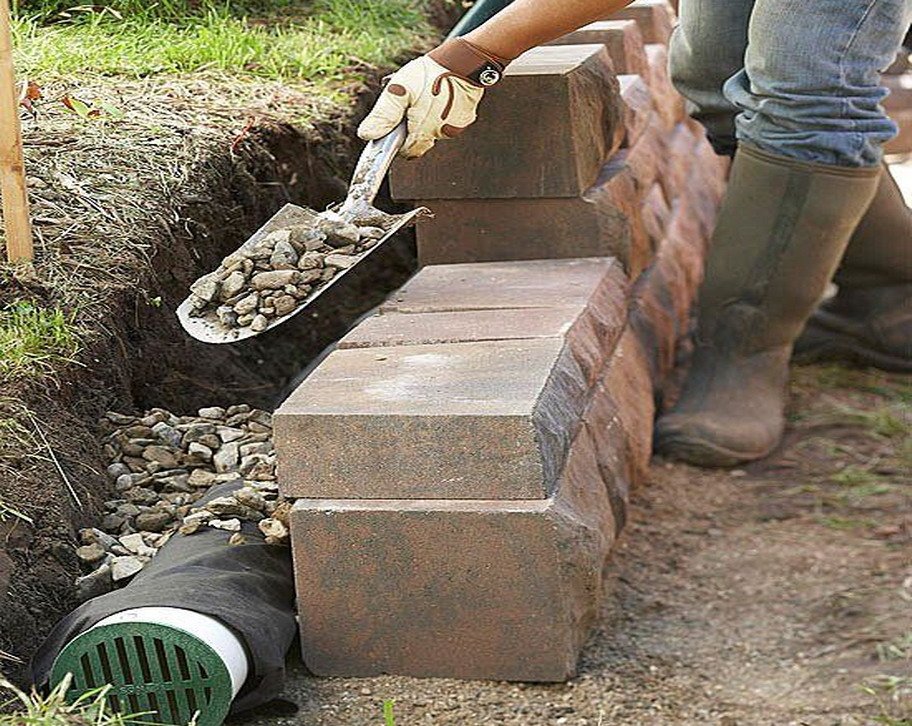
The short answer is yes. In Fredericton and most of New Brunswick, retaining wall drainage requirements apply to almost every wall that holds back soil. Whether someone asks do retaining walls need drainage or does a retaining wall need drainage, the answer is the same. If soil is behind it, water will be there too, and that water needs a safe way out.
Any wall that resists soil is fighting two forces:
That sideways water pressure, called hydrostatic pressure, does not depend only on wall height. Even a low wall can feel strong pressure when the soil behind it is saturated.
There are a few rare exceptions. A tiny edging that is under about 12 inches tall, built on free‑draining sandy soil in a dry climate, might be fine without a full drainage system. That does not describe Fredericton. Local soils are often clay based and hold water, and the region sees plenty of rain and snow. For our area, it is safest to assume retaining wall drainage requirements apply to anything more than a simple decorative border.
Many questions come up around size. Homeowners wonder does a 1 foot retaining wall need drainage, does a 2 foot retaining wall need drainage, or does a 3 foot retaining wall need drainage. Others ask do short retaining walls need drainage or do small retaining walls need drainage. In Fredericton’s climate, the safe answer for all of these is yes. At Atlantic Hardscape and Concrete, we design a drainage system even when someone asks do I need drainage for a small retaining wall, because we have seen too many “small” failures.
Local building rules also matter. In many cases, walls around 4 feet high or more need permits and engineering. Those engineered plans always include clear retaining wall drainage requirements. Atlantic Hardscape and Concrete reviews wall height, soil type, and nearby structures for every job, then designs a drainage plan that fits the property instead of relying on guesswork.
Hydrostatic pressure sounds technical, but the idea is simple. When water sits in soil behind a wall, it pushes sideways on that wall. Water cannot be squeezed smaller, so as more water collects, the sideways force grows stronger. This invisible push is one of the main reasons retaining walls fail.
Imagine dry soil behind a wall. There is some weight, but it is manageable. Now picture heavy rain or spring melt soaking that soil. Water fills the spaces between soil grains and makes the soil much heavier. A cubic foot of dry soil might weigh around 100 pounds, while saturated soil can weigh far more. That extra weight translates into more pressure on the wall, especially near the base where the water column is deepest.
Clay soils, which are common around Fredericton, make things worse. Clay holds water for a long time and drains poorly, so the soil stays saturated and heavy. When cold weather returns, the water in that clay freezes and expands by about 9 percent. This frost heave pushes the wall forward and upward. With repeated freeze‑thaw cycles, even a well‑built wall will start to move if retaining wall drainage requirements were ignored.
Wall failure usually happens in 3 stages, not all at once:
Understanding how hydrostatic pressure behaves makes it clear why proper drainage is not a luxury but a basic part of safe retaining wall design.
A good retaining wall does not rely on one trick to manage water. Proper retaining wall drainage requirements call for several parts that work together behind the scenes. When any one of these is missing or poorly installed, the risk of early wall failure rises.
Key components include:
Granular backfill
Instead of pushing native clay back against the wall, at least 12 inches of that zone are replaced with clear, angular crushed stone, usually three‑quarter inch. The sharp edges lock together and leave open space between stones. Water moves quickly down through this material instead of building up sideways pressure on the wall.
Geotextile filter fabric
This fabric sits between the native soil and the crushed stone zone. It allows water to pass through but stops fine clay and silt from washing into the drainage stone. Without this layer, soil slowly fills the gaps in the gravel and turns that free‑draining zone into a dense, soggy plug that no longer works. Proper fabric placement is one of the most important retaining wall drainage requirements for long‑term performance.
Perforated drain pipe (weeping tile)
A perforated pipe, usually 4 inches in diameter, sits at the bottom of the wall behind the first course of blocks. As water moves down through the stone, it enters the pipe and is carried away. For gravity to work, the pipe needs a steady slope of about one percent, meaning about a one centimetre drop per metre.
Outlet or discharge point
Any pipe needs somewhere to send the water. A daylight outlet or other discharge point is part of proper retaining wall drainage requirements. The pipe might exit on a lower part of the yard, tie into a storm drain (where bylaws allow), or run to a dry well. The key is that water leaves the system at a safe place, away from the wall, foundations, and neighbouring properties.
Surface grading and cap layer
Grading at the top of the wall makes a big difference. A cap of low‑permeability soil, sloped away from the wall, keeps surface water from pouring straight into the yard drainage stone. This works together with gutters, downspouts, and yard grading to keep as much water as possible out of the backfill in the first place.
Atlantic Hardscape and Concrete builds every wall with this full set of components and uses professional‑grade stone, fabric, and pipe so the drainage system keeps working for many years.
In Fredericton, retaining wall drainage requirements still apply to garden walls under 2 feet tall. People often ask does a 1 foot retaining wall need drainage or do small retaining walls need drainage, and are surprised when the answer is yes. Even a couple of courses of block can trap water against a slope.
For these lower walls, the system can be somewhat simpler, but the core pieces are still needed. A 12 inch zone of clear crushed stone, wrapped with geotextile fabric and tied to a perforated pipe, gives that water somewhere to go. When someone wonders do I need drainage for a small retaining wall, the safe plan in Fredericton is to assume that they do.
Walls between 2 and 4 feet are the most common around homes. These hold back real loads and are exposed to a lot of surface runoff from yards and driveways. For this range, retaining wall drainage requirements call for a full system with all the parts already described.
Questions such as does a 2 foot retaining wall need drainage or does a 3 foot retaining wall need drainage come up often during site visits. At these heights, there is no debate in our climate. A perforated pipe with the right slope, a 12 inch or wider crushed stone zone, filter fabric, and careful top grading are all standard, not extras. Walls close to 4 feet may also need permits and engineering, which always include detailed drainage notes.
Once a wall goes over about 4 feet, most municipalities treat it as an engineered structure. That means formal plans, permits, and stamped drawings. These plans always include strict retaining wall drainage requirements because a failure at this size can be dangerous and very costly.
Taller walls often need added measures such as wider drainage zones, higher quality geogrid reinforcement, and sometimes more than one level of collection pipe. Atlantic Hardscape and Concrete works with engineers to build these systems correctly, from footing depth below Fredericton’s frost line to outlet design. For large commercial or multi‑tiered walls, the drainage design is every bit as important as the visible face of the wall.
Different wall materials handle water in different ways, but none of them escape basic retaining wall drainage requirements:
A strong retaining wall starts with drainage in mind from the first shovel of soil. It is very hard to fix missing drainage later, which is why Atlantic Hardscape and Concrete builds it into every stage of construction. The steps below show how a professional team in Fredericton meets real retaining wall drainage requirements.
Site excavation and base preparation
The crew begins by digging a trench wide enough for the wall blocks, at least 12 inches of drainage stone, and working room. excavation services for a compacted gravel base, plus the buried part of the first course and local frost conditions. The base gravel is added in layers and compacted so the wall and drain pipe sit on a firm, level foundation.
First course installation
The first row of blocks is set carefully on the prepared base. Each block is checked with a level and aligned with string lines, since any error here will repeat up the wall. A portion of this course is buried below finish grade, which improves stability and protects against movement from frost.
Geotextile fabric placement
Non‑woven geotextile fabric is laid along the back of the trench against the native soil and pulled up the sides. Extra fabric is left at the top so it can later fold over the drainage stone. This creates a clean pocket for the stone and pipe, separating them from the surrounding clay and silt.
Perforated pipe installation
A four inch perforated pipe is placed at the heel of the wall, directly behind the first course of blocks on the compacted base. The pipe is sloped steadily toward the chosen outlet so gravity always helps water move out. Joints are connected securely so soil cannot enter and clog the line.
Granular backfill in lifts
Clear crushed stone is poured around and above the pipe, forming the start of the drainage zone. The stone is added in layers and lightly compacted so there are no large voids that might settle later. This free‑draining column will be extended upward as the wall grows.
Building the wall and compacting native fill
Additional block courses are stacked, following the manufacturer’s pattern and setback requirements. Behind the drainage stone, selected native soil or imported structural fill is added in thin layers and compacted with mechanical tampers. This keeps the area behind the wall dense and stable, not soft and loose.
Capping the drainage system
Once the drainage stone reaches about 6 to 12 inches below the top of the wall, the extra geotextile fabric is folded over the top of the stone. This burrito‑style wrap stops fines from above from washing down into the clean aggregate. It protects the heart of the drainage system for the long term.
Final grading and surface water management
A top layer of denser soil is placed over the wrapped stone and graded to slope away from the wall. This directs rain and snowmelt toward the yard instead of letting it soak straight into the backfill. At this stage, Atlantic Hardscape and Concrete also checks downspout locations and yard grading so surface water does not overload the wall.
Outlet installation and testing
The perforated pipe is connected to its outlet point, whether that is a lower section of the property, a dry well, or an approved storm connection. The discharge point is screened to keep animals and debris out. Before backfilling is complete, the system is flushed or tested so the crew knows water can move freely from behind the wall to its final exit.
Many walls in Fredericton were built with little or no attention to retaining wall drainage requirements. Over time, poor drainage starts to show in visible ways. Catching these signs early can prevent a complete failure and a full rebuild.
Any of these signs mean it is time for a professional inspection. Atlantic Hardscape and Concrete can assess whether the issue is minor surface water or a deeper failure of the drainage system. In many cases, real repairs involve excavation behind the wall and replacement of clogged or missing drainage rather than simple patching at the front.
Fredericton is not a gentle environment for retaining walls. Local retaining wall drainage requirements must respect the weather and soil that walls face year after year. Advice that might work in warm, sandy regions often falls short here.
The city sees many freeze‑thaw cycles each winter. Water that sits in soil behind a wall freezes, expands, and then melts, over and over. This repeated movement acts like a slow jack pushing the wall out. A good drainage system keeps the backfill as dry as possible so there is less water to freeze and less movement each season.
The foundation excavation in Fredericton is about 1.5 metres. That depth affects both footing design and drainage layout. Bases for taller walls often need to be lower than in milder areas, and pipes and outlets must stay below or clear of zones where ice can block them. This is one reason professional design is so important for long walls or walls supporting driveways and structures.
Spring adds another challenge. When snowpack melts quickly, a huge volume of water runs across and through the soil in a short time. Retaining wall drainage requirements must allow for this surge. Undersized pipes, narrow gravel zones, or blocked outlets cannot keep up, and water backs up behind the wall right when loads are highest.
Local soils often contain a lot of clay. Clay drains poorly, holds moisture, and swells when wet. That is why replacing native clay with clear crushed stone behind the wall is non‑negotiable here. High annual precipitation keeps those clay layers close to saturation for long periods, adding even more pressure on any wall without proper drainage.
On top of all that, walls over certain heights usually need permits and engineering in Fredericton and nearby communities. These engineered drawings spell out retaining wall drainage requirements in detail, including pipe size, backfill specifications, and outlet locations. Atlantic Hardscape and Concrete has spent more than 15 years building walls that meet these local expectations, which is very different from following generic advice written for milder regions.
After inspecting and repairing many failed walls across Fredericton, some patterns show up again and again. The same common mistakes keep coming back, even though they are easy to avoid with proper planning and respect for retaining wall drainage requirements.
Proper drainage is not an extra service for Atlantic Hardscape and Concrete . It is a core part of every retaining wall we build in Fredericton and surrounding areas. Our team treats retaining wall drainage requirements as the backbone of the design, not an add‑on at the end.
Every project starts with a thorough site analysis. We look at the slope of the yard, soil type, nearby structures, and how water already moves across the property. That includes checking downspouts, low spots, and existing walls or patios. From there, we design a drainage plan that fits the real conditions on the ground instead of guessing.
We then create a custom retaining wall and drainage design for each property. For larger projects, clients can review 3D design visuals before work begins, so they can see how the wall, grading, and outlets will work together. This approach makes it easier to meet both appearance goals and practical retaining wall drainage requirements at the same time.
On site, our crews use professional‑grade materials such as three‑quarter inch clear stone, high quality geotextile fabric, and durable perforated pipe. Drainage is integrated into every stage from excavation and base preparation through to capping and final grading. For walls that need engineering, we follow the drawings precisely and coordinate inspections and permits.
After construction, we stand behind our work. Our focus on long‑term durability means we expect walls to handle decades of freeze‑thaw cycles and heavy rain when maintained properly. We also offer inspection and maintenance services for older walls and previously built projects. Property owners in Fredericton, New Maryland, Oromocto, and nearby communities can contact Atlantic Hardscape and Concrete to schedule a retaining wall and drainage assessment and get clear advice on their next steps.
In Fredericton’s climate, there is no safe height for a soil‑retaining wall without drainage. Even a 12 inch garden border can trap water and suffer from frost heave or movement. Hydrostatic pressure and freeze‑thaw cycles act on any wall that holds back soil, no matter how low. Building codes also step in around 4 feet, where engineering and clear retaining wall drainage requirements are usually mandatory.
A proper drain behind the wall is the main defence against water pressure. That means a perforated pipe at the base of the wall, surrounded by clear crushed stone and connected to a good outlet. Weep holes in solid concrete or masonry walls can help release some water, but they only drain at the level of the holes and clog easily. Modern best practice in Fredericton is a full back drainage system that meets real retaining wall drainage requirements, not weep holes alone.
Drainage needs to be built during the original wall construction. Once the wall is in place and the backfill is compacted, there is no way to add an effective pipe and stone system without digging everything out. Retrofitting proper drainage usually means excavating behind the wall, replacing the backfill, and sometimes rebuilding sections. That is why Atlantic Hardscape and Concrete always treats drainage as a core part of the first build rather than an optional extra.
Gabion walls are made of wire baskets filled with rock, so they allow water to pass through more easily than solid concrete. Even so, they still benefit from smart drainage design. Placing geotextile fabric behind the baskets keeps the soil from washing out through the rock face. In many cases, a free‑draining backfill and even a collection pipe still form part of sensible retaining wall drainage requirements for gabions, especially on higher walls or where soil is clay based.
Skipping drainage might reduce the initial price, but it almost always increases total costs over time. In Fredericton, many walls without proper drainage start to show problems within one to three years, and some fail after the first hard winter. The damage usually begins with small bulges or cracks, then moves to leaning and separation, and finally collapse. At that point, the owner must pay for demolition, disposal, new excavation, and a full rebuild that finally includes correct retaining wall drainage requirements. There can also be safety and liability concerns if a failing wall is near a sidewalk, driveway, or property line.
GET STARTED
Your dream space is within reach as we work together from detailed 3-D designs to the final custom build. Our process is both professional and exciting, and we look forward to taking this journey with you.
Contact
34 Jackstraw Court, Fredericton, NB, Canada, New Brunswick
