Think about walking out your front door to find a patchy, weedy lawn staring back at you. It’s frustrating, isn’t it? You’ve tried seeding, waited weeks, and still ended up with bare spots and uneven growth. Many Fredericton homeowners face this exact scenario, wondering if there’s a faster, more reliable way to achieve that lush, green carpet they’ve been dreaming about.
Sod installation offers an instant transformation, but only when it’s done correctly. The difference between a thriving lawn and a failed investment often comes down to three critical factors: proper soil preparation, precise installation techniques, and diligent post-care. Skip any of these steps, and you’ll likely find yourself ripping out dead grass and starting over within months, wasting both time and money.
At Atlantic Hardscape and Concrete, we’ve spent over 15 years perfecting sod installation throughout the Fredericton area. Our team understands the unique challenges of New Brunswick’s climate, from acidic soils to unpredictable rainfall patterns. We’ve seen countless DIY attempts fail due to poor grading, inadequate watering schedules, or simply laying sod on unprepared ground. That’s why we take a comprehensive approach, from soil testing and conditioning to professional installation and detailed aftercare guidance.
In this guide, you’ll learn exactly how to properly install sod, including the essential soil preparation steps that create a strong foundation, the professional laying techniques that prevent common failures, and the watering and maintenance schedule that helps your new lawn establish deep, resilient roots. Whether you’re considering a DIY project or exploring professional services, you’ll gain the knowledge needed to make informed decisions and achieve a beautiful, lasting lawn.
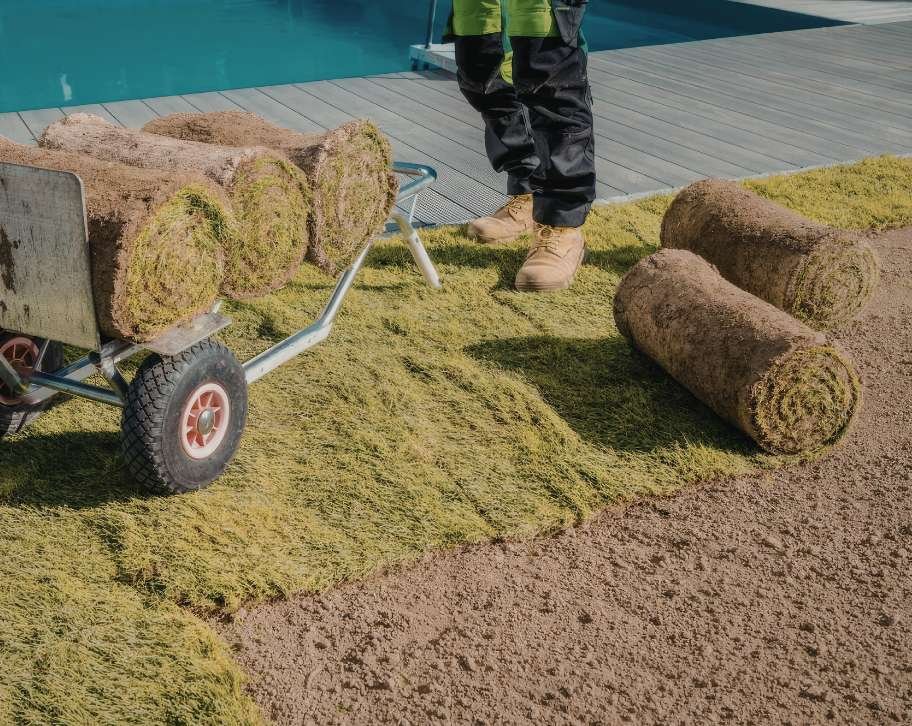
The foundation of any successful sod installation begins well before the first roll touches the ground. Proper soil preparation is the single most important factor determining whether your new lawn will thrive for decades or fail within months. At Atlantic Hardscape and Concrete, we’ve learned through 15+ years of experience that cutting corners during preparation always leads to costly problems down the road.
Start by clearing the designated area completely. Remove all existing grass, weeds, rocks, and debris using a professional sod cutter. This tool strips away the old surface efficiently, creating a clean slate for your new lawn. Don’t be tempted to lay sod over existing grass, it creates air pockets that prevent proper root anchoring and leads to uneven, spongy surfaces.
Next comes soil testing and conditioning, a step many homeowners skip but shouldn’t. New Brunswick soils tend to be naturally acidic, which can stunt grass growth and prevent nutrient absorption. Atlantic Hardscape and Concrete conducts pH testing on every project and amends acidic soils with lime to reach the optimal 6.0-7.0 pH range. If your soil is heavy clay (common in Fredericton) or excessively sandy, incorporate 2-4 inches of premium organic matter or topsoil. This improves drainage in clay soils and increases water retention in sandy ones.
Grading is where many DIY projects go wrong. Your soil must be level to prevent pooling water, but it also needs to slope away from building foundations at a rate of one inch drop per four feet. This protects your home from water damage while providing your lawn drains properly during New Brunswick’s heavy spring rains. Use a landscape rake to break up clumps and remove stones larger than an inch in diameter.
The final grade positioning requires precision. Set your soil level 0.5-1 inch below adjacent paved surfaces like driveways, walkways, and patios. This accounts for the thickness of the sod’s root base, making sure the installed grass sits flush with your hardscaping once it settles. Getting this measurement wrong creates tripping hazards or unsightly height differences.
Before installation day, lightly water the prepared soil. This simple step cools the ground and prevents dry soil from immediately sucking moisture out of the fresh sod roots upon contact. The soil should be moist but firm, not muddy. Atlantic Hardscape and Concrete’s comprehensive yard drainage options also come into play here, protecting your landscape investment from water accumulation that can drown new roots or create breeding grounds for fungus and disease.
Timing separates successful installations from failures. Sod is a living product that begins deteriorating the moment it’s harvested. In the humid conditions of the Saint John River Valley, you must install sod within 24 hours of delivery to prevent “pallet burn”, a condition where heat trapped in the rolls literally cooks the grass from the inside out. Atlantic Hardscape and Concrete coordinates delivery only after soil preparation is 100% complete, allowing us to install immediately upon arrival.
Begin laying sod along the longest straight edge of your property, such as a driveway or fence line. This creates a clean, professional border and gives you a reference line for the rest of the installation. Unroll each piece carefully, avoiding stretching or compressing the sod, which damages the root structure.
The staggered brick pattern is non-negotiable for quality installations. Lay each subsequent row in a running bond formation, similar to how bricks are laid in a wall. This pattern prevents long, continuous seams that become weak points during heavy rainfall. Water flows along these seams, causing erosion and creating channels where the sod dries out or lifts. By staggering the joints, you distribute stress evenly across the entire lawn.
Achieving tight seams requires attention to detail. Butt the edges of each sod piece firmly against its neighbors without overlapping or leaving gaps. Gaps invite weed growth and allow the edges to dry out and die, creating brown lines across your lawn. Overlapping creates uneven bumps that become scalped spots when you mow. The edges should touch so closely that you can’t see the seam, yet without any compression that would cause the sod to buckle.
Trimming around obstacles demands a sharp utility knife or specialized sod saw. Make clean, precise cuts around flower beds, trees, irrigation heads, and other landscape features. Jagged edges are more susceptible to drying out and disease. Avoid placing small scraps (less than one square foot) at the outer edges of the lawn, these pieces hold less moisture and typically die. Instead, use full pieces at the perimeter and tuck smaller trimmed pieces into the center of the lawn where they’re protected.
Installing on slopes presents special challenges common in Fredericton’s varied terrain. Always lay sod perpendicular to the incline (across the slope rather than up and down). This prevents the sod from sliding downhill before roots establish. For steep grades, use biodegradable sod staples to pin the rolls in place. These staples hold the sod securely for several weeks, then decompose naturally without leaving debris in your lawn.
Rolling for root contact is the final critical step. Once all sod is laid, use a lawn roller filled one-third to one-half with water and roll the entire area in multiple directions. This eliminates air pockets between the sod roots and the prepared soil, providing direct contact that’s essential for survival. Without this contact, roots air-dry within hours, leading to brown patches or complete sod failure. Atlantic Hardscape and Concrete’s 15+ years of experience means we know exactly how much pressure to apply, enough to create contact without over-compacting the soil, which would suffocate the roots.
The first 48 hours after installation are make-or-break for your new lawn. Begin watering within 15-30 minutes of laying the first roll, don’t wait until the entire lawn is complete if you’re working on a large area. The initial soak should penetrate deeply, wetting both the sod and the underlying soil to a depth of 4-6 inches. You can verify this by carefully lifting a corner of the sod to check if the ground beneath is thoroughly saturated.
During the first two weeks, your new sod needs consistent moisture to establish roots. In Fredericton’s summer heat, this typically means watering 2-3 times daily for short durations (15-20 minutes per session). Early morning, midday, and late afternoon are ideal times. Watch for signs of stress:
If the sod edges begin to shrink away from each other or the grass takes on a grayish tint, you’re under-watering
If you notice a spongy feel when walking on the lawn or see fungal growth, you’re over-watering
The transition period during weeks 3-4 is when you shift from frequent light watering to deep, infrequent watering. This encourages roots to grow deeper into the soil in search of moisture, creating a more drought-resistant lawn. Reduce watering frequency to once daily or every other day, but increase the duration to 30-45 minutes per session. By the end of week four, you should be able to gently tug on the grass without the sod lifting, this indicates the roots have anchored properly.
Your first mowing should occur roughly 3-4 weeks after installation, once the grass reaches 3-4 inches in height. Set your mower blade to its highest setting and make sure the blades are extremely sharp. Dull blades tear the grass rather than cutting it cleanly, stressing the young plants and creating entry points for disease. Never remove more than one-third of the grass blade height in a single mowing, this is the golden rule that prevents shock to the grass.
Traffic restrictions are essential during the establishment phase. Keep foot traffic, pets, and lawn equipment off the new sod for at least three weeks. The soil beneath is soft and saturated from intensive watering, and activity creates ruts, compacts the soil, and can shift the sod before roots anchor it in place. If you must cross the lawn, use plywood boards to distribute your weight.
Fertilization timing supports healthy root development without burning tender new grass. While most sod comes pre-fertilized from the farm, applying a phosphorus-rich starter fertilizer after the first mowing gives roots an extra boost. Avoid high-nitrogen fertilizers for the first 30-60 days, they promote rapid top growth at the expense of root development and can burn the young grass. Atlantic Hardscape and Concrete provides detailed post-installation care instructions tailored to your specific sod variety and can recommend professional irrigation systems that automate watering schedules, taking the guesswork out of lawn maintenance.
Late spring (May through June) and early autumn (late August through September) are the optimal windows for sod installation in the Fredericton area. These periods offer cooler temperatures and natural rainfall that support root establishment without the extreme stress of mid-summer heat. Installing during these windows also avoids the risk of immediate winter frost damage that can occur with late-fall installations.
New sod typically takes 4-6 weeks to establish a strong root system in New Brunswick’s climate. You can test root anchoring by gently attempting to lift a corner of the sod, if it resists and holds firm, the roots have anchored properly. During this establishment period, you’ll transition from frequent light watering (2-3 times daily) to deep, infrequent watering (once every 2-3 days) that encourages roots to grow deeper into the soil.
While DIY sod installation is possible, common mistakes like improper soil preparation, poor grading, and inadequate watering schedules frequently lead to failed installations that require complete replacement. Atlantic Hardscape and Concrete‘s professional installation mitigates these risks through comprehensive project management, from soil testing and pH adjustment to precise grading, expert laying techniques, and detailed follow-up care instructions. The long-term cost savings from avoiding re-installation typically outweigh the initial investment in professional services, and you gain the peace of mind that comes with 15+ years of local expertise.
GET STARTED
Your dream space is within reach as we work together from detailed 3-D designs to the final custom build. Our process is both professional and exciting, and we look forward to taking this journey with you.
Contact
34 Jackstraw Court, Fredericton, NB, Canada, New Brunswick
