Have you noticed water pooling near your foundation after every rainstorm? Are you wondering if connecting your downspouts to a French drain will solve your drainage problems once and for all?
No, you should not connect downspouts directly to a perforated French drain. The best approach uses a dual-pipe system where solid downspout lines and perforated French drains share the same trench but remain functionally separate. This protects your foundation while managing both groundwater and roof runoff effectively.
Many Fredericton homeowners face this dilemma when dealing with soggy lawns and basement moisture. The common assumption is that linking your gutter system directly to an underground French drain is the obvious solution. However, the answer depends entirely on proper system design and understanding how these two drainage methods work together.
This guide explains the critical difference between French drains and downspout systems, reveals why direct connections often fail, and outlines the professional dual-pipe approach that protects New Brunswick properties from water damage. You’ll discover the benefits of integrated drainage solutions and learn when to call in experts who understand our region’s clay soils and freeze-thaw cycles.
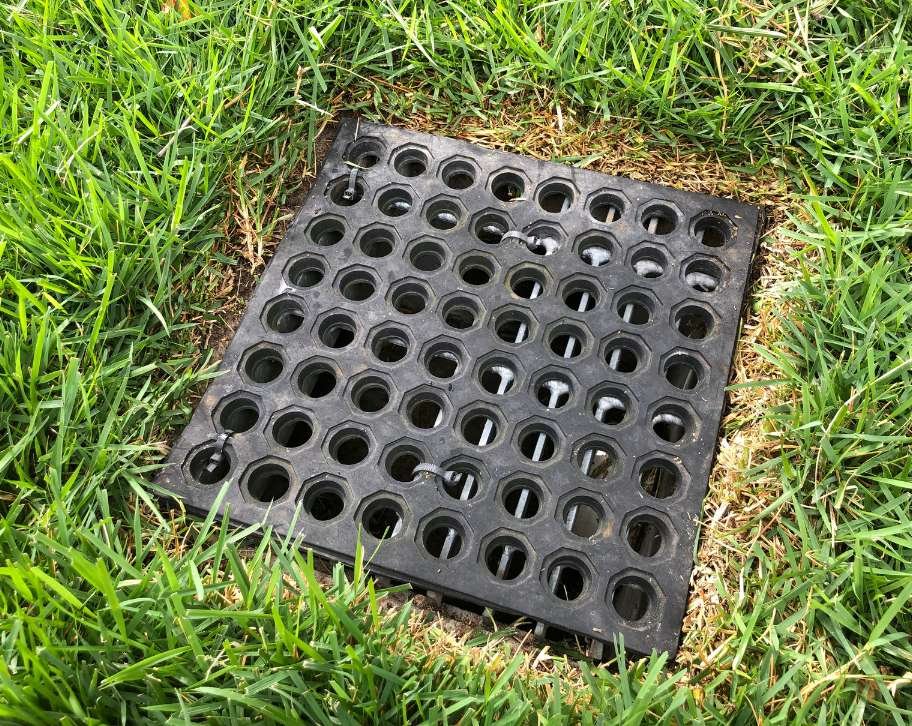
A French drain manages groundwater through perforated pipes and gravel. This subsurface system intercepts water that’s already saturating the soil around your foundation. The perforated pipe sits in a trench filled with 3/4″ clear crushed stone, wrapped in filter fabric. As the water table rises, groundwater enters through the small holes and flows by gravity to a safe discharge point. French drains handle slow, steady seepage rather than sudden bursts.
A downspout extension handles roof runoff through solid pipes. When rain hits your roof, gutters collect the water and channel it through downspouts. Without proper extension, this concentrated flow dumps directly beside your foundation. Solid PVC pipes carry this high-volume runoff rapidly away from the house to discharge locations like dry wells, pop-up emitters, or municipal storm sewers.
The two systems serve distinct purposes:
French drains address rising water tables and soil saturation
Downspout systems manage surface precipitation from your roof
During a typical Fredericton thunderstorm, your roof can shed hundreds of litres in minutes. A French drain designed for slow groundwater infiltration cannot handle this sudden volume.
Understanding this difference is critical before considering any connection. In New Brunswick’s clay-heavy soils, water drains slowly. Clay acts like a bowl, holding water rather than absorbing it quickly. This makes proper system selection even more important. If you force high-velocity roof water into a perforated French drain pipe, the water exits through the holes near your foundation, increasing hydrostatic pressure instead of reducing it.
Comparison: French drains vs. downspout systems
Feature | French Drain | Downspout System |
|---|---|---|
Purpose | Manages groundwater and soil saturation | Manages roof runoff and surface water |
Pipe Type | Perforated (water enters through holes) | Solid (water stays contained) |
Water Source | Rising water table, soil seepage | Concentrated roof precipitation |
Flow Rate | Slow, steady infiltration | High-volume bursts during storms |
Typical Depth | 18-24 inches below surface | 12-18 inches (minimum for frost protection) |
Fredericton’s freeze-thaw cycles add another layer of complexity. Pipes must slope correctly (at least 1/8 inch per foot, preferably 1/4 inch) to prevent standing water. Standing water freezes, expands, and cracks pipes or creates ice dams that cause spring overflow. Professional assessment determines which system your property needs based on soil composition, slope, and water table depth.
Direct connection to a perforated French drain pipe is strongly discouraged by drainage professionals. The preferred method is a dual-pipe system where both occupy the same trench but remain functionally separate. This approach protects your foundation while managing both groundwater and roof runoff effectively.
When you connect a solid downspout line to a perforated French drain, three problems occur:
Roof debris (shingle granules, leaves, organic matter) enters the system and exits through the perforations, clogging the surrounding gravel and filter fabric. Once the stone is “blinded” by silt, the French drain loses its ability to absorb groundwater.
High-volume roof runoff overwhelms the French drain’s capacity. Water backs up or erupts near your foundation during storms.
Water exits through perforations close to your basement walls, increasing hydrostatic pressure rather than reducing it.
The dual-pipe method solves these issues. A perforated French drain sits at the bottom of the trench, managing groundwater as designed. Above or beside it, a solid PVC pipe (SDR-35 or Schedule 40) carries roof water directly to a discharge point without leaking into the surrounding soil. This configuration uses one excavation while maintaining the integrity of both systems.
Safe discharge options include:
Dry wells: Underground chambers that hold runoff and allow slow infiltration
Pop-up emitters: Spring-loaded valves that open under water pressure to release water onto your lawn
Municipal storm sewers: Where local bylaws permit
Daylighting to lower property areas: Natural discharge to sloped terrain
Before installation, verify Fredericton’s municipal regulations regarding discharge locations.
New Brunswick’s freeze-thaw cycles require proper slope. A minimum of 1/8 inch per foot prevents standing water that freezes and cracks pipes during winter. When snow melts on your roof due to attic heat loss, the water enters downspouts. If the underground line is shallow or the exit point is blocked by snow, water freezes inside the pipe. This leads to ice damming in gutters or burst underground pipes. Professional installers position pipes at depths that balance frost protection with effective drainage.
“Clay soil common in the Fredericton area complicates matters. Clay has low permeability, meaning water drains slowly. If you rely solely on a French drain to handle roof runoff in clay soil, water pools indefinitely.”
A dedicated solid line ensures roof water moves away from the clay bowl surrounding your foundation.
1.Connecting to perforated pipe
Roof water exits through holes near the foundation, saturating soil and increasing hydrostatic pressure against basement walls. This defeats the entire purpose of drainage installation.
2. Inadequate slope
Pipes without proper pitch (minimum 1/8 inch per foot) allow water to pool and freeze during New Brunswick winters, causing system failure. Ice expansion cracks pipes and creates blockages that persist into spring.
3. Improper discharge location
Directing water onto a neighbour’s property, over sidewalks, or into areas that violate local bylaws creates legal issues and new erosion problems. Always verify municipal regulations before installation.
Professional assessment determines if your property’s soil type, slope, and water table require integrated drainage or separate systems. Atlantic Hardscape and Concrete conducts thorough soil analysis and evaluates natural drainage patterns before recommending solutions. Their dual-pipe installations account for Fredericton’s deep frost lines and clay soils, positioning systems for decades of reliable performance.
Properly designed downspout drainage prevents foundation damage, basement moisture, and landscape erosion. When roof water is directed away from your foundation through a solid pipe system, hydrostatic pressure against basement walls decreases dramatically. This prevents cracks, bowing, and interior flooding that can cost $15,000 or more in emergency foundation repairs.
Landscape preservation is another significant benefit. Without proper drainage, concentrated roof runoff creates channels in your lawn, washes away topsoil, and leaves gardens waterlogged. Soggy turf becomes spongy and unusable. Erosion undermines walkways and driveways. A well-designed system eliminates these issues, keeping your outdoor spaces functional and attractive.
The cost-effectiveness of upfront investment cannot be overstated. Professional drainage installation prevents exponentially higher remediation costs later. Basement waterproofing systems start at $5,000 and climb rapidly depending on the extent of damage. Landscape restoration following severe erosion adds thousands more. Investing in quality drainage today protects against these expenses.
Property value benefits are measurable in Fredericton’s competitive real estate market. Well-functioning drainage signals professional maintenance to potential buyers. Homes with visible water management issues (staining on foundation walls, settling driveways, basement moisture) face reduced offers or failed transactions. Buyers recognize that drainage problems indicate deferred maintenance and potential structural concerns.
System longevity depends on material quality and installation precision. Systems installed with commercial-grade fabric, proper pipe materials (SDR-35 PVC for downspout lines), and correct slope require only annual inspections and occasional cleanout flushing.
The integrated approach provides layered protection:
Surface grading directs water away from the foundation
French drains manage groundwater
Solid downspout lines handle roof runoff
Channel drains intercept surface water at critical transition points
This redundancy is particularly valuable in New Brunswick’s climate, where spring snowmelt and summer storms can deliver significant water volumes in short periods. If one system component is temporarily overwhelmed during intense rainfall, others continue functioning.
Atlantic Hardscape and Concrete offers comprehensive site assessments for properties throughout Fredericton and surrounding communities. With over 15 years of experience managing New Brunswick’s clay soils, deep frost lines, and challenging drainage conditions, their team delivers customized solutions that protect your investment.
Professional assessment determines the right drainage solution for your property’s unique conditions. Soil analysis, water table evaluation, and slope measurement inform system design. Integrated solutions include French drains, downspout connections, surface grading, and dry well installation. Each project moves from detailed 3D design concepts through to final custom build.
Service areas include Fredericton, Oromocto, New Maryland, Hanwell, Keswick, Lincoln, Brookside, Penniac, Douglas, and surrounding communities. If you’re experiencing foundation moisture, soggy lawns, or water pooling near your home, schedule a consultation to discover how expert drainage installation can protect your property for decades.
Corrugated pipe is prone to crushing under soil weight and debris accumulation in its ridges. The internal ridges catch shingle granules and organic matter, creating blockages that are difficult to clear. Smooth-wall PVC (Schedule 40 or SDR-35) is strongly preferred for downspout lines. The smooth interior allows maximum water velocity and prevents sediment buildup. Professional installations use rigid PVC that withstands soil pressure and can be easily snaked or jetted if maintenance is needed.
Minimum depth of 12-18 inches provides frost protection in New Brunswick’s climate. However, slope is more critical than depth. A minimum pitch of 1/8 inch per foot (preferably 1/4 inch per foot) ensures water flows continuously rather than pooling. Exit points must remain clear of snow and ice during winter. If the discharge location is blocked, water backs up into the system. Professional installers calculate depth based on your property’s frost line, soil type, and discharge location.
A pop-up emitter is a spring-loaded valve installed at the end of a drainage line. When water pressure builds inside the pipe, the valve opens and allows water to discharge onto your lawn away from the foundation. When pressure drops, the spring closes the valve, preventing debris from entering the system. Pop-up emitters are ideal for properties where discharge to municipal storm sewers isn’t available. They work well in areas with permeable soil that can absorb the released water without creating new pooling issues.
Annual inspection before spring snowmelt is recommended. Clear catch basin grates seasonally to prevent leaf and debris buildup. Flush cleanout points every 2-3 years to remove accumulated sediment. Professional systems installed with premium materials and correct encapsulation methods require minimal intervention. Installation-specific maintenance guidance tailored to each system’s design and materials helps extend system life. Lawn aeration helps maintain infiltration capacity around discharge points.
Municipal regulations vary by jurisdiction within the Fredericton area. Some neighbourhoods permit daylighting drainage pipes to the curb, while others require dry wells or on-property infiltration. Always verify local bylaws before installation to ensure compliance. Discharging water onto a neighbour’s property or creating hazards on public sidewalks is generally prohibited. Professional installers ensure discharge points meet regional requirements and prevent erosion or flooding issues downstream.
GET STARTED
Your dream space is within reach as we work together from detailed 3-D designs to the final custom build. Our process is both professional and exciting, and we look forward to taking this journey with you.
Contact
34 Jackstraw Court, Fredericton, NB, Canada, New Brunswick
