Have you noticed cracks spreading across your concrete walkway? Are stains and discolouration making your entrance look tired and neglected? Many property owners assume full replacement is the only solution when their walkways show signs of wear.
A concrete walkway overlay is a thin, polymer-modified layer applied directly over existing concrete that repairs surface damage, restores appearance, and adds protective strength without demolition costs. This resurfacing method works best on structurally sound surfaces with cosmetic issues like minor cracking, scaling, or staining. It typically costs less than full replacement and takes only 2-3 days to complete but depending on the size of the project.
This article explains what concrete overlays are, when they work best, cost factors to consider, and maintenance practices that extend their lifespan in Fredericton’s challenging freeze-thaw climate. You’ll learn how to determine if your walkway is a candidate for overlay or requires replacement, and what to expect from a professional installation.
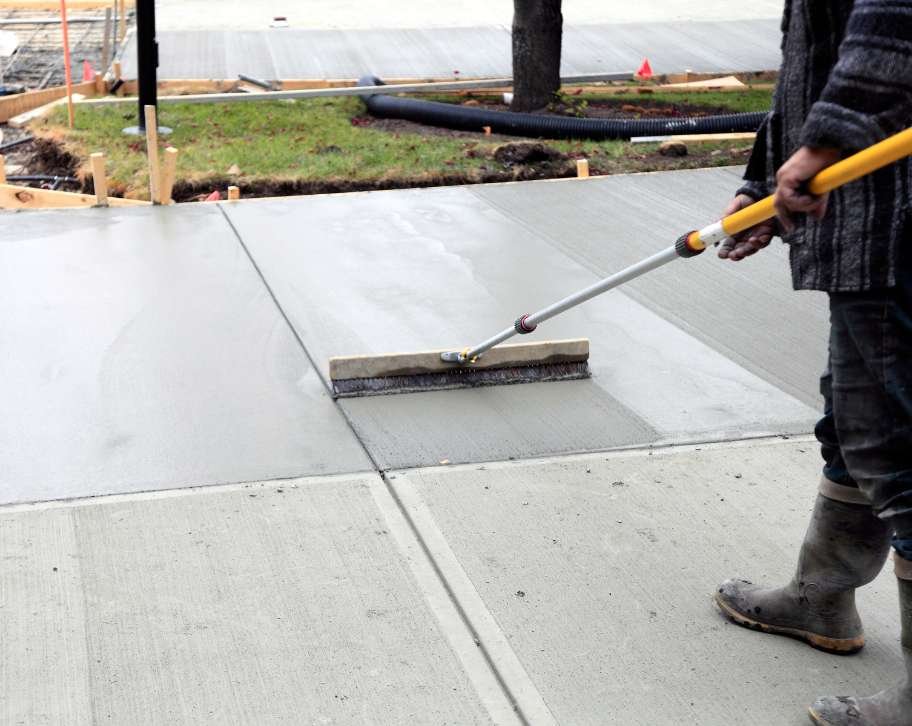
A concrete walkway overlay is a specialized cement mixture applied in thin layers over structurally sound existing concrete. The material typically contains Portland cement, silica sands, and polymer resins that bond to the original surface. Polymer modification is particularly significant for New Brunswick properties because it increases flexibility, allowing the overlay to withstand expansion and contraction caused by temperature swings. These resins also provide superior resistance to UV rays and chemicals like road salt, which are common in Atlantic Canada winters.
Overlays work best on walkways that are structurally sound but cosmetically compromised. Ideal candidates include surfaces with minor spider-web cracking, surface scaling where the top layer has flaked off, oil or rust stains, and general discolouration from weathering. The existing concrete must still have structural integrity for the overlay to perform properly.
However, overlays are not suitable for every situation. Structural red flags that require full replacement include:
Deep cracks running through the entire slab
Significant heaving where sections have lifted due to frost
Settled hollows indicating sub-base failure
These conditions signal problems beneath the surface that an overlay cannot fix. Applying an overlay over structurally compromised concrete will only result in the same problems reappearing through the new surface.
For property owners in Fredericton, overlays offer practical advantages. They eliminate demolition costs, reduce labour hours, and minimize disposal fees. The process is faster than full replacement, typically restoring walkway access within days rather than weeks. Real estate developers and property investors find overlays particularly valuable because they instantly boost curb appeal and property value without requiring massive capital expenditure.
Factor | Overlay | Full Replacement |
|---|---|---|
Condition Required | Structurally sound with surface damage | Structural failure, deep cracks, heaving |
Cost Range | Lower (no demolition or disposal fees) | Higher (includes removal and disposal) |
Timeline | 2-3 days typical | 1-2 weeks typical |
Disruption Level | Minimal | Significant |
Concrete walkway overlay costs vary based on several project-specific factors. While exact pricing depends on individual circumstances, understanding what influences the price helps property owners budget appropriately and make informed decisions.
The size of your walkway is the most obvious cost factor. Larger surfaces require more material and labour hours. However, per-square-foot pricing often decreases slightly on bigger projects due to efficiency gains.
Overlay type significantly impacts cost:
Micro-toppings and skim coats are the most economical option, providing a thin refresh layer
Spray-down overlays cost more due to specialized equipment and application techniques
Stampable overlays command premium pricing because they require skilled craftsmanship to create realistic textures and patterns
Surface preparation requirements directly affect project cost. Walkways with extensive staining, old sealers, or surface contamination need more intensive cleaning. This might involve pressure washing, diamond grinding, or shot-blasting to create the proper surface profile for bonding. The more preparation work required, the higher the labour cost.
Colour and pattern complexity also influence pricing. Single-colour applications are straightforward, while multi-toned finishes that mimic natural stone require additional steps and materials. Intricate stamped patterns demand more time and expertise than simple textures.
Sealer quality matters for long-term performance. High-quality, UV-resistant acrylic or polyurethane sealers cost more upfront but provide better protection against moisture penetration and colour fading. This is particularly relevant in Fredericton’s climate, where proper sealing prevents freeze-thaw damage.
Polymer-modified mixtures cost more than standard concrete, but they deliver superior durability in harsh climates. The enhanced flexibility and bonding strength justify the price difference when you consider the extended lifespan and reduced maintenance needs.
When comparing overlay costs against full replacement, the savings become clear. Replacement requires heavy machinery for demolition, labour-intensive removal, disposal fees at local facilities, and extended project timelines. Overlays eliminate these expenses entirely while still delivering a transformed appearance and renewed structural protection.
Professional installation ensures proper surface preparation and climate-appropriate materials, which directly impact how long your overlay lasts.
Cutting corners on installation quality to save money upfront often results in premature failure and higher long-term costs. According to industry data, professionally installed overlays in Atlantic Canada typically last 10 to 15 years with proper maintenance, delivering strong return on investment.
A professionally installed concrete overlay typically lasts 10 to 15 years in Fredericton’s challenging climate when properly maintained. Regular care protects your investment and prevents premature deterioration.
Routine maintenance checklist for Atlantic Canada:
Avoid harsh rock salt during winter. Sodium chloride can degrade the sealer and surface over time. Use sand or calcium chloride as safer alternatives, especially during the first winter after installation.
Reseal every 2 to 3 years. The sealer acts as a sacrificial protective layer that prevents water penetration and keeps colours vibrant. Regular resealing is the single most significant maintenance task.
Clean with pH-neutral products. Harsh acidic or alkaline cleaners can damage the sealer. Use gentle, pH-neutral solutions for routine cleaning.
Conduct annual spring inspections. Check for any cracks, drainage issues, or sealer wear after winter. Early detection allows for simple repairs before problems worsen.
Remove snow promptly. Allowing snow and ice to accumulate increases freeze-thaw stress on the surface. Clear walkways regularly during winter months.
Resealing is critical because the sealer protects the overlay from moisture infiltration. Water that penetrates the surface can freeze in winter, causing cracks and delamination. The sealer also shields against UV rays that fade colours and prevents staining from organic matter.
Winter care requires special attention in New Brunswick. Overlays are engineered for durability, but avoiding aggressive chemical de-icers during the first winter gives the material time to fully cure and develop maximum strength. After that initial season, continue using gentler alternatives to extend the overlay’s lifespan.
Routine cleaning prevents organic debris like fallen leaves and pine needles from decomposing on the surface and causing stains. Simple sweeping or rinsing with a garden hose removes most dirt. For stubborn stains, use a soft brush with pH-neutral cleaner rather than high-pressure washing, which can damage the sealer.
Professional installation with climate-adapted materials and proper drainage integration significantly reduces long-term maintenance demands. When water drains properly away from the surface, freeze-thaw damage becomes far less likely.
Atlantic Hardscape and Concrete brings 15 years of Fredericton-specific experience to concrete walkway resurfacing. Our team understands New Brunswick’s clay soils, challenging topography, and extreme weather patterns. We use polymer-modified cement mixtures engineered for Atlantic Canada’s freeze-thaw cycles, providing the flexibility and bonding strength your walkway needs to last.
Every project includes integrated drainage planning tailored to your property’s specific conditions. We assess surface grading, incorporate French drains or channel drains where needed, and ensure water moves away from your walkway rather than pooling beneath it.
Not every walkway is a candidate for overlay. We provide honest professional assessments based on the actual structural condition of your existing concrete. If resurfacing will effectively solve your problem, we’ll recommend it. If replacement is genuinely necessary, we’ll tell you that too. Our priority is your long-term satisfaction, not short-term profit.
Request a professional assessment to determine if your walkway is suitable for overlay or requires replacement. We’ll evaluate your concrete’s condition, discuss your aesthetic preferences, and provide a detailed proposal that fits your budget and timeline.
Concrete overlays typically range from feather-edge (paper-thin) to 3/4 inch thick, depending on the application type. Stampable overlays are usually applied at 1/4 to 1/2 inch thickness to allow for texture imprinting. Micro-toppings can be as thin as a credit card, while self-levelling overlays may be thicker to correct uneven surfaces.
Minor static cracks can be repaired with epoxy or specialized fillers before overlay application. However, active cracks that continue to move or structural cracks running through the entire slab require full replacement, not overlay. A professional assessment determines if your cracks can be successfully repaired or indicate deeper structural problems.
Polymer-modified cement mixtures are best for Atlantic Canada’s climate. These formulations include bonding agents and flexibility additives that withstand freeze-thaw cycles. Breathable, UV-resistant sealers are equally significant. Climate-appropriate materials specifically engineered for harsh weather conditions deliver the longest-lasting results in Fredericton and surrounding areas.
Most residential walkway overlay projects take 2 to 3 days from start to finish. This includes surface preparation, crack repair, overlay application, texturing or stamping, and sealer application. Foot traffic can usually resume within 24 hours of the final sealer coat, though full curing takes longer. Weather conditions may extend the timeline slightly.
Both options have distinct advantages depending on your goals and budget. Overlays provide seamless surfaces with lower ongoing maintenance and no weed growth between joints. Pavers offer a premium aesthetic and allow individual unit replacement if damage occurs. Overlays are typically faster to install and more cost-effective, while pavers provide greater design flexibility and a high-end appearance.
GET STARTED
Your dream space is within reach as we work together from detailed 3-D designs to the final custom build. Our process is both professional and exciting, and we look forward to taking this journey with you.
Contact
34 Jackstraw Court, Fredericton, NB, Canada, New Brunswick
