If you have watched muddy water carve channels down your slope after a heavy rain, carrying away topsoil and exposing roots, you know the sinking feeling that follows. For homeowners in Fredericton and the surrounding New Brunswick area, this is a familiar and costly problem, one that threatens foundations, lowers property values, and worsens every season.
Erosion control landscaping is about more than a tidy yard. It’s about protecting your most significant investment from New Brunswick’s demanding climate: intense spring snowmelts, heavy summer storms, and freeze-thaw cycles that destabilize even well-established landscapes. Left unchecked, erosion strips topsoil, compromises structural integrity, and pollutes local waterways.
The good news is that effective erosion control is achievable. For over 15 years, Atlantic Hardscape and Concrete has helped Fredericton-area homeowners transform vulnerable properties into stable, beautiful outdoor spaces built to withstand whatever Mother Nature delivers.
In this guide, you’ll find proven strategies for protecting your property from soil loss and water damage, including retaining walls, terracing, permeable paving, drainage systems, strategic vegetation, and bio-engineering techniques. You’ll also learn how to spot erosion problems early and determine which solutions best fit your situation, whether you’re tackling a steep slope, persistent pooling, or simply getting ahead of future damage.
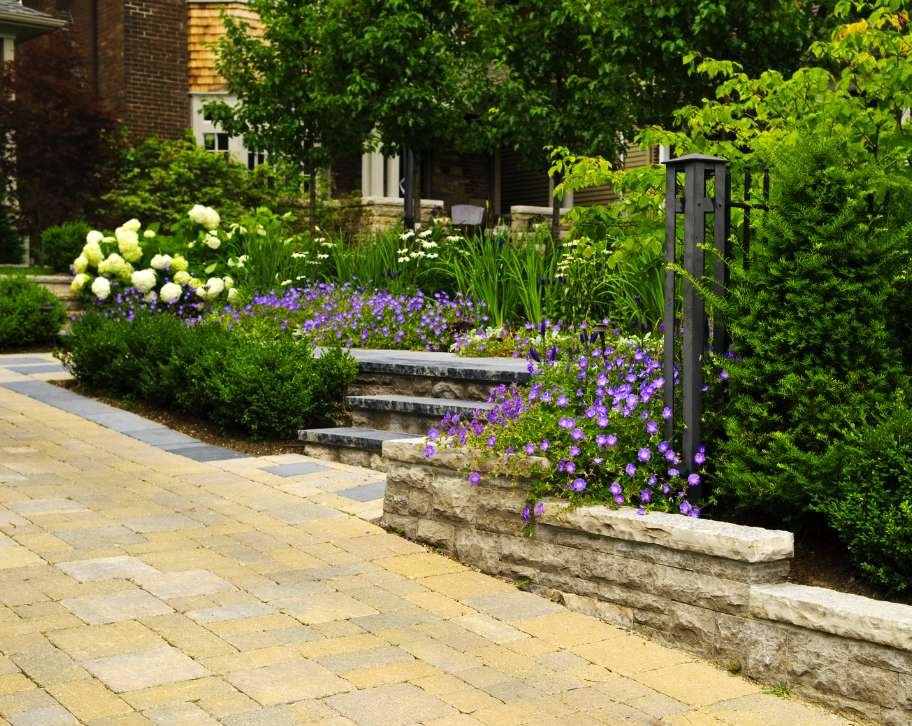
Soil erosion is the gradual displacement of your property’s topsoil by natural forces like water, wind, and ice. That critical top layer contains the nutrients, moisture, and oxygen plants need to thrive. When erosion removes it, vegetation struggles, resulting in stunted growth, thinning lawns, and bare patches.
For homeowners in the Fredericton area and broader New Brunswick region, erosion is a constant threat. Spring snowmelt, summer thunderstorms, and winter freeze-thaw cycles each bring their own erosive challenges throughout the year.
Warning signs are often subtle at first. Exposed tree roots, small channels called rills forming after rainstorms, thinning vegetation on slopes, and sediment accumulation all indicate active erosion that will worsen without intervention.
The consequences extend beyond your yard. Eroded soil carries fertilizers and pesticides into local waterways, disrupting aquatic ecosystems and increasing flood risks. Structurally, water-saturated soil can crack foundation walls, flood basements, and shift hardscaping elements like walkways and patios, repairs that can cost tens of thousands of dollars.
Erosion is also progressive. A small problem today becomes a major crisis within years, as deteriorating soil structure makes remaining soil increasingly vulnerable. Addressing erosion early is far less costly than extensive remediation later. Beyond structural and environmental concerns, erosion directly affects property value, bare patches and exposed roots signal neglect, while professional erosion control demonstrates responsible ownership and protects your most significant asset.
For properties with significant slopes or uneven terrain,common throughout the Fredericton area, hardscaping provides the most effective defense against erosion. These structural methods don’t just manage erosion symptoms; they fundamentally change how your property handles water and soil pressure. Atlantic Hardscape and Concrete specializes in engineering hardscape features that turn problem areas into functional, attractive outdoor spaces with permanent erosion protection.
The beauty of professional hardscaping in landscape design lies in its dual purpose. A well-designed retaining wall or terraced system creates usable flat surfaces for gardens or patios, manages drainage to protect your foundation, and adds architectural appeal to your landscape.
With over 15 years of experience in the Fredericton area, Atlantic Hardscape and Concrete understands how to design features that address New Brunswick’s unique climate challenges while enhancing your property’s functionality and beauty.
Retaining walls are engineered structures designed to hold back soil on slopes while managing the pressure that soil and water exert. When properly built, they prevent soil from sliding downslope and allow water to slowly filter into plant root systems rather than rushing destructively down the grade.
Atlantic Hardscape and Concrete begins every project with thorough site assessment, examining slope grade, soil composition, and water flow patterns. Construction quality is paramount: our process includes solid footings below the frost line, critical in New Brunswick where freeze-thaw cycles can heave poorly founded structures. We select specialized retaining blocks for your specific conditions, carefully placing and backfilling each course for a stable, integrated result.
The integration of drainage methods is essential for longevity. Water buildup behind a wall creates hydrostatic pressure that can cause even well-built walls to fail. We incorporate French drains, perforated pipes, and drainage aggregate to ensure water escapes rather than accumulates.
Material selection offers flexibility for different preferences and site conditions:
Natural stone provides a timeless look that blends beautifully with natural landscapes
Timber or wood options offer warmth and cost-effectiveness for residential applications
Concrete blocks come in various styles and colors, providing durability and design versatility
Beyond erosion control, retaining walls protect your foundation by directing water away from structures and transform sloped areas into usable outdoor spaces, gardens, seating areas, or level lawns that expand your property’s functionality.
Every retaining wall on property presents unique challenges. Atlantic Hardscape and Concrete’s expertise ensures your wall is customized, engineered for long-term performance, and built to the highest standards, the difference between a wall that lasts decades and one that fails prematurely.
When slopes are particularly steep, a single retaining wall often isn’t sufficient. Terracing, creating a series of stepped retaining walls provides the answer for very steep inclines. This staircase effect reduces the erosive force of water while distributing soil pressure more effectively across multiple structures.
The physics are straightforward but powerful. Instead of water gaining momentum down a long slope, terraced walls break that momentum at each level. Water slows, pools briefly, and infiltrates the soil rather than continuing its destructive path. Each terrace level creates a flat “cell” that can be planted with gardens or groundcover, transforming an unusable steep slope into a series of attractive, functional planting beds.
Professional engineers typically recommend terraced designs for slopes exceeding certain grades, as distributed pressure across multiple walls is structurally superior to a single tall wall. Atlantic Hardscape and Concrete ensures terraced systems are properly engineered for your specific slope, calculating optimal height and spacing while integrating adequate drainage at every tier.
Specialized materials enhance terrace stability. Geogrid, a mesh material placed between soil layers provides additional reinforcement, creating a composite structure stronger than either component alone. Each terrace level is built with the same attention to footings, leveling, and drainage as standalone retaining walls, with the added complexity of ensuring the entire system functions as an integrated whole.
The aesthetic benefits shouldn’t be overlooked. Terraced landscapes create visual interest that flat properties simply can’t match. Elevation changes make properties feel larger and more dynamic, while each level offers opportunities for varied plantings with different colors and textures. For properties previously considered unusable due to steep grades, terracing transforms liabilities into genuine assets.
Traditional concrete and asphalt worsen erosion by forcing rainwater into gutters and sewers. When water can’t infiltrate where it falls, it gains erosive velocity and overwhelms drainage systems. Modern landscaping prioritizes permeable hardscapes that allow stormwater to filter naturally into the ground, reducing runoff and erosion risk while maintaining attractive, functional surfaces.
Permeable paving is both environmentally responsible and practically effective. By allowing water to infiltrate on-site, these surfaces reduce strain on municipal stormwater systems, decrease flooding risks, and recharge groundwater supplies. For homeowners, permeable options prevent concentrated runoff that causes erosion around driveways, walkways, and patios. Atlantic Hardscape and Concrete specializes in permeable hardscaping solutions that address New Brunswick’s freeze-thaw challenges while delivering the durability and aesthetics homeowners expect.
Pervious concrete and porous asphalt are engineered alternatives to traditional solid surfaces, featuring interconnected voids that allow water to pass through into a stone reservoir base before infiltrating the native soil below. This dramatically reduces runoff while delivering surfaces that look and perform similarly to conventional paving.
Interlocking pavers with wide joints are a popular residential option, using spacers filled with permeable stone or sand to allow water infiltration. This system combines the aesthetic appeal of traditional pavers with the environmental benefits of permeability. River rock and gravel suit informal paths and parking areas, offering inherent permeability and a natural appearance that blends well with landscape plantings.
Proper installation is essential regardless of material choice. Atlantic Hardscape and Concrete ensures meticulous base preparation, including a minimum of 4 inches of gravel for reservoir capacity and structural support, correct grading to direct water through the system, and edge restraints to prevent migration over time.
Climate resilience is critical in New Brunswick. Quality permeable paving must withstand intense freeze-thaw cycles, requiring:
Deeper frost-resistant bases extending below the frost line
Solid drainage systems that prevent ice formation within the paving structure
Materials specifically rated for cold-climate performance
Atlantic Hardscape and Concrete’s local experience ensures permeable installations perform reliably through countless freeze-thaw cycles. An often-overlooked advantage of permeable paving is the prevention of soil compaction. Unlike traditional solid surfaces, permeable systems maintain soil structure, support healthier root growth, and allow vegetation to thrive right up to paved edges.
Effective erosion control relies on a simple principle: water follows the path of least resistance. Without a controlled path, water creates its own, leading to erosion, flooding, or foundation damage. Strategic drainage planning is essential for protecting your property, and it’s where Atlantic Hardscape and Concrete’s expertise delivers real value for Fredericton-area homeowners.
Drainage systems function as invisible infrastructure, unseen but critical to your landscape’s health and your home’s structural integrity. When properly designed, they intercept water before it causes problems and direct it away from vulnerable areas. Atlantic Hardscape and Concrete specializes in complete yard drainage solutions tailored to New Brunswick’s unique climate challenges, including intense spring snowmelt, summer storms, and the drainage complications created by freeze-thaw cycles.
French drains are one of the most effective tools for managing groundwater and preventing erosion. These systems use sloped trenches filled with gravel and perforated pipes to collect and redirect excess water underground. By providing a clear path of least resistance, a properly positioned French drain intercepts water before it causes surface erosion or foundation damage.
Strategic positioning is essential to French drain effectiveness. Atlantic Hardscape and Concrete assesses where water flows naturally on your property, positioning drains to intercept it before it reaches vulnerable areas such as foundations, low-lying lawn sections, or erosion-prone zones. The drain then redirects water to safe discharge points, all out of sight beneath the surface.
Proper drainage installation demands precision. Trenches must be dug to the right depth, with a consistent downward slope so water flows freely rather than pooling. Gravel size, pipe perforation placement, and aggregate selection all influence performance. Atlantic Hardscape and Concrete’s expertise ensures every detail is optimized for each specific property.
One of the greatest advantages of French drains is their invisibility. Once installed and backfilled, the system leaves no trace above ground, just a healthier, drier landscape. This makes them especially appealing to homeowners who want effective drainage without changing their property’s appearance.
French drains also play a critical role alongside retaining walls. Without proper drainage, water builds up behind walls and creates hydrostatic pressure that can cause structural failure. Atlantic Hardscape and Concrete routinely integrates French drains behind retaining walls to allow water to escape, protecting long-term wall performance without any visible impact.
Finally, discharge point planning ensures collected water is directed safely away from the property and neighboring areas, either into the ground or approved storm systems. Atlantic Hardscape and Concrete identifies discharge locations that comply with local regulations and work with the property’s natural topography, completing a drainage solution that is as responsible as it is effective.
Surface drainage systems manage water that flows over the ground, using channel drains, swales, and berms to provide above-ground solutions that can be designed to complement landscape aesthetics.
Channel drains are linear systems ideal for hardscaped areas like driveways and patios. A narrow, grate-covered channel collects surface water and directs it to discharge points through underground piping, effectively preventing pooling and erosion.
Swales are shallow, engineered depressions that guide water naturally along predetermined paths. Often planted with grass or vegetation, they blend seamlessly into the landscape and allow water to gradually infiltrate the ground as it moves, making them an eco-friendly drainage option.
Berms work in the opposite way, raised earthen barriers that redirect water away from vulnerable areas. Strategically placed upslope from a foundation, a berm diverts water around structures rather than toward them. Like swales, berms can be planted attractively, turning functional drainage features into landscape focal points.
Proper grading is essential to effective surface drainage. Pathways and patios should be graded to ensure water flows away from buildings. Without controlled drainage, water will exploit weak points in the landscape,loose soil, steep slopes, or thin vegetation creating erosive rills and gullies that worsen over time. Professional drainage design anticipates water flow and provides managed paths to prevent this damage.
In New Brunswick, seasonal extremes make drainage planning especially critical. Spring snowmelt can deliver large volumes of water while the ground remains partially frozen, and summer storms can drop inches of rain within hours. Drainage systems must be sized to handle these peak conditions, not just average rainfall, ensuring reliable performance year-round.
Exterior foundation drains and waterproofing membranes provide permanent protection against water-related foundation issues. Typically installed during construction or major renovation, these systems create integrated protection that lasts the life of the home.
Exterior foundation drains are positioned at the foundation footing level, collecting water before it infiltrates basement walls. Waterproofing membranes applied to exterior foundation walls add a physical barrier against water penetration. Together, they provide redundant protection, drainage removes water before it reaches the foundation, while the membrane prevents infiltration if water does reach the wall.
These systems work in concert with surface drainage for comprehensive water management. Surface systems prevent water from reaching the foundation, subsurface systems handle groundwater, and foundation drains provide a final line of defense at the structure itself. This layered approach ensures protection even during extreme weather.
Seasonal groundwater levels are an important consideration during planning. In areas where the water table rises seasonally, systems must handle both surface runoff and groundwater. Atlantic Hardscape and Concrete’s expertise includes understanding local groundwater conditions and designing systems that perform reliably year-round.
The long-term value of proper foundation drainage cannot be overstated. Foundation repairs are among the most expensive problems a homeowner can face. Preventing water infiltration protects structural integrity, prevents flooding, eliminates mold-causing moisture, and preserves property value, making it far less costly than repairing damage after it occurs.
While structural methods and drainage systems provide critical erosion protection, strategic vegetation selection creates sustainable, self-maintaining erosion control that improves over time. Plants anchor soil, break rainfall impact, and support the biological activity that resists erosion, making them nature’s most effective erosion control engineers.
Native species adapted to New Brunswick’s soil and climate provide superior erosion control compared to non-native alternatives. Having evolved to thrive in local conditions, they require less maintenance, water, and fertilizer while offering better habitat for local wildlife. Atlantic Hardscape and Concrete’s landscape design expertise includes creating planting plans that balance erosion control functionality with aesthetic beauty, using native species suited to your specific site conditions.
Effective erosion control plantings rely on a multi-layered approach combining trees, shrubs, perennials, and groundcovers. This diversity provides protection at different heights and root depths, creating redundant stability even if individual plants fail. Deep-rooted grasses and perennials form a subterranean net that holds soil together, shrubs add mid-layer coverage, and trees provide the deepest roots for long-term stabilization.
The canopy layer also plays a critical but often overlooked role. Rainfall striking bare soil causes splash erosion, the first step in soil loss. A dense canopy breaks the force of falling rain, allowing it to drip gently onto the surface rather than dislodging soil particles.
Recommended native groundcovers for the Atlantic region include:
Creeping juniper: Spreads quickly with dense, evergreen foliage and extensive roots
Wild strawberry: Creates a low mat that holds soil while producing seasonal flowers and edible fruit
Native sedges: Thrive in various moisture conditions with deep, fibrous root systems
Bearberry: An evergreen option well-suited to sandy soils and slopes
Shrub selection for mid-layer coverage should include:
Serviceberry: Offers spring flowers, edible berries, fall color, and a solid root system
Red-osier dogwood: Thrives in moist areas with striking red winter stems
Bayberry: Salt-tolerant and ideal for coastal or roadside plantings
Sumac species: Provide dramatic fall color and aggressive roots that stabilize soil effectively
Tree choices for long-term stability include:
Red oak: Develops an extensive root system suited to well-drained slopes
White pine: Adapts to various soil conditions with year-round evergreen coverage
Red maple: Tolerates a wide range of moisture conditions with spectacular fall color
White spruce: An evergreen option with good wind resistance and adaptability
Diverse plantings are essential for resilient erosion control. Varied root depths ensure deeper roots maintain stability if surface roots are damaged. Different growth patterns mean that when one species struggles, others thrive. Combining deciduous and evergreen species ensures year-round coverage. Together, these layers create protection that only strengthens as plants mature and root systems intertwine.
Atlantic Hardscape and Concrete’s backyard landscape design expertise includes developing planting plans tailored to your site’s sun exposure, soil moisture, slope, and aesthetic preferences, delivering effective erosion protection and lasting beauty for your property.
Rain gardens are designed depressions planted with water-tolerant vegetation, positioned to capture runoff from downspouts, driveways, or sloped areas. Water pools temporarily in the depression for no more than 24-48 hours, slowly infiltrating amended soil that filters pollutants and recharges groundwater supplies.
Strategic placement is essential. Rain gardens should intercept runoff before it causes erosion at the base of downspouts, at the toe of slopes, or in natural low points, while remaining at least 10 feet from building foundations to prevent basement seepage.
Suitable plant species for rain gardens include:
Swamp milkweed: Pink flowers that support monarch butterflies
Swamp mallow: Large, showy blooms that thrive in temporarily flooded conditions
Blue flag iris: A native wetland plant with striking purple flowers
Joe-pye weed: Tall clusters of pink flowers with excellent wildlife value
Sizing matters for effectiveness. A rain garden should cover roughly 20-30% of its drainage area, with a depth of 4 to 8 inches sufficient to hold meaningful water volume while draining within 48 hours. Soil amendment needs depend on existing conditions: clay soils require compost and sand to improve infiltration, while sandy soils benefit from compost for nutrient retention.
Beyond function, rain gardens offer real aesthetic value. They create attractive focal points with seasonal blooms, draw butterflies, birds, and beneficial insects, and look like intentional landscape features rather than drainage infrastructure, enhancing your property’s beauty while managing stormwater effectively.
Mulch acts as a protective blanket for your topsoil, providing a simple but highly effective erosion control measure. This “top dressing” shields soil from wind, sun, and the impact of heavy rain, preventing the initial soil displacement that begins the erosion process.
Erosion prevention mechanisms make mulch particularly valuable. When rain falls on mulched soil, the mulch absorbs the impact, preventing splash erosion. Water infiltrates more slowly and evenly through the mulch layer, reducing surface runoff. The mulch layer physically holds soil in place, preventing wind from picking up and carrying away fine soil particles. During dry periods, mulch shades the soil, reducing evaporation and maintaining moisture that keeps soil cohesive and resistant to erosion.
Additional mulch benefits extend beyond erosion control:
Moisture retention: Plants require less irrigation and remain healthier during dry periods
Temperature moderation: Protects plant roots from extreme heat in summer and cold in winter
Weed suppression: Reduces competition for water and nutrients while eliminating the soil disturbance that weeding causes
Soil improvement: As organic mulches decompose over time, they add valuable organic matter to the soil, enhancing its structure, fertility, and ability to support healthy plant growth
Pest and disease reduction: Mulch creates a barrier that limits soil-borne pathogens from splashing onto plant leaves during rainfall, reducing the risk of fungal diseases and certain pest infestations.
If you are noticing soil washing away after heavy rain or uneven ground forming around your foundation, it may be time to consider professional erosion control landscaping. At Atlantic Hardscape and Concrete, we provide complete erosion control solutions for homeowners in Fredericton, starting from detailed site evaluation and landscape design to expert installation of retaining walls, drainage systems, grading, and protective ground covers. Our team focuses on long-term stability, proper water flow management, and durable hardscape features that protect your property while enhancing curb appeal. With the right combination of landscaping and hardscaping, you can prevent costly damage and keep your outdoor space strong, safe, and visually appealing year-round.
GET STARTED
Your dream space is within reach as we work together from detailed 3-D designs to the final custom build. Our process is both professional and exciting, and we look forward to taking this journey with you.
Contact
34 Jackstraw Court, Fredericton, NB, Canada, New Brunswick
