The standard hydroseed germination time produces visible green sprouts within 5 to 10 days of application. Full turf establishment and dense ground coverage take approximately 60 to 90 days under proper care and steady moisture. Homeowners working with Atlantic Hardscape and Concrete often track this growth timeline to plan seasonal outdoor maintenance, particularly for their hydroseeding project.
Hydroseeding blends turf seed, water, starter fertilizer, wood fibre mulch, and specialized soil tackifiers into a rich liquid slurry. This wet mulch blanket seals in continuous moisture and shields fragile embryos against displacement from wind and rainwater runoff, ensuring seeds germinate effectively.
Understanding the hydroseed grass growth timeline, species germination profiles, regional weather dynamics, and structured hydration practices helps property owners achieve a healthy lawn.
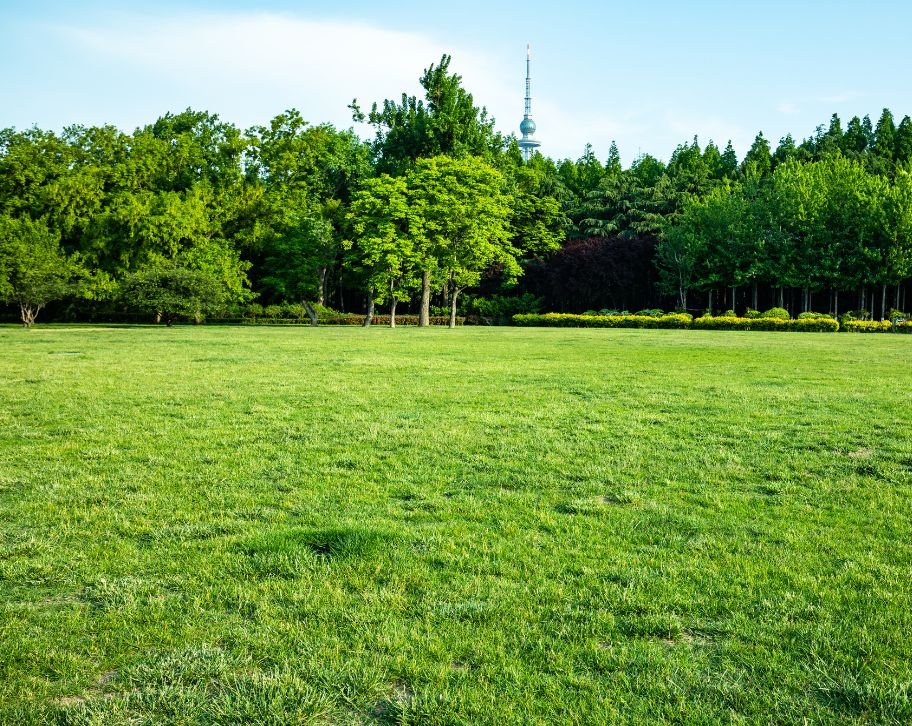
The standard hydroseed germination timeline spans from 5 days for early emergence to roughly 8 weeks for a fully usable turf surface. Slurry mixtures achieve up to 85% seed germination rates under consistent misting compared to roughly 50% for standard dry broadcast seeding. Mulch fibers hold 10x their dry weight in water to maintain constant hydration, softening the seed coat quickly to start growth.
During the opening phase, the seed absorbs moisture directly from the saturated mulch layer. A primary root emerges to anchor into the topsoil, followed by the initial green shoot piercing through the mulch crust. Within 3 to 4 weeks, secondary roots and lateral tillers develop to form a tight, interwoven vegetative blanket.
Full structural maturation occurs over 60 to 90 days as root systems extend 10 to 15 centimetres into the soil profile. This deep rooting produces a resilient lawn This area is capable of handling regular foot traffic and changing weather conditions, especially during the spring and fall.
Understanding the distinct time of year to hydroseed can significantly impact the success of the project. hydroseeding germination stages This method allows property owners to monitor progress accurately during the initial two months of the hydroseeding process.
Days 1 to 5 involve moisture absorption, where seeds take in water from the wood and cellulose mulch to activate enzymes, crucial for the germinate process. Metabolic activity initiates inside the embryo, preparing the root cap to emerge into the damp topsoil, which is critical for seeds to germinate.
Days 5 to 14 mark early emergence, as primary roots anchor into the subgrade and slender shoots push through the protective surface crust. A noticeable light green haze begins spreading across the yard during this window.
Days 15 to 28 represent the tillering phase, where primary grass blades produce side shoots that knit separate seedlings together. Lateral expansion fills small gaps across the soil surface and thickens the emerging turf canopy.
Days 29 to 60 focus on root maturation, driving root systems 10 to 15 centimetres into the ground, which is essential for a successful hydroseeding project. The turf strengthens against heat and moisture stress while establishing full turf density.
The standard timeline shows visible green growth within 5 to 7 days under favourable moisture and warmth. Fast-germinating nurse grasses appear as a fine, needle-like fuzz that provides early ground stabilization. Slower permanent varieties require additional days to push green tips through the mulch blanket. Property owners must avoid overseeding during the opening 14 days, as distinct species emerge at different intervals across sunny and shaded zones.
The speed of seed sprouting depends directly on the botanical species present within the applied seed blend. Cool-season mixtures combine fast-starting nurse crops with slower germinating species, enhancing the hydroseeding process. sod-forming grasses to balance rapid erosion control with long-term turf resilience.
Grass Species | Botanical Name | Sprouting Window | Growth Habit and Role |
|---|---|---|---|
Perennial Ryegrass | Lolium perenne | 5 to 10 Days | Fast emergence, high wear tolerance, serves as initial nurse crop |
Fine Fescue | Festuca rubra | 7 to 14 Days | Moderate growth, outstanding shade adaptation, thrives in acidic soils during the best time to hydroseed. |
Tall Fescue | Festuca arundinacea | 7 to 14 Days | Moderate growth, deep root capability, excellent heat tolerance |
Kentucky Bluegrass | Poa pratensis | 14 to 28 Days | Slower emergence, self-repairing rhizomes, forms dense sod canopy |
Perennial Ryegrass acts as an early protector by securing the soil matrix within the opening week. Fine Fescues and Tall Fescues follow during the second week, offering drought resilience and shade tolerance. Kentucky Bluegrass requires up to 28 days to sprout, spreading subterranean rhizomes that bind the entire turf layer together.
External weather conditions and ground quality dictate the pace of grass development after slurry application. Soil temperature serves as the primary biological trigger for seed activation, requiring sustained levels between 10°C and 18°C. Cold ground below 8°C forces seed into temporary dormancy, which extends the germination period until steady warmth returns.
Late summer to early autumn provides the ideal planting window in Atlantic Canada. Soil holds summer warmth, autumn dew reduces evaporation, and annual weed competition declines. Spring applications perform well too, though cold early soils and heavy rainfall can slow initial development.
Soil chemistry also plays a major role in early seedling health. Cool-season grasses require a soil pH between 6.0 and 7.0 for smooth nutrient intake. Acidic soils bind up phosphorus, requiring agricultural limestone applications to restore balance. Decompacting the top 10 centimetres of ground allows roots to penetrate without expending excess energy.
A structured watering schedule keeps seedlings alive and builds deep root networks. The specialized mulch retains moisture efficiently, but if the seed embryo dries out after activation, the plant dies quickly. Irrigation must transition from frequent surface mists to deep soakings as roots expand downward
Days 1 to 14 require light hydration 2 to 4 times daily for 5 to 10 minutes per zone. Keep the mulch continuously dark and damp while preventing surface puddling and seed runoff.
Days 15 to 28 transition to 1 to 2 watering sessions daily for 15 to 20 minutes per zone. This deeper watering pattern moistens the upper 5 centimetres of soil, encouraging roots to push downward.
Days 29 and beyond shift to 2 to 3 deep watering sessions per week, delivering 2.5 centimetres of total water weekly. Deep watering builds drought resistance and strengthens root structures.
Property owners should avoid watering late in the evening. Lingering surface moisture overnight creates conditions that encourage damping-off fungal pathogens in young seedlings.
Evaluating hydroseeding vs sod growth speed involves balancing the initial usable timeline against root development depth. Sod provides an instant visual lawn on day 1 and permits light foot traffic within 2 to 3 weeks. However, sod rolls lose up to 90% of their root mass during harvest, requiring intensive watering to recover from transplant shock and knit into native ground.
Hydroseeded grass develops its root structure directly within the native soil bed without root disturbance. Hydroseeding applications cost roughly 50% less than sod installation on properties larger than 5,000 square feet. While hydroseed requires 6 to 8 weeks before regular foot traffic is safe, its undisturbed roots grow deeper into natural soil channels for lasting resilience, making it the best time to hydroseed.
Selecting the appropriate lawn establishment method requires a detailed assessment of site grading, soil structure, drainage patterns, and sunlight exposure. Correct subgrade preparation establishes the base for healthy turf roots, preventing common issues such as poor water drainage, patchiness, and erosion.
Atlantic Hardscape and Concrete provides complete site grading, subsoil preparation, and ground leveling to create ideal conditions for turf installation. Contact us to schedule a site evaluation and receive a professional assessment for your hydroseeding project.
The standard hydroseed germination time This method provides visible sprouts in 5 to 10 days, with complete turf maturity developing across 60 to 90 days, making it an efficient time for the first mow. Achieving a durable lawn requires balanced seed selection, careful subsoil preparation, and a consistent multi-phase watering plan. By understanding each growth stage and protecting young seedlings from heavy foot traffic, property owners can establish thick, healthy turf that improves outdoor spaces.
Mow your lawn when grass blades reach 8 to 10 centimetres, typically between days 21 and 35. Follow the one-third rule by never cutting more than one-third of the total blade height during a single session. Use a lightweight walk-behind mower with sharp blades to avoid tearing fragile roots.
If the mulch dries out after seeds begin internal cell growth, the fragile embryos can perish within hours. Rehydrate the mulch crust immediately with gentle misting cycles. Quick rehydration can salvage unsprouted seeds before the protective blanket hardens completely.
Keep all foot and pet traffic off the area for the initial 21 days to avoid crushing tender root caps. Light footsteps are permissible only when strictly necessary for adjusting sprinkler equipment or performing the first mow after the initial growth period.
Uneven emergence usually occurs because blended seed mixes contain species with different germination speeds, which can take longer. Inconsistent sprinkler coverage patterns or isolated areas of dense soil compaction can also create temporary gaps in early shoot growth.
Late summer to early autumn, from mid-August to mid-September, is the ideal seasonal window. Ground temperatures remain warm, evaporation slows down, and weed competition drops. Late spring serves as a dependable secondary window once soil temperatures consistently pass 10°C.
GET STARTED
Your dream space is within reach as we work together from detailed 3-D designs to the final custom build. Our process is both professional and exciting, and we look forward to taking this journey with you.
Contact
34 Jackstraw Court, Fredericton, NB, Canada, New Brunswick
