Do you want a thick, green lawn and feel unsure where to start? Many property owners compare hydroseeding vs sod and feel stuck between mixed advice and myths. Cost, timing, and maintenance all matter, especially in New Brunswick’s climate.
Hydroseeding sprays a slurry of grass seed and mulch on prepared soil, while sod installs ready-grown turf from a farm. The better option depends on budget, schedule, property size, appearance goals, and how fast you need a usable yard.
Hydroseeding is a lawn seeding method that sprays a slurry of seed, mulch, water, and fertilizer onto prepared soil. This process creates an even seedbed that keeps moisture near each seed and protects the soil from wind and rain. For Fredericton and nearby New Brunswick communities such as Oromocto and Hanwell, moisture control matters during cool springs and warm, drying summers.
In a typical mix, the tank holds:
Grass seed suited to Atlantic Canada
Wood or paper fibre mulch
Starter fertilizer
A tackifier that makes everything stick
Water and a green dye for visibility
The green colour in the slurry is only a dye so the operator can see coverage. Common grass blends include Kentucky bluegrass, perennial ryegrass, and fine fescue, adjusted for sun, shade, and soil on each property.
Once sprayed, the tackifier helps bind mulch, seed, and topsoil into a thin blanket. This layer reduces erosion on slopes or new construction sites, which is useful near the Saint John River Valley where heavy spring rain can move bare soil. As the mulch stays damp, seeds germinate through it and send roots into the native soil beneath. Over time, the mulch breaks down and feeds the soil, leaving a lawn that grew in place instead of being moved from a farm.
Hydroseeding works well for:
Large residential backyards
Commercial grounds and campuses
Roadside banks and drainage ditches
Multi-lot developments and open slopes
The process can cover irregular shapes and steep ditches more easily than sod rolls. The trade-off is time, since the yard looks unfinished until the young grass fills in over several weeks.
The hydroseeding application process follows clear steps that set up the seed for even growth. Good preparation and early care matter more than the spray itself, so a well-planned sequence protects your investment. For Fredericton properties, that means paying attention to grading, drainage, and timing in spring or early autumn.
Site preparation comes first with clearing debris, old turf, and rocks, then grading for drainage away from foundations and low spots. The soil is usually tilled or loosened, and organic material or lime is added if soil tests suggest it. A smooth, firm surface helps the slurry stick and keeps water from pooling in hollows.
Mixing and spraying follow, as the contractor loads seed, fertilizer, mulch, tackifier, and water into the tank and blends them until even. The operator then sprays the mix across the seedbed in overlapping passes so coverage is uniform across slopes, corners, and tight areas near hardscape edges. The green tint makes missed patches easy to spot and correct during the same visit.
Early maintenance focuses on watering and protection while seeds germinate, usually over 7 to 14 days in New Brunswick weather. Light irrigation several times per day keeps the mulch damp, but not flooded, so the surface does not dry into a hard crust. Foot traffic and pet use stay off the new area until grass reaches mowing height and feels firm underfoot.
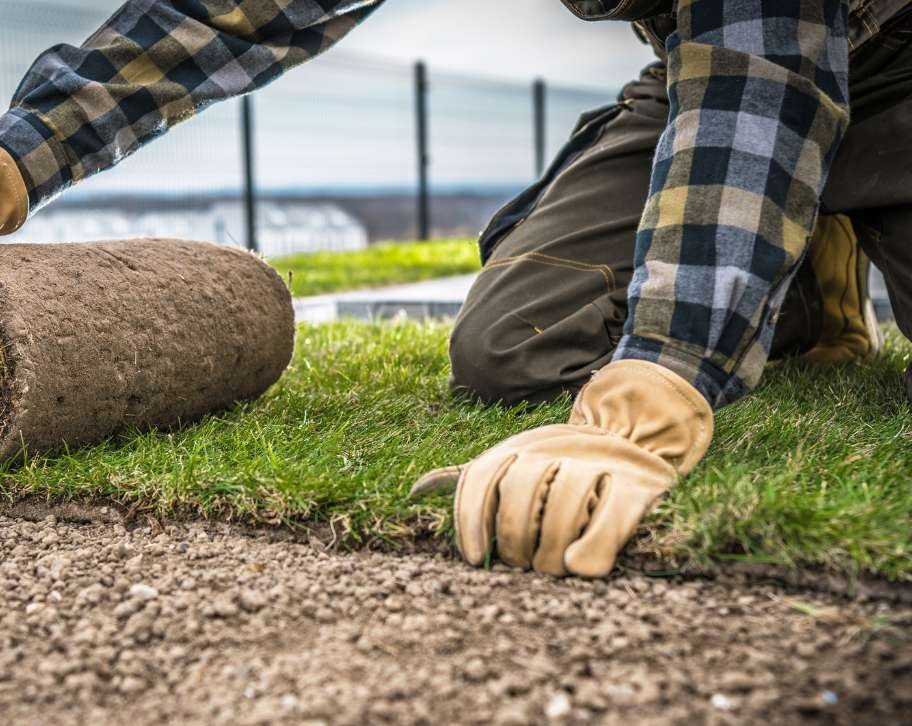
Sod installation places pre-grown turf, complete with roots and a thin layer of soil, directly onto prepared ground. In one day, a bare lot in Fredericton can change into what looks like a finished lawn, even though the roots still need time to anchor. Sod is grown on farms around Atlantic Canada, then harvested in rolls or slabs and shipped quickly so it stays fresh.
Each piece of sod carries thousands of individual grass plants, usually blends that suit sunny conditions common in many front yards. Because the turf is already thick, it hides most exposed soil and gives immediate colour and coverage. This visual effect helps real estate developers and property investors present homes in New Maryland or Lincoln with strong curb appeal at open houses.
Key benefits of sod include:
Instant appearance: Immediate green cover and finished look
Faster use: Light traffic in about 2 to 3 weeks
Fast erosion control: Root mat holds soil in place at once
Weed suppression: Dense turf canopy blocks light from weed seeds
However, sod is still a transplant. It grew in different soil and may face stress as it adjusts to the new yard. Careful watering and rolling help the farm soil bond to local New Brunswick soil, so roots can bridge the seam and grow deeper. Good site preparation and timing in the growing season are as important here as with hydroseeding.
A correct sod installation process helps the turf root quickly and stay even across the yard. Skipping steps can lead to dry seams, spongy spots, or thin areas that later need overseeding. A clear sequence from soil work to first watering gives new sod in Fredericton the best start.
Soil preparation begins with removing old grass, weeds, stones, and construction debris, then grading so water drains away from buildings. The top layer is loosened and improved with compost or other material to reach a consistent depth, usually around 10 to 15 cm. A rake creates a smooth surface free of large clumps, which helps sod sit flat.
Laying the sod comes next, starting along a straight edge such as a driveway, walk, or patio. Rolls are placed in a staggered brick pattern so joints do not line up, which reduces the risk of visible lines later. Edges meet tightly without overlap, and pieces around curves or garden beds are cut cleanly for a neat fit.
Final settling and watering make the lawn ready for rooting, with a roller used to press sod into the soil and remove air pockets. Right after rolling, the whole area is soaked until water reaches the native soil below the sod layer. For the next 2 weeks, the surface stays consistently moist, and traffic is kept light so the new root system is not disturbed.
Cost and timeline comparisons between hydroseeding and sod often decide which method owners choose. Hydroseeding usually has a lower material and labour price per square foot, while sod trades higher cost for speed. In Fredericton and surrounding New Brunswick communities, the difference stands out on large residential lots and broad commercial sites.
Hydroseeding cost per square foot is generally a fraction of sod installation cost because you pay for seed, mulch, fertilizer, and one spray visit. The crew can cover several thousand square feet in a short day with limited manual lifting. For real estate projects with open slopes or wide backyards, the grass seed vs sod vs hydroseed calculation often points to hydroseeding as the budget-friendly choice.
On a small area, such as a town lot in Brookside or a storefront in Oromocto, the balance changes. Sod brings higher installation cost at the start because the price reflects months of irrigation, mowing, and fertilizing at the farm. Delivery, manual hauling, and trimming around paths or retaining walls add more labour hours. In return, the owner can walk on the lawn sooner and show a finished yard to clients or buyers.
Time to a usable lawn also differs:
Hydroseeded grass: Green shoots in 7 to 14 days, light use in about 6 to 8 weeks, depending on weather and seed mix.
Sod: Finished look at once, light use in about 2 to 3 weeks, then gradual move to regular traffic as roots deepen.
Both methods need clear watering plans during this establishment stage, so the price of sod vs hydroseed includes water and care, not only the first day of work.
This comparison lines up cost, speed, erosion control, and labour needs to answer “Which is cheaper, sod or hydroseed?” and “Which is better, sod or hydroseed, for my project?”
Factor | Hydroseeding | Sod |
|---|---|---|
Upfront price | Lower cost per square foot, especially on large areas | Higher cost because turf is grown on a farm |
Establishment speed | Visible in 1 to 2 weeks, full use in about 6 to 8 weeks | Instant green look, light use in about 2 to 3 weeks |
Labour demand | Fewer staff, mechanized spraying, efficient on large or sloped sites | More manual work carrying, cutting, and fitting heavy rolls |
Erosion control | Mulch blanket protects soil, especially on banks and ditches | Dense turf holds soil at once on flat and gently sloped ground |
Custom grass mix | Easy to choose seed blends for shade, sun, or traffic patterns | Limited to mixes offered by sod farms in Atlantic Canada |
Over the long term, both methods can give healthy lawns across Fredericton and New Brunswick, as long as water, mowing, and fertilizing stay consistent. Hydroseeded lawns often develop deeper roots because they grow in place from seed. Sod can please buyers and tenants faster, so developers may accept higher sod pricing to meet tight sales or opening dates.
Water and maintenance needs differ between hydroseeding and sod during the early weeks, even though both require close attention. Hydroseeding needs frequent surface moisture so seeds do not dry out, while sod needs deep soaking so the root mat bonds with underlying soil. In the Maritime climate around Fredericton, adjusting to rain, wind, and heat makes a large difference in success.
For a new hydroseeded lawn, the mulch must stay damp until the grass canopy closes. Common practices include:
Light irrigation 2 to 3 times a day for the first couple of weeks
Extra watering during dry wind or hot sun in New Brunswick summers
Avoiding heavy spraying that causes puddles or runoff
Once the grass reaches about 3.5 to 4 cm, watering shifts to deeper, less frequent sessions that encourage roots to grow down.
New sod absorbs a lot of water at first because each roll acts like a sponge that has been cut from its water supply. Standard steps include:
Soaking the entire area right after installation so water reaches through the sod and into the native soil
Watering daily, or even twice a day in hot spells, for 7 to 14 days
Watching seams and edges for drying or shrinking and adjusting water as needed
After roots begin to grab, owners move to deeper watering a few times per week.
Routine maintenance starts soon after establishment. Hydroseeded lawns can be mowed once grass reaches around 7 to 8 cm, using sharp blades and small height cuts. Sod can be mowed earlier, yet blades still stay high to protect new roots near the surface. For both methods, early fertilizing follows product labels and local guidelines in New Brunswick, and regular mowing helps thicken the turf so it crowds out weeds.
Weed control and erosion protection play different roles in hydroseeding and sod. Hydroseeding starts on bare soil, so any dormant weed seeds already in the ground can sprout at the same time as the grass. Sod arrives from the farm with a dense canopy that blocks light from the soil, so weeds struggle to appear during the first weeks. Both methods still need long-term lawn care to manage unwanted plants.
Key points for hydroseeding:
The hydroseed mulch blanket reduces erosion right away, especially on slopes or disturbed ground along new driveways and retaining walls in Keswick or Douglas.
Wood or paper fibres interlock with the tackifier, so rainwater and wind are less able to move soil.
This approach works well on roadside banks, drainage swales, and walkout basements where loose soil might otherwise wash into ditches or neighbouring lots.
Key points for sod:
Erosion control comes from the weight and density of the turf mat, which holds soil firmly on gentle slopes in residential neighbourhoods of Fredericton.
On very steep banks, heavy sod pieces can sometimes slip before roots anchor, especially if irrigation is heavy. In such cases, a well-applied hydroseed blanket can be more stable.
Weed management plans differ slightly between both approaches. Hydroseeded lawns benefit from early mowing and careful fertilizing so the chosen grass species, such as perennial ryegrass or fine fescue, outcompete weedy species. Sod starts with fewer weeds but still receives seeds carried by wind, water, or birds. Over time, both lawns need similar routines of:
Mowing height control
Soil testing and correct fertilization
Aeration and occasional overseeding
These steps help keep turf thick and resilient.
Choosing between hydroseeding and sod for a specific property means comparing budget, timing, use, and terrain. A small front yard on a busy Fredericton street has different needs than a large commercial campus or multi-lot development in New Brunswick. The best lawn seeding method is the one that fits how fast you need results and how much ongoing care you can give.
Hydroseeding is often suitable for:
Large residential yards and acreages, where cost per square foot matters
Developments with wide slopes between lots
Roadside and utility corridors
Areas where custom seed blends for shade, traffic, or soil conditions are useful
New lawn installation options for these sites might even mix methods, such as sod near the house for fast curb appeal and hydroseeding on side slopes or back areas. Developers in communities like New Maryland or Lincoln often choose hydroseeding to stabilize wide slopes between lots while using sod on high-visibility entrances.
Sod is often suitable for:
Tight urban yards and infill lots
Commercial storefronts and office entrances
Properties entering the real estate market soon
Homes where owners want quick curb appeal for photos and showings
Instant green cover helps with marketing, and the yard can handle light use in a couple of weeks. Owners who want a quick upgrade before selling often accept the higher price of sod vs hydroseed for this reason.
Family use also influences choice. Households with children and pets who need a play surface soon after construction usually prefer sod, since it reduces the waiting period. Hydroseeded lawns require at least a month of protection, often behind temporary fences, so feet and paws do not damage tender seedlings. In both cases, a clear plan for watering, mowing, and drainage supports lawn health through Fredericton’s winters and summers.
Professional support can remove much of the guesswork around hydroseeding vs sod. Expert lawn services from Atlantic Hardscape and Concrete help property owners match hydroseeding style seeding and sod to Fredericton’s conditions. This local team focuses on soil assessment, proper grading, and drainage planning before recommending grass seed vs sod vs hydroseed blends for each yard. Site visits across areas such as Hanwell, Oromocto, and Brookside let them see sun, shade, and traffic patterns in person.
Their crews prepare ground for new lawn installation options by removing old turf, shaping soil, and adding drainage where needed. They then install sod with careful attention to seams and rolling, or guide clients on seed-based approaches, timing, and early care. Clear instructions on watering, mowing, and seasonal maintenance help owners avoid common mistakes that lead to thin or patchy turf.
By pairing regional knowledge of New Brunswick weather with structured processes, this type of service reduces guesswork for homeowners, commercial managers, and developers. Clients can ask specific questions about sod vs seed vs hydroseed trade-offs for their site, then choose the method that fits budget and schedule with more confidence.
Cost: Hydroseeding usually has a lower upfront price per square foot than sod, so large areas often lean toward spray seeding. Sod costs more at the start because you pay for mature turf that took months to grow on a farm. Both options still require money and time for watering and care in the first weeks.
Speed: Sod gives instant green cover and can handle light use within a few weeks. Hydroseeding needs about 4 to 8 weeks before regular traffic. A sprayed lawn looks like green mulch at first, so patience and care are part of the plan.
Care: Hydroseeding needs light, frequent watering at the surface. Sod needs deep soaking through the turf layer and into native soil. Sod suppresses weeds early, and hydroseeding controls erosion on slopes with its mulch blanket, so each method suits different site conditions.
Hydroseeding is usually cheaper than sod on a per-square-foot basis. The cost difference between sod and hydroseed comes from the price of growing, cutting, and shipping farm turf versus buying seed and mulch. On large residential lots and commercial grounds in New Brunswick, hydroseed cost vs sod can mean large budget savings. Sod may still make sense on small, high-visibility areas.
Sod normally takes about 2 to 3 weeks to start rooting into native soil in Fredericton. During this time, you water deeply every day and avoid heavy traffic, sharp turns, and dragging objects across the turf. After the first few weeks, roots strengthen, so you can shift to deeper, less frequent watering and regular mowing at a higher blade setting.
You can hydroseed on slopes, and it often performs very well there. Tackifiers in the hydroseed mix help the mulch and seed stick to steep banks and ditches, even during heavy Maritime rain. This slope stability can be better than heavy sod rolls, which may slip before roots anchor if the grade is sharp or watering is heavy.
The best time to install a new lawn in Fredericton is usually late spring or early autumn. During these windows, soil is warm, air temperatures are moderate, and natural rainfall helps both seed germination and sod rooting. Mid-summer heat or late autumn cold can stress young grass, so planning around New Brunswick’s shoulder seasons often gives better results.
GET STARTED
Your dream space is within reach as we work together from detailed 3-D designs to the final custom build. Our process is both professional and exciting, and we look forward to taking this journey with you.
Contact
34 Jackstraw Court, Fredericton, NB, Canada, New Brunswick
