Do you spend more weekends pulling weeds than relaxing with a cold drink on your patio? Low-maintenance landscaping around concrete patios combines climate-appropriate plants, stone borders, and smart design to minimize upkeep. Many Fredericton homeowners invest in beautiful concrete patios only to find themselves trapped in a cycle of high-maintenance garden care that steals precious leisure time.
The good news is that a stunning outdoor space doesn’t have to demand constant attention. By selecting climate-appropriate plants, strategic border materials, and smart design techniques, you can transform your patio surroundings into a beautiful, functional space that practically takes care of itself.
This guide walks you through proven strategies specifically tailored for New Brunswick’s Zone 5 climate. You’ll discover which plants thrive with weekly watering or less, how to eliminate tedious edge trimming, and which border materials prevent weeds without ongoing effort. If you’re a busy professional, a growing family, or simply someone who values outdoor enjoyment over yard work, these time-saving approaches will help you reclaim your weekends while boosting your property’s curb appeal.
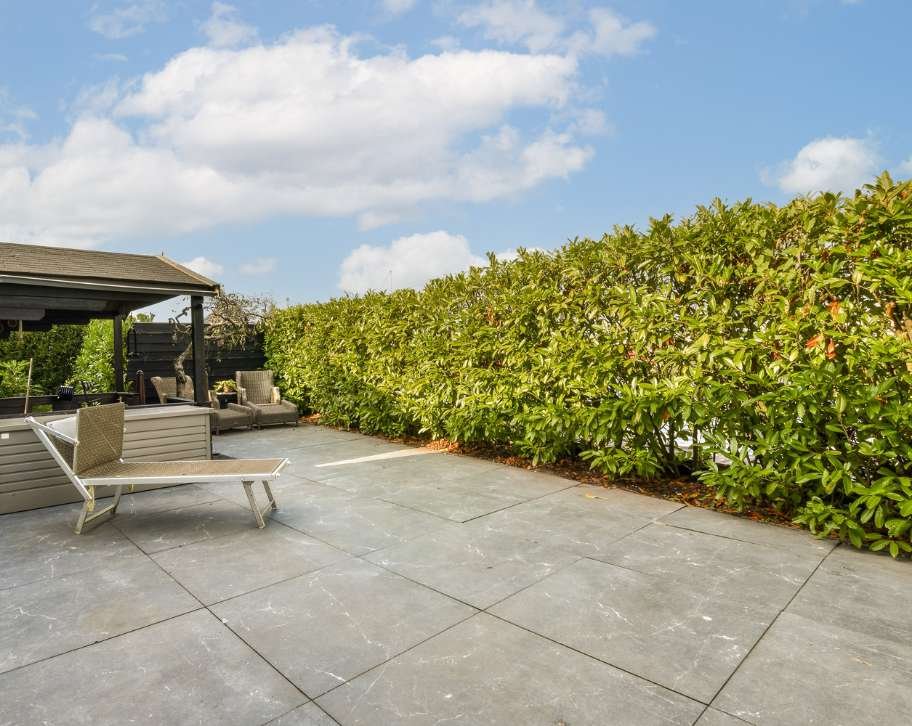
Concrete patios provide a permanent, weather-resistant foundation that requires minimal upkeep compared to wood decks that demand annual staining, sealing, and board replacement. This inherent durability creates a natural partnership with low-maintenance landscaping. When you pair a surface that doesn’t rot, warp, or splinter with plants that thrive on neglect, you’ve built an outdoor space that delivers maximum enjoyment with minimum intervention.
Strategic plant selection and hardscape borders create visual softness while drastically cutting maintenance hours. Instead of weekly mowing right up to the patio edge, a 12-inch border of river rock and drought-tolerant groundcover eliminates trimming entirely. Rather than replanting annuals each spring, perennials like Sedum and ornamental grasses return year after year, requiring only a single spring cleanup. This approach doesn’t sacrifice beauty; it simply redirects effort from repetitive tasks toward one-time installations that pay dividends for decades.
New Brunswick’s Zone 5 climate presents specific challenges that make low-maintenance choices even more valuable. Harsh winters, spring freeze-thaw cycles, and humid summers mean that delicate plants demand constant babying. By selecting hardy native species and climate-appropriate varieties, you work with nature rather than against it.
Lavender, Coneflowers, and Karl Foerster grass don’t just survive our weather; they thrive in it with minimal watering once established. Studies show that native and climate-adapted plants require up to 75% less water than traditional landscaping choices once their root systems mature.
The cost-effectiveness becomes clear over time. While the initial investment in quality polymeric sand, landscape fabric, and mature perennials may seem higher than a bag of annual seeds, the math shifts dramatically when you calculate hours saved. A traditional flower bed around a patio can demand 3-4 hours weekly during growing season. A properly designed low-maintenance border requires perhaps 2-3 hours total per year for spring cleanup and occasional stone raking.
That’s roughly 150 hours returned to you annually. At a conservative value of $25 per hour for your time, that represents $3,750 in annual savings.
Atlantic Hardscape and Concrete integrates these principles from the design phase forward. Our 3-D planning process incorporates drainage solutions, weed-blocking borders, and strategic plant zones that complement your concrete foundation. We install weep holes and proper grading to prevent water pooling, eliminating the moss and algae growth that would otherwise demand pressure washing.
By building the hardscape and softscape as a unified system rather than separate projects, we create outdoor spaces that remain beautiful with minimal intervention season after season.
Selecting the right plants transforms landscaping from a weekly chore into a seasonal pleasure. For Fredericton’s climate, drought-tolerant perennials top the list for concrete patio surroundings. Sedum varieties offer succulent foliage that stores water, requiring irrigation only during extended dry spells. Lavender provides fragrant purple blooms and silvery foliage that actually prefers the reflected heat from concrete surfaces.
Black-eyed Susans and Coneflowers deliver vibrant summer colour, attract pollinators, and return reliably each spring without replanting. These perennials establish deep root systems that make them increasingly self-sufficient after the first growing season. Research indicates that established perennials can develop root systems extending 18-24 inches deep, allowing them to access moisture unavailable to shallow-rooted annuals.
Hardy groundcovers eliminate the most tedious maintenance task: edge trimming where grass meets concrete. Creeping Thyme forms a dense, fragrant mat that suppresses weeds naturally, requires no mowing, and releases a pleasant scent when walked upon. Low-growing Juniper varieties spread horizontally to fill space while staying under 6 inches tall. Both options tolerate foot traffic better than grass and need zero fertilizer or pesticides to remain healthy.
Plant them in the 6-12 inch buffer zone around your patio edge, and you’ll never touch a string trimmer in that area again.
For movement and texture without pruning demands, ornamental grasses deliver year-round interest. Karl Foerster feather reed grass grows in tight, upright clumps that never flop or require staking. Its wheat-coloured plumes persist through winter, providing visual interest when everything else has died back. Blue Fescue forms tidy blue-grey mounds that need only a single spring haircut to remove dead foliage.
Both varieties tolerate drought once established and require no division for 5-10 years.
Sedum (Stonecrop) – Succulent leaves store moisture; thrives in reflected heat from concrete; blooms late summer through fall.
Lavender – Prefers dry conditions; fragrant foliage and flowers; deer-resistant and drought-tolerant after first season.
Karl Foerster Grass – Upright habit won’t flop onto patio; provides winter interest; requires only spring cleanup.
Creeping Thyme – Forms weed-suppressing mat; releases fragrance when stepped on; needs zero mowing or trimming.
Black-eyed Susan – Bright yellow blooms all summer; self-seeds moderately; attracts butterflies with no deadheading required.
When it comes to border material options, stone outperforms wood mulch in every practical measure for concrete patio surroundings. River rock and decorative pea gravel don’t decompose, so they never need topping up. They don’t retain moisture against the concrete surface, preventing the staining and moss growth that organic mulches cause.
A 3-4 inch layer over commercial-grade landscape fabric blocks weeds permanently while allowing water to drain freely. Wood mulch, by contrast, washes away during heavy rains, harbours insects, and requires annual replacement to maintain appearance. Industry data shows that wood mulch loses approximately 30% of its volume annually through decomposition and displacement.
Polymeric sand edges provide another low-maintenance solution, particularly between the patio and adjacent hardscape features. Once activated with water, this specialized sand hardens to a plastic-like consistency that blocks weed seeds from germinating in joints and cracks. It resists erosion far better than regular sand and prevents ant colonies from establishing beneath paver edges. Atlantic Hardscape and Concrete uses high-quality polymeric sand in all installations, creating borders that remain weed-free for years without chemical treatments or manual weeding.
The layering technique creates visual depth while minimizing maintenance zones. Position taller shrubs like Boxwood or Dwarf Spirea at the perimeter, 3-4 feet from the patio edge. These provide privacy screening and a green backdrop without overhanging the concrete. Mid-zone perennials such as Coneflowers or ornamental grasses fill the middle band, offering seasonal colour at eye level when seated.
Low groundcovers like Creeping Thyme or Sedum hug the patio edge, eliminating the grass-to-concrete transition that demands constant trimming. This three-tier approach guides the eye naturally while keeping each plant in appropriate sunlight without crowding.
Defined borders with stone or paver edging eliminate the single most time-consuming maintenance task: trimming where grass meets concrete. Install a 6-8 inch border of contrasting pavers or natural stone set flush with the lawn. This creates a mowing strip that allows your lawnmower wheels to roll along the edge, cutting grass cleanly without leaving an untrimmed fringe. The border also prevents grass runners from creeping onto the patio surface and provides a visual frame that makes the entire space look professionally designed.
Installing landscape fabric under decorative rock blocks weeds permanently without chemical treatments. Lay commercial-grade woven fabric directly on the soil after removing existing vegetation. Overlap seams by 6 inches and secure with landscape staples every 3 feet. Top with 3-4 inches of river rock or pea gravel.
This system allows water and air to penetrate while blocking sunlight that weed seeds need to germinate. Unlike plastic sheeting, quality fabric won’t degrade or create drainage problems. This one-time installation eliminates 90% of weeding for the life of your landscaping.
Container gardens offer seasonal flexibility without long-term commitment. Large decorative planters positioned at patio corners or entry points allow you to introduce tropical plants or vibrant annuals during summer, then swap them for evergreen boughs or ornamental kale in fall. Containers also solve problem areas where soil quality is poor or tree roots make in-ground planting impossible. Choose self-watering planters with built-in reservoirs to reduce watering frequency to once or twice weekly even during hot spells.
For homeowners who want fresh herbs or vegetables without extensive garden beds, raised garden beds with built-in irrigation deliver maximum yield with minimum effort. Position a 4×4 foot raised bed adjacent to the patio, filled with quality garden soil. Install a drip irrigation system on a timer to handle watering automatically. The elevated height eliminates bending and kneeling, while the contained space makes weeding a 10-minute task rather than an hour-long ordeal.
Grow high-value crops like tomatoes, basil, and lettuce that you’d otherwise buy at premium prices.
Drainage solutions prevent the water pooling that leads to moss growth, concrete staining, and increased maintenance. Grade soil away from the patio at a minimum 2% slope (1/4 inch per foot). For areas where surface grading isn’t sufficient, install a French drain along the patio perimeter.
This gravel-filled trench with perforated pipe channels water away from the foundation before it can pool. Atlantic Hardscape and Concrete incorporates weep holes filled with pea gravel in all concrete installations, providing escape routes for moisture that would otherwise cause freeze-thaw damage and create damp conditions where moss thrives.
Proper spacing matters more than most homeowners realize. Maintain 6-12 inches of clearance between plants and the patio edge. This buffer allows air circulation that prevents moss and algae from colonizing the concrete surface in shaded areas. It also protects the patio from root damage as plants mature.
Use this buffer zone for stone mulch or low-growing groundcover rather than leaving bare soil that invites weeds.
Task | Traditional Flower Bed | Low-Maintenance Stone Border |
|---|---|---|
Weekly weeding (growing season) | 1-2 hours | 0 hours |
Edge trimming (weekly) | 30-45 minutes | 0 minutes |
Watering (3x weekly) | 45 minutes | 15 minutes |
Annual mulch replacement | 3-4 hours | 0 hours |
Spring cleanup | 4-5 hours | 2-3 hours |
Total annual hours | 150-180 hours | 12-15 hours |
Atlantic Hardscape and Concrete brings over 15 years of specialized experience creating integrated outdoor spaces that thrive in New Brunswick’s challenging climate. We understand that Fredericton’s freeze-thaw cycles, clay-heavy soils, and extreme temperature swings demand more than generic approaches. Our comprehensive process starts with detailed 3-D design that visualizes your finished space before a single shovel breaks ground, making sure every element works together functionally and aesthetically.
From the foundation up, we build for longevity. Our tailored 6-10 inch compacted Granular A bases withstand local frost heave, while specialized weep holes and proper grading prevent the water accumulation that destroys lesser installations. We integrate low-maintenance borders using contrasting colours and natural stone, creating visual separation that reduces ongoing upkeep.
Our professional sealing services protect your concrete investment from moisture and salt damage, extending its lifespan while maintaining its appearance.
If you’re planning a new patio installation or looking to reduce maintenance around an existing concrete surface, our team provides property-specific recommendations that match your lifestyle and budget. We handle every phase from drainage work to final border installation, delivering outdoor spaces that require minimal intervention while maximizing your enjoyment. Contact Atlantic Hardscape and Concrete today to discuss how we can transform your patio surroundings into a beautiful, low-maintenance retreat that gives you back your weekends.
Stone borders with landscape fabric underneath require the least ongoing effort. Pair this foundation with drought-tolerant perennials like Sedum, Lavender, and ornamental grasses that need weekly watering or less once established. Replace lawn edges with Creeping Thyme or other groundcovers to eliminate trimming entirely. This combination delivers year-round visual interest with only 2-3 hours of annual maintenance for spring cleanup.
Install commercial-grade landscape fabric as a barrier between soil and decorative stone, overlapping seams by 6 inches. Apply 3-4 inches of river rock or pea gravel over the fabric. Use polymeric sand in joints and expansion gaps; once activated with water, it hardens to block weed seeds. Maintain 6-12 inches of clearance between plants and concrete to prevent organic debris accumulation where weeds germinate.
Leave 6-12 inches of clearance between plants and the patio edge for proper airflow. This buffer prevents moss and algae growth on concrete surfaces, particularly in shaded areas. It also protects your patio from root damage as plants mature. Use this space for stone mulch, polymeric sand, or low-growing groundcover like Creeping Thyme rather than allowing plants to touch the concrete directly.
River rock and pea gravel require the least ongoing maintenance. Unlike wood mulch that decomposes and washes away, stone remains stable indefinitely. It doesn’t retain moisture against concrete, preventing staining and moss growth. Stone borders need only occasional raking to maintain appearance and never require topping up or replacement. When installed over landscape fabric, they provide permanent weed suppression without chemical treatments.
Established drought-tolerant perennials like Sedum, Lavender, and ornamental grasses need watering once weekly or less during normal conditions. New plantings require 2-3 times weekly watering for their first growing season to establish deep root systems. Container plants demand 2-3 times weekly watering depending on pot size and sun exposure. Once perennials establish after 12-18 months, many survive on rainfall alone except during extended drought periods.
GET STARTED
Your dream space is within reach as we work together from detailed 3-D designs to the final custom build. Our process is both professional and exciting, and we look forward to taking this journey with you.
Contact
34 Jackstraw Court, Fredericton, NB, Canada, New Brunswick
