Spring melt, a few heavy storms, and suddenly a backyard in Fredericton does not look the same. The slope behind the house seems steeper, the lawn feels soft underfoot, and bits of soil creep toward the patio or driveway. Many properties in places like Northside Fredericton, New Maryland, and Hanwell face this same problem every year.
For anyone in that situation, the question often comes up very quickly, what is a gravity retaining wall and can it fix this kind of slope issue? A gravity retaining wall is a simple idea with careful engineering behind it. It holds back soil by using its own weight, so a yard becomes safer, cleaner, and far more usable.
In the Fredericton area, gravity retaining walls help with many needs. They control erosion beside foundations, create level areas for patios and gardens, and turn steep banks into stepped outdoor spaces that are easy to mow and enjoy. When they are designed and installed properly, they can also add a lot of curb appeal and long‑term value.
This article walks through everything a property owner needs to know. You will see a clear definition of a gravity wall, how these walls work, common materials, key benefits, important design details, and how they compare with other types of retaining walls. Along the way you will see how Atlantic Hardscape and Concrete, with more than fifteen years of local experience, designs and installs gravity retaining walls that suit Fredericton soil and weather conditions.
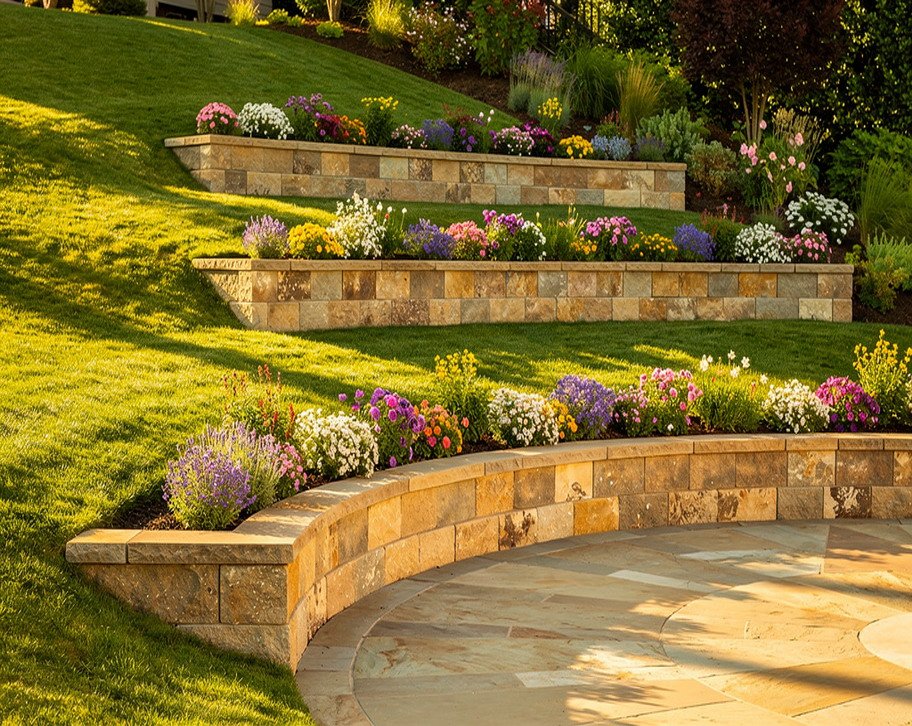
A gravity retaining wall is a structure that holds back soil by using its own weight. Instead of relying on steel reinforcement or deep anchors, it uses heavy blocks, stone, or concrete so the mass of the wall resists the sideways push of the earth behind it. For a simple gravity wall definition, it is a short, heavy wall that stays in place because it is thick and heavy enough not to move.
Most gravity walls use a dry stack method. That means the blocks or stones sit on top of each other without mortar between the units. The weight of each unit and the friction between them keep the wall acting as one solid piece. Modern block systems also include small lips or lugs that help each course lock to the one below, which improves gravity wall stability.
A key design feature is a slight lean back into the slope, often called a battered setback. This gives the wall a gentle tilt toward the soil that it holds. That lean helps direct forces downward into the base of the wall instead of straight out toward the yard, which makes the wall far more stable for its size.
Even though a stone gravity wall can look like a simple row of blocks or rock, it is still a piece of retaining wall engineering. The height, base width, block shape, and batter all work together so the wall does not slide, tip, or sink. When that design is correct, a gravity wall can handle large loads with no visible signs of effort.
In the Fredericton area, common gravity retaining wall examples include:
The same idea works for both small residential yards and larger commercial properties.
To understand how gravity walls work, picture a stack of very heavy blocks holding back a pile of damp soil. The soil pushes sideways, but the blocks push back with their own weight. As long as the wall is heavy enough, and built with the right shape, the soil cannot move it.
The first part of this is simple weight. A gravity retaining wall creates strong downward force that presses the base of the wall into the foundation material. That force resists sliding forward. The heavier the wall and the wider the base, the more soil pressure it can handle without moving.
Friction between the units is the next key factor. When each block or stone sits on a properly prepared base and on top of another unit, the rough surfaces grip each other. That friction stops one course from slipping over the one below. In modern gravity wall construction, many block systems add small interlocking features so the courses hold together more effectively, almost like large building blocks.
The battered setback also plays an important role. Because the wall leans back toward the soil, the line of force from the weight of the wall passes deeper into the base material instead of near the outside edge. This reduces the chance that the wall will tip forward. Think of how a person leans toward a heavy object when they brace against it. That lean makes the stance stronger.
Good gravity retaining wall design must deal with three main failure modes:
Overturning – when the wall wants to tip forward.
Sliding – when the whole wall wants to move along the base.
Bearing failure – when the soil under the base squeezes out or settles.
A well designed wall uses enough mass, base width, and friction to resist all three. The result is a simple looking structure that hides a lot of careful thought about how forces move through soil and stone.
The material used for a gravity wall has a big impact on strength, lifespan, cost, and appearance. Some options suit small garden features, while others are better for driveways or commercial sites. Atlantic Hardscape and Concrete works with several gravity wall materials so each project matches both the yard and the budget.
For larger jobs where very thick sections are needed, a mass concrete retaining wall may also be an option. Atlantic Hardscape and Concrete guides clients through these choices, so the final wall fits the site conditions, local weather, and long‑term plans for the property.
Atlantic Hardscape and Concrete uses these strengths to improve both function and property value. A well designed gravity wall can add usable outdoor area and a more polished look, which often shows up as higher home equity and easier resale.
Even though gravity walls look simple, good gravity retaining wall design takes many details into account. When these details are handled well, the wall can stand straight for decades. When they are ignored, the wall may lean, crack, or even fail.
Every project starts with a solid base. A trench is dug to the proper depth and width, then filled with compacted granular stone. This creates a flat, firm footing for the first course of blocks. If the base is uneven or soft, the wall can settle in spots, which results in dips, bulges, or leaning sections later on.
In New Brunswick, frost is a major concern. Soil expands as it freezes, which can lift any structure that does not sit deep enough. For that reason, footing depth must reach below the local frost line where practical. In some cases, rigid insulation near the base can help control frost movement when full depth is not possible. Atlantic Hardscape and Concrete plans this carefully so gravity wall stability does not suffer during winter.
Water management is just as important as the foundation. Wet soil weighs more than dry soil and adds strong pressure to the back of the wall. To manage this, free‑draining gravel or clear stone sits directly behind the wall, often wrapped in filter fabric to keep soil out. A perforated pipe at the bottom of this zone collects water and directs it to a safe outlet. This simple system releases water pressure before it builds to high levels.
Site conditions guide many other design choices:
A wall that supports a driveway, parking area, or pool deck needs more mass and sometimes extra design features compared with a wall that supports only a flower bed. This is where the experience of a contractor who understands retaining wall engineering becomes very important.
Careful base preparation and alignment during gravity wall construction make a big difference to the finished look. The first course of blocks must sit level from end to end. Each new course must line up, keep the planned setback, and remain square to any corners. Small errors low down can turn into visible curves and waves once the wall reaches full height.
Longer walls often need planned joints. Control or expansion joints give the structure places where minor movements from temperature change or soil movement can show without random cracking. When laid out at the design stage, these joints are almost invisible, yet they protect the wall from stress.
On steep sites, terracing is a smart option. Instead of one tall wall, the slope is broken into two or more shorter walls with level areas between them. This spreads out soil pressure and creates a more human‑scale yard. Atlantic Hardscape and Concrete often uses stepped foundations that follow the natural ground, with terraces that suit seating areas, paths, or garden beds. This careful approach at the design and construction stage helps prevent costly repairs later.
Gravity walls are just one of several types of retaining walls that can hold back soil. Each system has strengths and fits certain site conditions. Understanding how they compare makes it easier to decide which one works best.
Cantilever retaining walls use a vertical concrete stem attached to a wide base slab shaped like the letter L. The backfill soil above the slab helps hold the wall in place. These walls are efficient for greater heights, often beyond what a practical gravity wall can handle. They do, however, need more excavation space for the base and more detailed engineering and forming.
Anchored retaining walls add steel cables or rods that extend from the wall into the soil or rock behind it. The anchors are tensioned so they pull the wall back toward the slope. This design suits very tall walls, sites with very high soil pressures, or areas with very limited room in front of and behind the wall. Anchors can also work with gravity or cantilever walls for added safety.
Sheet piling walls use thin sheets of steel, vinyl, or wood driven straight into the ground. Part of each sheet sits below grade and the rest stands above. They fit soft soils and narrow sites, such as near water or tight property lines. For most residential projects in Fredericton, they are less common, but they still appear in some commercial or marine settings.
For heights up to about three metres, a gravity wall is often the most straightforward and cost‑friendly option. When walls need to go higher, or when soil conditions are poor, other systems may be a better match. Atlantic Hardscape and Concrete looks at each property, compares options such as cantilever vs gravity retaining wall designs, and then recommends the approach that balances safety, cost, and appearance.
For most residential and light commercial projects, gravity retaining walls work best up to about three metres in height. Above that point, the amount of mass needed grows very quickly, so the wall becomes very thick and more costly. Soil type, drainage, and any extra loads such as driveways or parking areas can reduce the practical height. Atlantic Hardscape and Concrete reviews each site and can advise when a gravity wall is suitable and when another type of retaining wall makes more sense.
When they are designed and built properly, gravity retaining walls can last fifty years or more with only modest maintenance. Long life comes from quality materials, a solid foundation below the frost line, and a drainage system that keeps water from building up behind the wall. Precast concrete blocks and well chosen stone perform very well in the New Brunswick climate. Atlantic Hardscape and Concrete focuses on these details so the walls they build stay straight and strong for decades.
Most gravity wall failures trace back to water and poor base conditions. If there is no proper drain and free‑draining backfill, water builds up behind the wall and adds strong pressure that can push the wall outward. Shallow footing depth can allow frost heave to lift and tilt sections. Poor soil compaction under the base or behind the wall can lead to uneven settling. Undersized walls without enough mass for their height also struggle. With good design, sound gravity wall construction, and careful attention to these points, Atlantic Hardscape and Concrete works to avoid these problems on client projects.
Yes, gravity retaining walls are made for sloped sites and work very well on hilly ground around Fredericton. The base of the wall often steps up or down so it follows the natural contour without large cuts. On very steep slopes, several shorter walls can form a terraced system with level areas between each wall. Specialized retaining blocks and careful base work help the wall sit firmly even on uneven ground. Atlantic Hardscape and Concrete has extensive experience with challenging slopes and uses proven methods to keep these walls stable.
The cost of a gravity retaining wall in Fredericton depends on many factors. Wall height and length, the type of block or stone, soil conditions, access for equipment, and drainage needs all affect the price. For walls up to about three metres, gravity systems are usually more cost‑effective than more complex types of retaining walls. Investing in proper design and quality construction saves money over time by avoiding repairs. The best way to get accurate numbers is to contact Atlantic Hardscape and Concrete for a site visit and a detailed quote based on the actual property.
GET STARTED
Your dream space is within reach as we work together from detailed 3-D designs to the final custom build. Our process is both professional and exciting, and we look forward to taking this journey with you.
Contact
34 Jackstraw Court, Fredericton, NB, Canada, New Brunswick
