Have you ever wondered which pathway material will stand up to Fredericton’s brutal winters without cracking? Are you torn between the timeless beauty of natural stone and the affordability of concrete for your garden walkway?
Both natural stone and concrete stepping stones serve functional purposes in Atlantic Canadian landscapes. However, they differ dramatically in durability, maintenance requirements, and long-term performance when exposed to our region’s freeze-thaw cycles.
This article compares natural stone and concrete stepping stones across the factors that matter most to Fredericton property owners. You’ll learn about material composition, climate performance, maintenance needs, and total cost of ownership.
By the end, you’ll have the clarity needed to choose the right stepping stone material for your property’s unique conditions and your design goals.
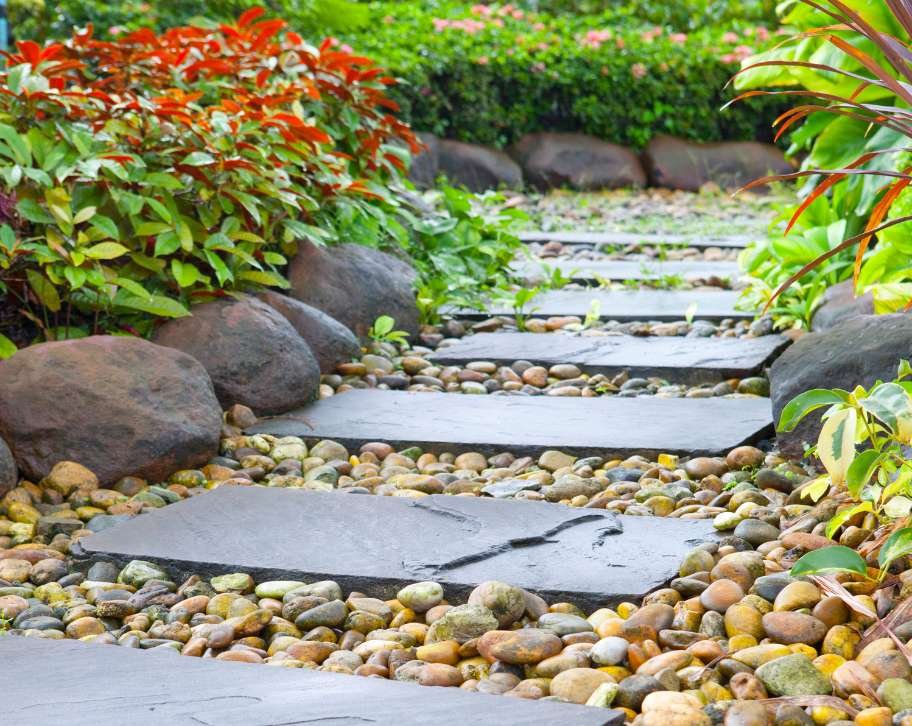
Natural stone stepping stones are quarried directly from geological formations. Common varieties used in Atlantic Canada include sandstone, limestone, granite, and slate. These materials form over millions of years under intense geological pressure, creating inherently strong, dense products. Premium natural stone often exceeds 15,000 PSI (pounds per square inch) in compressive strength. Each piece features unique veining, mineral deposits, and colour variations that cannot be replicated.
Concrete stepping stones are manufactured products. They’re made by mixing cement, water, and aggregate (sand and crushed stone), then pouring the mixture into moulds. Manufacturers add chemical pigments during mixing to achieve specific colours. While modern production techniques can create concrete that mimics natural textures, the material remains a synthetic composite. Concrete strength varies by mix design, typically ranging from 3,000 to 5,000 PSI for residential applications.
The structural difference between these materials is fundamental. Natural stone is naturally dense with low porosity (depending on the specific type), while concrete contains microscopic pores throughout its structure. These pores can absorb moisture, which becomes problematic during freeze-thaw cycles. Natural stone’s geological formation process creates internal cohesion that manufactured products struggle to match.
Material comparison:
Feature | Natural Stone | Concrete Stepping Stones |
|---|---|---|
Formation | Geological (millions of years) | Manufactured (hours) |
Compressive Strength | 15,000+ PSI | 3,000-5,000 PSI |
Porosity | Low (varies by type) | Higher (microscopic pores) |
Appearance | Unique veining and colour | Uniform dimensions and pattern |
Colour Source | Natural minerals | Synthetic pigments |
Concrete can be moulded to mimic wood grain, brick patterns, or stone textures. However, these imitations reveal their manufactured nature upon close inspection, particularly as the surface wears down to expose the underlying aggregate. Natural stone maintains its authentic appearance throughout its entire depth.
Both materials require proper installation to perform well in New Brunswick’s climate. Without adequate drainage, base preparation, and edge restraints, even premium materials will fail prematurely.
Fredericton’s freeze-thaw cycles pose the greatest threat to stepping stone longevity. When water infiltrates a material and then freezes, it expands by approximately 9%. This expansion creates internal pressure that can crack, chip, or degrade the surface.
Natural stone’s density and low porosity (in premium varieties like granite and dense limestone) resist moisture infiltration. Water doesn’t penetrate deeply enough to cause structural damage when it freezes. The stone’s geological formation created internal bonds that withstand repeated thermal cycling without degrading. Properly installed natural stone stepping stones can last 50 years or more with minimal maintenance.
Concrete’s porous structure allows water absorption. During winter, this moisture freezes and expands, causing spalling (surface flaking), hairline cracks, and surface scaling. Each freeze-thaw cycle compounds the damage. While proper installation with drainage reduces this risk, it doesn’t eliminate it entirely.
UV exposure presents another challenge. Concrete manufacturers use synthetic pigments to create colour. These pigments break down under direct sunlight over years, causing the surface to fade and eventually reveal the grey aggregate underneath. Natural stone maintains colour consistency throughout the entire piece. If a chip occurs, the exposed interior looks identical to the surface.
Climate-related durability factors:
Spalling: Concrete surfaces flake or chip when trapped moisture freezes
Surface scaling: Thin layers of concrete peel away from repeated freeze-thaw exposure
Hairline cracks: Temperature fluctuations cause concrete to expand and contract, creating small fissures
Colour fading: UV rays degrade synthetic pigments in concrete over 10-15 years
Structural integrity: Natural stone maintains strength indefinitely; concrete weakens over time
Expected lifespan in Atlantic Canadian conditions varies significantly. Natural stone stepping stones installed by professionals can last 50+ years without replacement. Concrete typically shows significant wear within 15-25 years, requiring sealing, repairs, or full replacement.
Maintenance requirements differ substantially. Concrete needs resealing every 2-3 years to prevent moisture infiltration and staining. Without sealing, organic debris (leaves, berries) causes permanent discolouration. Natural stone requires occasional power washing or simple soap-and-water cleaning. When installed with professional-grade polymeric sand or brush-in jointing compound, natural stone resists weed growth and erosion naturally.
“Proper drainage planning, including weep holes through existing concrete bases, geotextile fabric barriers, and polymeric sand in joints, creates moisture-managed systems that withstand Fredericton’s seasonal extremes.”
Concrete stepping stones have lower initial material and installation costs. For property owners working with strict budget constraints or temporary installations, concrete provides an accessible entry point. The uniform dimensions and repeatable patterns also make concrete faster to install in some applications.
Natural stone requires a higher upfront investment. Material costs are greater, and installation typically takes longer due to the unique shape and size of each piece. However, this initial expense must be weighed against total cost of ownership over the material’s lifespan.
Maintenance cost comparison:
Concrete: Requires professional sealing every 2-3 years ($300-600 per application for typical residential pathways). Prone to staining from oil, leaves, and organic debris. Cracks typically require full unit replacement, as patches are visually obvious and structurally temporary.
Natural stone: Minimal upkeep beyond occasional cleaning. No sealing required for most varieties. Damaged stones can be spot-repaired or replaced individually. Small chips often blend naturally with the stone’s texture.
Natural stone is recognized as a premium feature in the Fredericton real estate market. Property appraisers and real estate professionals consistently note that natural stone hardscaping increases perceived property value. Prospective buyers view natural stone pathways similarly to hardwood floors or granite countertops as high-end features worth paying more for.
Concrete repairs present practical challenges. When a concrete stepping stone cracks, the entire unit typically needs replacement. This requires breaking out the damaged section, which often disturbs adjacent areas. Natural stone pavers can be lifted individually and replaced without affecting surrounding stones.
Environmental considerations matter to many 2026 property owners. Concrete production generates significant CO₂ emissions due to the energy-intensive cement manufacturing process. Some concrete products use synthetic dyes and chemical additives that can leach into surrounding soil over time. Natural stone is a recyclable, earth-friendly material with low embodied energy. It’s harvested rather than manufactured, containing no synthetic pollutants.
Total cost of ownership (20-year comparison for 200 sq ft pathway):
Cost Factor (Estimated) | Natural Stone | Concrete |
|---|---|---|
Initial Installation | $3,500-5,000 | $2,000-3,000 |
Sealing (every 2-3 years) | $0 | $2,400-4,800 |
Repairs/Replacement | Minimal | $800-1,500 |
Total 20-Year Cost | $3,500-5,000 | $5,200-9,300 |
Professional installation ensures both materials perform to their potential. Improper drainage, inadequate base preparation, and absent edge restraints are the leading causes of premature pathway failure. Experienced contractors account for site-specific variables that DIY projects often overlook, including Fredericton’s clay soils and topography.
Choosing between natural stone and concrete depends on your property’s specific conditions, budget, and design goals. Atlantic Hardscape and Concrete has 15+ years of experience working with Fredericton’s unique soil composition and climate challenges. We conduct thorough site evaluations to assess drainage needs, ground conditions, and intended use. Our team provides customized material recommendations backed by detailed 3-D design renderings, so you can visualize exactly how your pathway will look before installation begins. Contact us for a consultation to discuss your project.
Yes, paver overlay installation is possible using sand-set or mortar-set methods. The existing concrete must be structurally sound without major cracks or settling. Contractors drill weep holes through the concrete base to allow drainage and install geotextile fabric to prevent sand erosion. Proper edge restraints are critical to prevent the overlay from spreading over time. This approach allows you to upgrade the appearance and functionality of existing concrete without full demolition.
Concrete is susceptible to cracking from freeze-thaw cycles when moisture infiltrates its porous structure. Water expands by approximately 9% when it freezes, creating internal pressure that causes hairline cracks, spalling, and surface scaling. Proper installation with drainage and regular sealing reduces but doesn’t eliminate this risk. Natural stone’s density and low porosity provide superior resistance to thermal cycling, making it more reliable in Atlantic Canadian winters.
Natural stone is generally recommended for pool surrounds due to superior slip resistance when wet. Certain natural stone varieties (like textured limestone or sandstone) provide better traction than smooth concrete surfaces. Natural stone’s porosity in some types also allows faster drainage around water features, reducing standing water. Concrete can become slippery when wet and often requires textured finishes or sealants to improve safety.
Properly installed natural stone can last 50+ years or even centuries with minimal maintenance. Longevity depends on stone type (granite and dense limestone outlast softer sandstone), installation quality, and basic upkeep. Natural stone’s geological formation creates inherent durability that manufactured products cannot match. In contrast, concrete typically shows significant degradation within 15-25 years before requiring replacement.
Yes, natural stone has higher upfront material and installation costs. However, lower maintenance requirements and longer lifespan make it cost-competitive over time. Natural stone requires no periodic sealing and rarely needs repairs. Concrete requires sealing every 2-3 years and is more prone to damage requiring replacement. For strict budget constraints or temporary installations, concrete remains the more accessible choice.
GET STARTED
Your dream space is within reach as we work together from detailed 3-D designs to the final custom build. Our process is both professional and exciting, and we look forward to taking this journey with you.
Contact
34 Jackstraw Court, Fredericton, NB, Canada, New Brunswick
