Yes, you can protect pavers during snow removal, and the outcome mostly comes down to three things: the equipment you use, the technique you follow, and how well you prepared the borders before winter hit. Paver edging and borders take more punishment than the main paved field because they sit at the perimeter, exposed to plow blades, shovel edges, and shifting soil. This guide walks through why that damage happens, which tools and techniques keep borders intact, how to pick the right deicing products, and what pre-winter prep actually makes a difference.
We’ll also cover what to do if you find scraped edging or a sunken border after a storm has already passed through. None of this requires special equipment or a big budget. It mostly comes down to small habits, applied consistently, through a long Atlantic Canada winter.
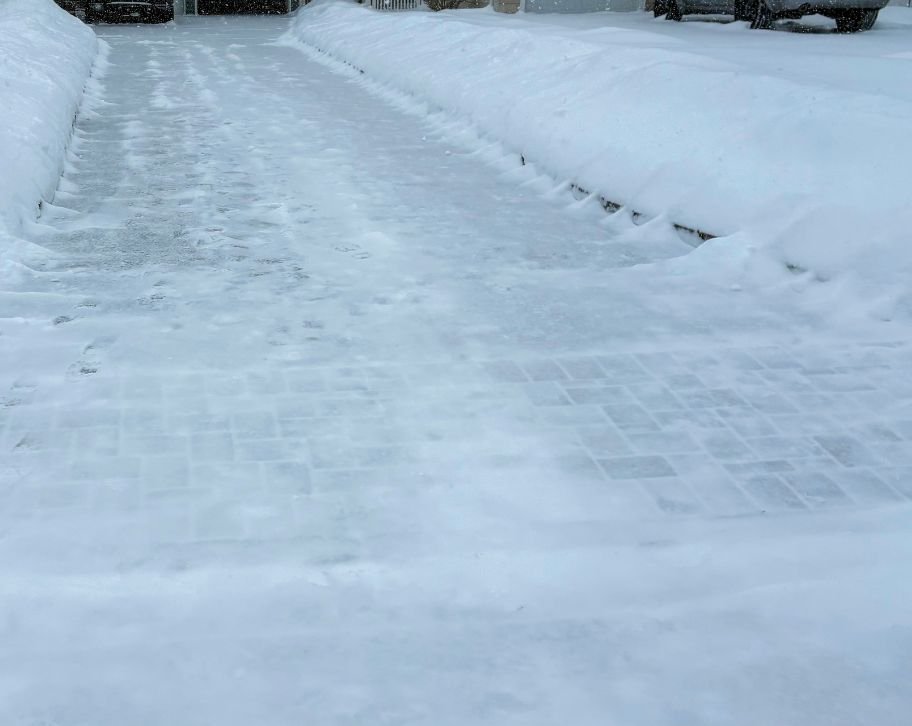
Paver border damage during snow removal usually comes from two separate causes working together: why pavers shift or sink from tools and equipment, and moisture that freezes and expands underneath the stone. Mechanical damage happens when a metal shovel edge, a snow blower housing, or a low plow blade makes direct contact with a paver surface or its edge. Over a season of repeated contact, this scraping chips corners, scratches finishes, and can knock border stones loose from their bedding.
Border and edging areas take the worst of this because they sit at the outer limit of the paved surface, right where equipment turns, backs up, or pushes snow off to the side. The main field of pavers gets a straightforward pass from a shovel or blower, but the perimeter gets scraped, bumped, and piled with extra snow weight. Add in moisture that seeps into joints and settles under the border, and you have two damage mechanisms working on the same vulnerable strip of stone.
Freeze-thaw cycling is the process where water trapped beneath or between pavers freezes, expands, and pushes the stone out of position, then thaws and lets it settle slightly off-alignment, a mechanism examined in recent research on real-time freeze-thaw durability of concrete pavements. Repeated over a winter, this slow push-and-settle motion is what causes borders to heave, tilt, or separate from the rest of the installation. Edge restraints, the plastic, aluminum, or mortared strips that hold the outer row of pavers in place, absorb most of this pressure because they sit right at the point where the paved field meets the surrounding soil or lawn. When a restraint weakens or corrodes, the border it was holding starts to spread outward a little more with each freeze-thaw cycle.
The safest snow removal equipment for pavers and edging is a plastic or rubber-edged shovel, followed by carefully operated snow plowing vs snow blowing, with mechanical plows and pushers carrying the highest risk. Metal tools scrape and chip the surface finish on contact, while heavier machinery can lift, crack, or displace entire sections of border stone if the blade sits too low or the operator isn’t paying attention near the perimeter. The right choice depends on how much snow you’re clearing, how often, and whether borders and lawn edging sit close to the path equipment will travel.
Before the first snowfall, it helps to physically mark before snowplow arrives and lawn edging sit, using stakes or flags if snow tends to hide the edges quickly. This gives anyone clearing snow, including yourself, a visual reminder of where extra care is needed. For plows or pusher attachments, raising the blade height even slightly near borders reduces the chance of catching an edge restraint or lifting a row of stone.
Equipment | Damage risk near borders | Best practice |
|---|---|---|
Plastic or rubber-edged shovel | Low | Lift and place snow rather than scraping; safest option for most residential borders |
Snow blower | Moderate | Keep discharge chute pointed away from edging; slow down near the perimeter |
Plow or mechanical pusher | High | Raise blade height near borders, or switch to manual tools in those zones |
Mechanical equipment on residential paver borders generally isn’t recommended without careful oversight, since even a few centimetres of blade misjudgment can catch and lift an edge restraint. On commercial sites where plows are unavoidable, marking border zones clearly and briefing operators ahead of time reduces most of this risk, consistent with the design and installation guidance detailed in the ICPI technical specification for interlocking concrete pavements.
The safest way to remove snow from paver borders is to clearing snow driveway tips rather than scrape or drag it across the surface. Dragging a shovel blade along the stone, especially at the edge where borders meet the lawn, is what causes most of the scratching and chipping homeowners notice each spring. Working in safe snow shoveling tips, instead of trying to clear the full depth in one pass, also reduces the force you need to apply and lowers the risk of catching a border stone awkwardly.
Metal tools, including standard steel shovels and ice picks, should never be used directly on borders or edging. If ice has formed along the perimeter, it’s better to let it soften naturally or apply a paver-safe melt product than to chip at it with anything metal. A few extra minutes of patience here costs far less than repairing a cracked or displaced border stone later.
If you snow plowing contracts work, the clearest way to protect pavers is to put your expectations in writing before the season starts. Many crews are used to working on asphalt and concrete, and won’t automatically slow down or switch tools around decorative borders unless you tell them to. It helps to document your property’s borders and edging with photos in the fall, so there’s a clear record of their condition before winter begins.
A short list of ground rules, shared with the contractor in advance, usually covers the main points:
No mechanical plows or pushers within a set distance of paver borders or lawn edging, with manual clearing used instead in those zones.
Only plastic or rubber-edged shovels approved for use directly on paver surfaces and borders.
Clear instructions on where snow can be piled, keeping large snow loads off border areas where the weight can stress the stone once it freezes solid.
A quick walk-through after each major visit to check for new scrapes, shifted stones, or marked lawn edges while the crew is still on site.
Choosing the right deicing product matters because rock salt and heavy over-salting are among the fastest ways to wear down paver joints and surfaces over a winter. Salt draws moisture into the stone and the sand between joints, and when that moisture freezes, it creates the same expansion pressure that drives freeze-thaw damage, just concentrated in a smaller area. Applied too often, or in amounts beyond what’s needed for traction, salt accelerates surface wear on both concrete and natural stone borders, which is part of why researchers have worked on designing low chloride deicing fillers that reduce this wear while still melting ice effectively.
A salt before or after shoveling works better than treating the whole property the same way. Reserve concrete-safe deicing products for paver borders and driveways, and lean on sand for traction in areas closer to gardens, lawns, or anywhere runoff might reach sensitive plants. This keeps the chemical load lower right where your borders and edging sit, without giving up safe footing elsewhere on the property.
Calcium chloride and magnesium chloride are generally considered less damaging to pavers than standard rock salt, and both work at lower temperatures for effective ice melt, a point reinforced by expert tips to care for pavers during winter. Plain sand offers grip without any chemical exposure at all, which makes it a solid choice near gardens, wells, or any area where you’d rather avoid salt runoff entirely.
The most effective way to protect pavers during snow removal season is to address weak points yard preparation checklist snowfall, not after. Sealing paver surfaces and joints in the fall reduces how much moisture the stone can absorb, which directly lowers the freeze-thaw pressure that pushes borders out of alignment later in the season. At the same time, a walk around the property to inspect edge restraints for looseness, corrosion, or gaps gives you a chance to fix small issues while the ground is still workable.
fix landscape drainage issues play a bigger role than most homeowners expect. When water pools near a border instead of draining away, it has more chance to seep under the stone and freeze there. Checking that grading slopes water away from paved areas, and clearing any blocked drainage channels, takes some of the pressure off the borders before winter even arrives.
Polymeric sand resists erosion and frost displacement better than standard loose sand, because it hardens once it’s activated with water and forms a more stable bond between pavers, a principle also explored in research on waste slag and rubber particle mortar used to fill joints in snow-melting concrete pavement. This makes it a stronger defence for border joints that face repeated freeze-thaw cycling over a New Brunswick winter. Pairing that with a seasonal check of edge restraints, looking for loose spikes, bent sections, or corrosion, catches small problems while they’re still cheap and easy to fix, rather than letting them turn into a border that needs to be rebuilt.
If you notice damage after a snow removal visit, the first step is a quick inspection of the affected area for scrapes, chipped edges, shifted stones, or marked lawn edging. Look closely at spots where equipment turned or where snow was piled, since these areas usually show the most wear. Photographing the damage from a few angles gives you a clear record, whether you’re raising it with a contractor or planning repairs yourself.
Acting quickly matters more than most people realize, since a loose border stone or a small gap in an edge restraint tends to get worse with each additional freeze-thaw cycle rather than staying the same. For repairs that go beyond a quick reset, such as re-sanding, re-bedding a shifted section, or reinforcing a failing edge restraint, Atlantic Hardscape and Concrete offers paver repair and maintenance services built around exactly this kind of winter wear, giving property owners a straightforward next step once damage has already occurred.
Most paver border and edging damage during snow removal comes down to a handful of preventable causes: the wrong tool, an aggressive technique, heavy salt use, or a border that went into winter already weakened. Choosing rubber or plastic-edged tools, keeping mechanical equipment away from the perimeter, using concrete-safe deicing products, and inspecting edge restraints each fall will prevent most of the problems homeowners deal with every spring.
A pre-winter inspection is still the simplest way to avoid a costly repair later, since catching a loose restraint or a drainage issue in October is far cheaper than rebuilding a border in April. If you’d like a property-specific look at how your borders and edging are set up to handle a Fredericton winter, Atlantic Hardscape and Concrete can walk the site with you and flag anything worth addressing before the snow starts to fly.
Rock salt can be used, but it tends to accelerate surface wear and joint erosion on interlocking pavers over time, especially with repeated application. Calcium chloride or magnesium chloride, used sparingly, are generally gentler options that still provide effective traction and ice melt during winter storms.
A snowplow can damage driveway edging mainly through low blade height and hard plow edges catching the stone. Raising the blade slightly near borders, or switching to manual or rubber-edged tools in those specific zones, lowers this risk considerably.
There’s no single fixed schedule, since resealing frequency depends on the sealer product, traffic levels, and how much sun and moisture the area gets. A practical approach is to check the sealer’s condition each fall and reapply once it starts absorbing water instead of shedding it.
Shifting or sinking edging is usually caused by freeze-thaw heaving, poor drainage around the border, or worn edge restraints that no longer hold the stone firmly in place. If the same area keeps failing year after year, a professional assessment of the base and drainage is generally worth the cost.
Snow blowers can be used near lawn edging, but the discharge force and the housing itself can strike and damage the material if aimed directly at it. Pointing the discharge chute away from edging and slowing down as you pass it reduces this risk substantially.
Minor, localized repairs like resetting a single shifted stone are often manageable for a capable homeowner with basic tools. Once base failure is widespread, or the same section of border keeps failing despite repairs, a professional assessment is the more reliable route.
GET STARTED
Your dream space is within reach as we work together from detailed 3-D designs to the final custom build. Our process is both professional and exciting, and we look forward to taking this journey with you.
Contact
34 Jackstraw Court, Fredericton, NB, Canada, New Brunswick
