Snow plowing uses vehicle momentum and heavy blades to push large volumes of snow quickly into consolidated banks. Snow blowing uses mechanical augers and impellers to lift and throw snow across lawns, preventing surface scraping and eliminating tall roadside drifts. Choosing between them depends on your surface material, lot size, snow storage area, and clearing speed requirements.
Selecting the right snow clearing approach prevents expensive pavement repairs and keeps driveways, pedestrian paths, and commercial parking areas safe throughout harsh winter storms.
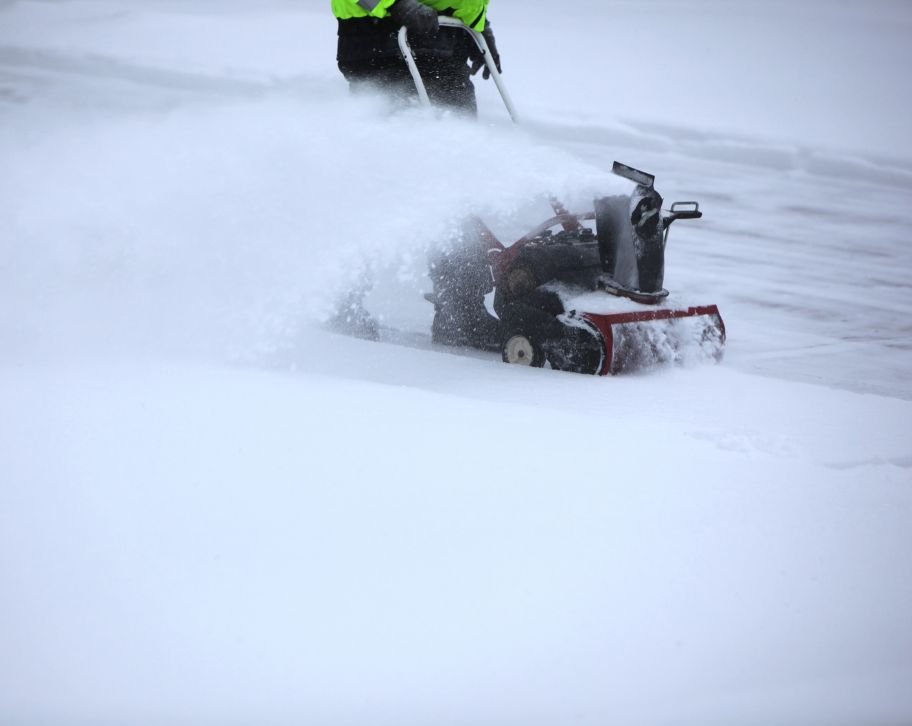
Snow plowing and snow blowing rely on distinct physical principles to clear winter precipitation. Plowing uses heavy equipment mass and forward momentum to push snow sideways into perimeter rows. Snow blowing draws snow into an intake housing, fragments ice chunks, and expels the snow through a directional chute using centrifugal force. Both methods clear travel paths effectively, but their impact on ground surfaces, property boundaries, and drainage patterns differs significantly.
The table below provides a direct snow removal equipment comparison across core operational features.
Performance factor | Snow plowing | Snow blowing |
|---|---|---|
Primary action | Kinetic pushing and scraping | Mechanical intake and centrifugal casting |
Typical machinery | Pickup trucks, skid steers, wheel loaders | Walk-behind units, tractor mounted attachments |
Snow placement | Consolidated perimeter windrows and banks | Dispersed lawn coverage up to 15 metres |
Hardscape safety | Higher friction and impact risk on paver joints | Low contact risk with elevated skid shoes |
Clearing speed | Rapid linear passes across open pavement | Methodical passes focused on controlled placement |
Surface scraping | Direct contact with steel or carbide cutting edges | Elevated non-marking composite or polymer shoes |
Meltwater runoff | Concentrated mounds that cause slow localized melts | Distributed layer that melts evenly into turf |
Snow plows depend on vehicle weight, tire traction, and curved steel moldboards to roll snow sideways as the host vehicle drives forward. The curved moldboard creates a continuous rolling curl that channels heavy accumulation toward the outer edge of the travel lane, forming a ridge known as a windrow. Multi-position V-blades allow operators to split deep drifts bilaterally, scoop snow forward, or angle material to either side. Straight blades push snow to one continuous side during long linear runs.
Commercial plow setups feature trip springs or full-trip moldboards that allow the blade to pivot when striking hidden obstacles, protecting the vehicle chassis and operator. Steel cutting edges provide aggressive scraping power on standard asphalt, but rigid steel can snag high joints on decorative stone and stamped surfaces.
Snow blowers use rotary mechanisms to collect, break down, and throw snow away from the cleared surface. Single-stage blowers use high-speed rubber paddles to collect snow and propel it through an exit chute in one motion. Two-stage systems use a slow-turning, serrated steel auger to break apart dense snow and feed it directly into a high-speed impeller fan. Three-stage units add an accelerator turbine that slices through packed snow and ice blocks before feeding the impeller.
Adjustable composite skid shoes keep the metal intake housing elevated slightly above the ground surface. Directional discharge chutes rotate up to 200 degrees, allowing operators to cast snow up to 15 metres away onto open turf, away from structures and travel paths.
Choosing between snow plowing and snow blowing requires evaluating property layout, surface materials, and long-term maintenance costs. While plowing clears open asphalt parking areas in minutes, snow blowing offers precision snow placement that protects delicate stonework. Understanding how each method influences surface integrity, clearing speed, and spring melt drainage helps prevent expensive property repairs.
Heavy machinery and rigid metal blades can cause severe wear on decorative exterior surfaces over multiple winter seasons. Interlocking concrete pavers, stamped concrete, and soft early-winter asphalt require careful handling to avoid chipping and joint degradation. Snow blowers with non-marking polymer skid shoes glide over paver chamfers without scraping off protective topical sealers or leaving rust streaks.
Property owners should consider four structural risks before selecting winter clearing equipment:
Rigid steel cutting edges exert high localized pressure that can catch raised paver edges, gouging decorative stone and stripping surface sealers.
Repeated scraping can dislodge polymeric joint sand, allowing meltwater to seep beneath pavers and causing frost heaving during freeze-thaw cycles.
Heavy multi-ton plow trucks place substantial dynamic axle loads on residential driveways, which can cause aggregate subbase settling and permanent wheel rutting.
Aggressive blade down-pressure can scratch exposed aggregate and chip decorative concrete borders along driveway edges.
Clearing speed and available snow storage space dictate which method works best for a specific site. A commercial truck plow can clear a standard two-car driveway in under five minutes, making it ideal for rapid storm response. Walk-behind snow blowers take 20 to 30 minutes to clear the same footprint, but they eliminate the need to push back frozen perimeter banks later in the season.
Plowing consolidates snow along driveway margins, narrowing usable driving lanes and creating tall mounds that restrict driver sightlines at road intersections. Snow blowing broadcasts snow evenly across open lawns, preventing heavy ice banks and allowing normal spring ground drainage.
Deciding between residential snow plowing and residential snow blowing services depends on your specific driveway design and regional weather patterns. Sites with narrow side setbacks or custom architectural hardscaping benefit from blowing, while large open spaces favor plowing. A hybrid approach often delivers the best results by using plows for wide lanes and blowers for detailed walkway areas.
Residential driveways with interlocking pavers, steep grades, or tight zero-lot-line fences are ideal candidates for snow blowing. Snow blowers direct accumulation away from building siding and foundation walls, preventing water infiltration during spring melts. Long rural laneways and standard asphalt driveways benefit from the fast cycle times of vehicle-mounted plows.
Homeowners can evaluate property needs using four practical considerations:
Examine your surface material to avoid using standard steel plow blades on stamped concrete, natural stone, or interlocking pavers.
Assess available snow storage along the perimeter, choosing snow blowers if narrow lot lines prevent large plow windrows.
Review driveway slope and layout, as steep grades or tight curves make truck manoeuvring difficult during icy conditions.
Evaluate local snowfall volume and storm frequency, since frequent heavy storms quickly exhaust the stacking limits of standard plow blades.
Commercial parking fields, loading bays, and distribution centres rely on commercial snow plowing services and box pushers to move massive snow volumes in minimal time. Heavy equipment keeps main driving aisles accessible for tenant vehicles, delivery trucks, and emergency services throughout major storms.
Commercial property managers also integrate snow blowers to clear pedestrian walkways, curb cuts, and fire hydrants down to bare pavement without blocking accessible ramps. Dispersing snow away from parking lot corners maintains clear driver sightlines at roadway exits, which helps reduce property liability and traffic hazards.
Atlantic Hardscape and Concrete delivers winter maintenance services structured to protect delicate surfaces while maintaining dependable winter access. Their experienced crews adjust equipment using non-marking poly skid shoes and flexible cutting edges, preventing paver chipping, surface gouging, and sand joint erosion. By pairing high-capacity plowing for wide parking zones with precision blowing for pedestrian zones, Atlantic Hardscape and Concrete protects your hardscape investment through every storm cycle.
Selecting the right snow removal method comes down to matching property layout, surface materials, and time requirements. Snow plowing delivers rapid clearing speed for wide driveways and commercial parking fields, moving heavy volume in minutes. Snow blowing provides gentle surface protection for delicate interlocking pavers and distributes snow evenly to avoid massive frozen banks. Evaluating these factors helps protect your hardscape investment and maintains safe access throughout the winter.
Standard steel plow blades can chip paver chamfers, dislodge joint sand, and scratch concrete sealants. Using snow blowers with composite skid shoes or plows outfitted with flexible rubber or polyurethane cutting edges prevents surface damage.
Heavy plow trucks use vehicle mass and hydraulic power to push dense, waterlogged snow easily. Snow blowers handle wet snow well only when equipped with high-torque engines and serrated augers that resist chute clogging.
Two-stage snow blowers can clear gravel driveways safely when the skid shoes are adjusted to keep the auger 25 millimetres above the stone. Single-stage blowers should never run on gravel because their rubber paddles throw loose rocks.
Snow plowing is much faster for clearing open parking lots and long driveways during active storms. Snow blowing takes more time per pass but eliminates secondary work needed to push back or haul away heavy perimeter snowbanks.
Two-stage and three-stage snow blowers use heavy notched steel augers to grind up the packed ice berms left by municipal street plows. They throw the dense chunks safely onto lawns without damaging the driveway apron.
GET STARTED
Your dream space is within reach as we work together from detailed 3-D designs to the final custom build. Our process is both professional and exciting, and we look forward to taking this journey with you.
Contact
34 Jackstraw Court, Fredericton, NB, Canada, New Brunswick
